
REVIEW · USA
Big Island, Hawaii: Volcanoes National Park Safari
The main draw is simple: you can look into the volcanic heart of the Big Island from a helicopter, then sweep past old lava fields, steaming vents, waterfalls, forest, and farms on the way back to Hilo. When conditions cooperate, the view into Kilauea’s caldera can be the trip’s defining moment.
I like the small maximum group of six and the fact that your pilot, often Andrew or Jim, does more than fly. I also like the easy Hilo Airport meeting point and the chance to see parts of Volcanoes National Park that are hard to reach on foot. The catch is weather: clouds, smoke, or wind can block the volcano, and the route may change or the flight may be canceled.
Key points to know before booking
- The flight lasts about 55 minutes, with a safety briefing and check-in 40 minutes before departure.
- The helicopter holds no more than six people, but not every seat offers the same window view.
- Andrew and Jim are frequently praised for their narration, covering geology, Hawaiian culture, waterfalls, and island history.
- The volcano is never guaranteed, even during an active eruption. Cloud and smoke can make flying over the caldera unsafe.
- A $379 fare is a major splurge, but it buys a broad view of areas that would take much longer to reach by road and trail.
- You must report accurate body weight, with an extra seat required above 250 pounds per person or when two people together weigh 420 pounds.
Flying from Hilo into volcanic country
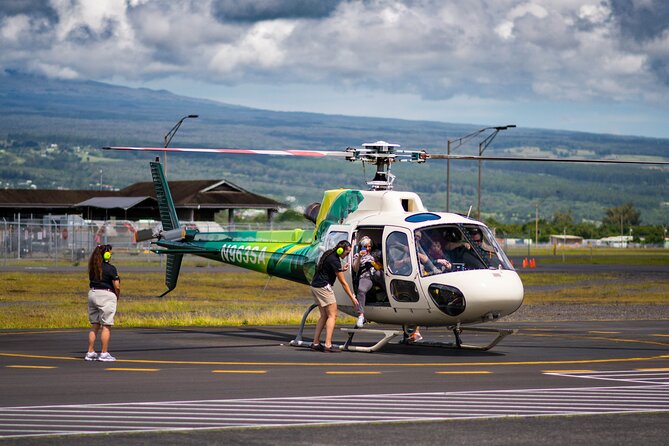
Safari Helicopters operates from 2220 Kekuanaoa Street at Hilo Airport. That location matters. The airport is on the rainy, eastern side of the island, much closer to Volcanoes National Park than Kona, so you avoid crossing the island before the flight.
Plan to arrive 40 minutes before departure. The ground team handles check-in, confirms safety details, and prepares you for boarding. The company has operated on the island for more than 30 years, and that long run shows in the organized preflight routine described by passengers who flew with the company.
The tour is offered in English and includes the flight, fees, and taxes. It does not include hotel transportation or snacks, so you need to arrange your own ride to Hilo Airport and eat beforehand if you need food.
The helicopter has room for up to six people. That keeps the group fairly intimate, but a full cabin can feel tight. One passenger described the seats as small, while another had trouble getting a clear view from a seat behind the pilot. If seeing the volcano is your main goal, ask the operator about seating arrangements when possible. You should expect that some seats have better sightlines than others.
More National Park Safaris in the USA
- The Rocky Mountain National Park Safari Tour
★ 5.0 · 366 reviews - Half-Day Wildlife Safari Tour in Grand Teton National Park
★ 5.0 · 341 reviews - Estes Park: Rocky Mountain National Park Safari Tour
★ 4.8 · 264 reviews
The route from orchid farms to native forest
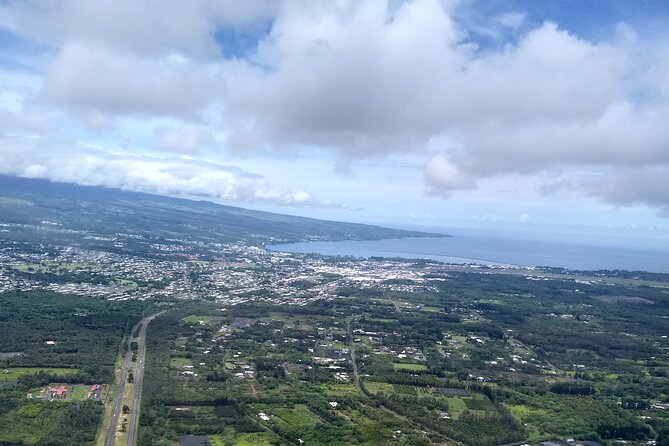
Once airborne, the first part of the route gives you a useful introduction to the eastern side of Hawaii Island. You may look down on orchid farms, macadamia farms, lush forest, and native vegetation. From the ground, these areas can blend into a wall of green. From above, you can see how farms and forest fit together across the slopes.
This section is not filler. It helps you understand the Big Island as a place shaped by elevation, rainfall, farming, and volcanic soil. Your pilot provides the running commentary, pointing out what you are seeing and explaining parts of the island’s natural and cultural past.
Andrew, also called Drew, receives repeated praise for keeping the flight informative and entertaining. Jim is also singled out for clear explanations and careful flying. The strongest part of this operation is not simply the aircraft. It is the narration that turns a scenic flight into a lesson in geology and island history.
You should keep your expectations realistic, though. The flight is short, and the exact route depends on weather and air-safety rules. The pilot may make turns or repeat passes at major sights so people on both sides of the cabin can see. Still, a window view is not guaranteed from every seat.
Reaching Volcanoes National Park by air
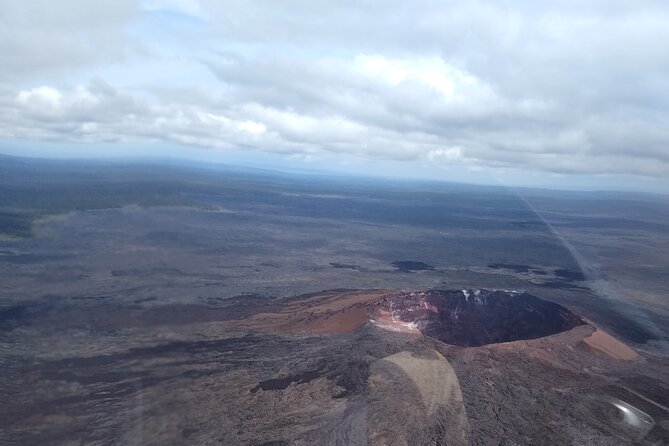
The helicopter heads toward Volcanoes National Park, where old craters, lava flows, fissures, and the broad volcanic summit area come into view. From the air, you can grasp the scale of Kilauea in a way that is difficult from a roadside overlook.
You may see black lava fields cutting through forest, old eruption scars, steam or gas rising from volcanic features, and, when activity and visibility line up, fresh lava or a glowing area within the caldera. Several flights have taken passengers over active vents or seen lava flowing from a fissure. Other flights have seen only smoke, clouds, or older lava features.
That difference is the central issue with this tour. The title promises Volcanoes National Park, and the route normally focuses on it, but an active eruption is not a scheduled show. One flight took place during an eruption but could not enter the caldera because heavy smoke mixed with cloud. Another flight had clear views of the volcano cone and lava fields. The timing and weather made the difference.
Even during an eruption, lava fountains or overflows can be sporadic. A pilot may know that activity is happening but still be unable to show it safely during your 55-minute window. If you book mainly to see glowing lava, understand that the aerial view is never guaranteed.
What weather can change on the day
This is a weather-dependent activity in the fullest sense. Low cloud, rain, smoke, and wind can affect visibility or make a planned route unsafe. The company may offer a different route, a later date, or a full refund if poor weather cancels the flight.
On some days, the crew has offered a north-side route or a flight toward Waimanu Valley when Volcanoes National Park could not be seen properly. Those alternatives can include coastlines, waterfalls, forest, and remote valleys. They may be excellent helicopter flights, but they are not the same experience as seeing Kilauea.
That distinction matters. If your only reason for booking is the volcano, you may prefer to cancel when the route changes. If you mainly want a helicopter flight over hard-to-reach parts of Hawaii, an alternate route may still be worth accepting.
The ground staff appears to explain this possibility before takeoff. They may also give you the choice to fly another route or cancel when the volcano is hidden. The practical move is to check the forecast, keep some flexibility in your schedule, and avoid booking the flight as your only possible visit to the national park.
Same country, a different kind of drive:
- Miami: Everglades Safari Park Airboat Tour
★ 4.4 · 1,267 reviews - Grand Teton Wildlife Safari in a Enclosed or Open-Air Vehicle (season dependent)
★ 5.0 · 1,212 reviews - Everglades Airboat Safari Adventure with Transportation
★ 3.0 · 956 reviews - 3 Hour Off-Road Sunset Safari to Grand Canyon with Entrance Gate Detour
★ 5.0 · 904 reviews
The pilot is part guide, part safety officer
A good pilot makes a helicopter ride feel less like a quick sightseeing loop and more like a guided trip. Andrew and Jim are often praised for explaining what lies below, answering questions, and making several passes so both sides of the cabin get a chance at the view.
Expect commentary about lava flows, calderas, volcanic gases, waterfalls, forests, farms, Hawaiian culture, and past eruptions. One flight included views of a golden Buddha, while others focused on vents, craters, and coastlines. The details vary with the route, but the pilot’s narration is a major part of the value.
Safety also shapes the experience. The pilot may decide not to approach a cloud-covered caldera or an area with poor visibility. That can be disappointing, especially if an eruption is active, but it is the right call. A helicopter tour should never be judged only by whether it reached the exact feature printed in the title.
The strongest flights combine smooth handling with clear narration. First-time helicopter passengers have found the operation reassuring, and families with children have described the staff as welcoming. The 55-minute length is also sensible: long enough to reach the volcano and see more than one type of scenery, but not so long that the ride becomes exhausting.
Is $379 a fair price?
At $379 per person, this is a premium activity. A family of four is looking at more than $1,500 before transportation and any food. You should compare it with the cost of a rental car, fuel, park time, and a full day of driving, but do not treat the helicopter as a replacement for exploring the park on foot.
The value comes from access and scale. In less than an hour, you can connect Hilo’s farms and forests with the volcanic summit, lava fields, waterfalls, and remote areas that are difficult to see from roads. You also get a pilot’s explanation of what you are looking at rather than a silent scenic flight.
The price is harder to justify if you need a guaranteed view of active lava. No operator can promise that. A clear day with visible eruption activity can make the fare feel worthwhile. A cloudy day with an alternate route may leave you wishing you had spent the money on a land-based visit instead.
I would consider this a good splurge for a first Big Island visit, a special occasion, or anyone with limited time who wants a broad look at the island. It is a weaker choice for a budget-focused family, someone uncomfortable in cramped seating, or someone who cannot accept a route change.
Weight rules and comfort in the cabin
Safari Helicopters requires accurate weights for safety. The stated passenger limit is 249 pounds, and an additional seat is required for a person over 250 pounds or for two people whose combined weight is 420 pounds.
Do not guess low when booking. If the submitted weight is inaccurate and creates a safety issue, you may have to buy another seat or leave the tour, with no refund for that problem. This is a small detail with a big financial consequence, so handle it honestly at the start.
The cabin is compact, and six people can mean close quarters. One passenger found the seats small, while another said a position behind the pilot limited the view and caused discomfort around the door area. These are not reasons to rule out the tour, but they are reasons to ask about seating and tell the staff if you have mobility or comfort concerns.
The ground team has helped older people with mobility limitations, according to one family’s experience. Still, the supplied information does not promise a specific accessibility setup, so you should contact the company before booking if you need assistance.
Cancellation, minimum numbers, and scheduling
You can cancel for a full refund up to 24 hours before the start time. Changes or cancellations inside that 24-hour window are not accepted for a refund.
The tour also requires good weather and a minimum number of passengers. If weather cancels the flight, you are offered another date or a full refund. If the minimum is not met, you may be offered a different date or experience, or a refund.
The minimum-passenger rule has caused frustration when flights were moved or canceled close to the scheduled time. The company says it may need five or six people to operate a departure, especially during unsettled weather. I would not schedule a nonrefundable dinner, cruise connection, or long drive immediately after the flight.
This is especially important if you are staying on the Kona side. The Hilo departure point is not a minor detail. One person accidentally booked the Hilo-side volcano tour while expecting a Kona departure and faced a long drive across the island. Check the meeting address before paying.
Who will enjoy this flight most?
I would recommend it most to people who:
- Want an aerial view of Kilauea and Volcanoes National Park
- Enjoy learning from a pilot during the flight
- Have limited time on the Hilo side
- Can handle a small cabin and uncertain weather
- Are willing to pay for a special experience rather than a guaranteed attraction
- Can keep their schedule flexible
Families can do well here. Children as young as six have taken the flight, and the staff has been described as warm and helpful. Couples and solo visitors also benefit from the small group, though you should not assume every seat has an equally open view.
If you are set on seeing an active eruption, pair the helicopter with a land visit to Volcanoes National Park. That way, the flight can be a bonus rather than your only chance to see volcanic activity.
Should you book the Volcanoes National Park Safari?
Book it if you want the Big Island from above and accept that nature controls the route. The best version of this flight includes a smooth ride, clear narration from pilots such as Andrew or Jim, views of lava fields and craters, and perhaps an active vent or eruption in the caldera.
Skip it if $379 would cause real budget stress, if you need certainty, or if you would be unhappy with a coastal or forest route after paying for a volcano tour. For everyone else, this is a strong Hilo-side splurge, provided you verify the meeting point, report your weight accurately, arrive 40 minutes early, and keep a backup plan for poor weather.
FAQ
Where does the helicopter tour begin?
The tour begins at 2220 Kekuanaoa Street, Hilo, Hawaii 96720, USA, at Hilo Airport.
How long does the flight last?
The experience lasts approximately 55 minutes.
How early should I arrive?
You should arrive 40 minutes before the scheduled departure time for check-in and the safety briefing.
What can I see during the flight?
The route may include Volcanoes National Park, lava flows, craters, calderas, volcanic vents, waterfalls, orchid farms, macadamia farms, and native forest. Exact views depend on weather and volcanic conditions.
Is active lava guaranteed?
No. Cloud, smoke, wind, and changing volcanic activity can prevent views of active lava or the caldera.
How many people can join the flight?
The activity has a maximum of six people.
Is hotel transportation included?
No. Hotel pickup and drop-off are not included. You must make your own way to the Hilo meeting point.
What is the weight requirement?
The stated limit is 249 pounds per passenger. An additional seat is required for a passenger over 250 pounds or when two passengers have a combined weight of 420 pounds.
What happens if the weather is poor?
If poor weather cancels the tour, you are offered a different date or a full refund. The route may also be changed when conditions make the planned volcano flight unsafe.
Just added around the USA
- 3 Hour See Crystal River Wildlife Safari Boat Cruise★ 4.5 · 25 reviews
- Northern Yellowstone Safari from Cody, WY★ 4.5 · 24 reviews
- Red Canyon Wild Mustang Tours And Safaris In Cody Wyoming★ 5.0 · 27 reviews
- Wetlands Safari Eco-Cruise in Cape May (Osprey Birding By Boat)★ 5.0 · 113 reviews
- Yellowstone Wildlife Safari from Bozeman – Private Tour★ 5.0 · 140 reviews
- Yellowstone Winter Wildlife & Snowshoe Tour | PRIVATE★ 5.0 · 19 reviews
- Yellowstone Wildlife Safari in Lamar Valley from Bozeman★ 5.0 · 35 reviews
- Yellowstone Snowshoe Safari from Bozeman – Private Tour★ 5.0 · 18 reviews
USA Safaris, compared.


Grand Teton Wildlife Safari in a Enclosed or Open-Air Vehicle (season dependent)
Read our review →
Everglades Airboat Safari Adventure with Transportation
Read our review →
Off the Beaten Path Ketchikan Photo Safari – 3 hr.
Read our review →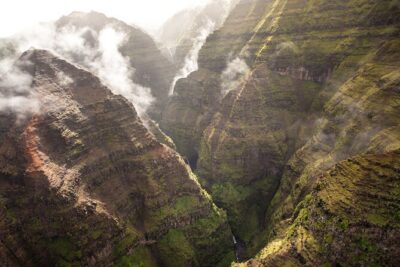
Kauai Deluxe Waterfall Safari: Helicopter Tour
Read our review →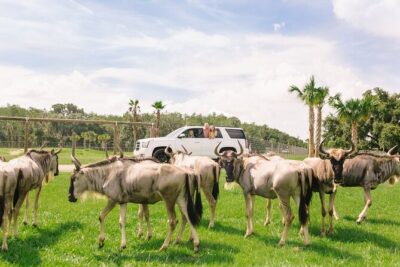
Wild Florida Drive-Thru Safari and Gator Park Admission
Read our review →
Wild Dolphin Watching and Snorkel Safari Off West Coast of Oahu
Read our review →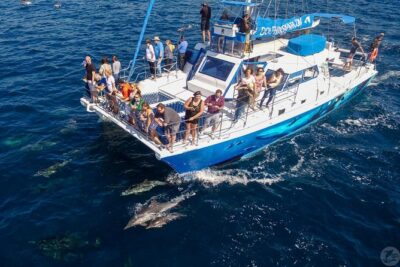
Dana Point Dolphin and Whale Watching with Underwater Viewing
Read our review →Browse the lists this tour appears in