
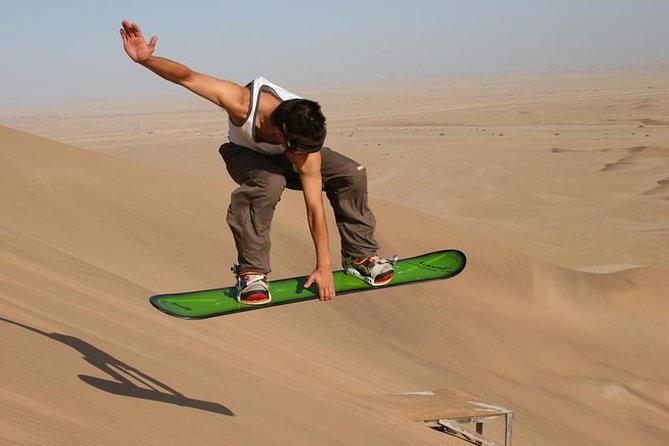
REVIEW · WINDHOEK
6 Day Sand, Sea & Etosha Budget Camping Safari
Namibia packs a lot into six days here: red dunes, Atlantic coast, and Etosha wildlife. You leave Windhoek early, sleep under a camelthorn tree near Sesriem, reach the Skeleton Coast’s adventure capital, then spend two nights watching animals gather at Etosha waterholes.
I like the excellent mix of scenery and wildlife, especially the sunrise climb at Dune 45 and the patient waterhole strategy in Etosha. I also like the small maximum group of nine and the hands-on camping setup, which gives the trip a friendly feel. The drawback is the pace: several days involve long drives, and the pre-dawn Sossusvlei start will test anyone who prefers a slow morning.
Key points to know before booking
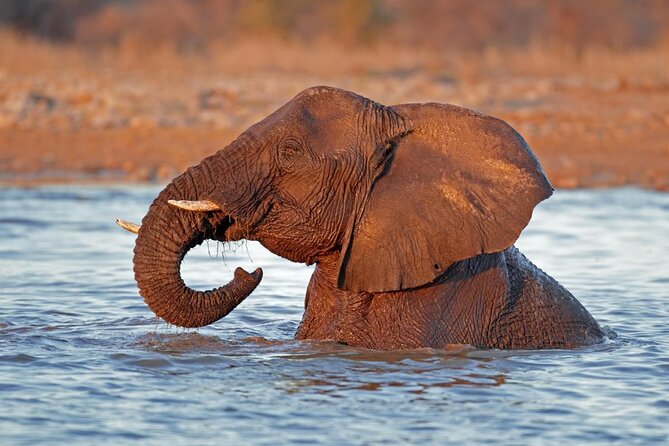
- Dune 45 at sunrise: Start before dawn for the best light on Namibia’s famous red sand.
- Two nights in Etosha: More time here gives you several chances to visit waterholes and spot wildlife.
- Small group size: The vehicle carries no more than nine people, keeping the safari more personal.
- First-time camping can work well: Guide Raymond has been praised for helping nervous campers learn the routine.
- Meals are partly included: You receive six lunches, four dinners, and five breakfasts, but drinks and mineral water cost extra.
- The price reflects a full route: At $1,355.66 per person, transport, park fees, camping gear, meals, and guided drives are bundled together.
What this six-day route really gives you
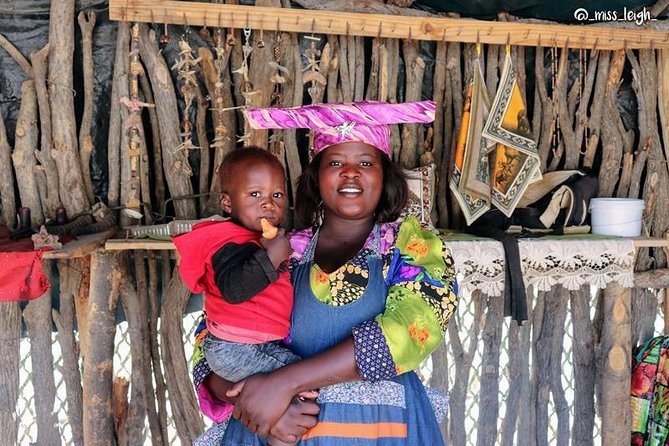
This is a fast, practical introduction to Namibia rather than a slow stay in one region. In six days, you cover the Namib Desert around Sesriem, the gravel plains and mountains west of the country, the coastal town of Swakopmund, and Etosha National Park.
That range is the main reason to consider it. You do not spend the whole trip looking at one type of scenery. The colors and mood change sharply: red dunes become pale desert, then ocean air, then dry bush and waterholes crowded with animals.
The trade-off is distance. Namibia is enormous, and the route cannot avoid long stretches on the road. You should be comfortable with early starts, basic camping, and several hours in a safari vehicle. The physical requirement is listed as moderate, which seems fair. You do not need to be an athlete, but you should manage tent camping, vehicle transfers, and a dune climb.
The group limit of nine matters. A small safari vehicle gives you a better chance of seeing the guide’s explanations and a less crowded feel at stops. It also means you share the daily rhythm closely with the same small group, so patience and good humor help.
More Overnight Safaris in the world:
- Dubai: Overnight Safari, Dinner, Stargazing & Al Khayma Camp
★ 4.8 · 2,562 reviews - Dubai Overnight Desert Safari, BBQ & Stargazing at Al Khayma Camp
★ 5.0 · 2,327 reviews - 4 Days Group Camping Safari
★ 5.0 · 1,101 reviews
Day 1: From Windhoek to a camelthorn campsite near Sesriem
Pickup from accommodation inside Windhoek city limits is scheduled for 7:00 a.m. You first go to Chameleon headquarters for a short pre-departure meeting, then set off toward Sesriem.
The road crosses Namibia’s central plateau, with mountain views along the way. Rehoboth is used for essential supplies, and the route continues through the small community of BűellsPort before reaching camp around lunchtime.
The campsite sits beneath a huge old camelthorn tree, with views toward the red dunes of the Namib. That setting is a fine introduction to the area. You are not simply arriving at a campground after dark. You have time to set up, eat a picnic-style lunch, and take in the desert surroundings.
Camping equipment is supplied, except for a sleeping bag. You can hire one, so check that arrangement before departure if you do not have your own. Tap water is included, but drinks and bottled mineral water are not. Bring money or supplies for those extras.
The first day is listed at about six hours, though the road time and setup make it a full start to the trip. The early pickup also means you should arrange breakfast before leaving your Windhoek accommodation if you need more than the tour’s meal plan provides.
Day 2: Sossusvlei and the best light at Dune 45
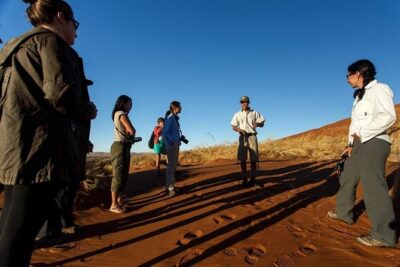
This is the signature desert day. You leave before dawn and drive the first 45 kilometers in darkness and early twilight to Dune 45, named for its distance from Sesriem.
The early hour is not needless punishment. Sunrise gives the dunes their strongest color, with orange and apricot tones on one side and long shadows on the other. The changing light also shows the ridges and curves of the sand far better than harsh midday sun.
You climb Dune 45 to a viewing point, watch the sunrise, then return to the vehicle for a quick breakfast. The schedule continues to Sossusvlei, where the red dunes and dry desert floor provide the main visual reward of the day. The Sossusvlei excursion and park entry are included.
You should expect some exertion here. Sand makes every step harder, and the morning begins very early. Wear shoes that you can walk in comfortably and carry only what you need. The supplied information does not specify the exact walking time or distance, so your guide will set the practical pace.
This is also a day for careful water planning. Tap water is included in the trip, but the tour does not include drinks or mineral water. In a hot desert setting, do not assume the included meal plan covers every drink you will want.
The day runs for about six hours. That leaves a useful balance between the early start and time at the dunes, though anyone who dislikes dawn departures should take this schedule seriously. Dune 45 is the sort of stop that rewards the effort, but the reward depends on being ready to move while most of the country is still asleep.
Day 3: Desert roads, mountain passes, and Swakopmund
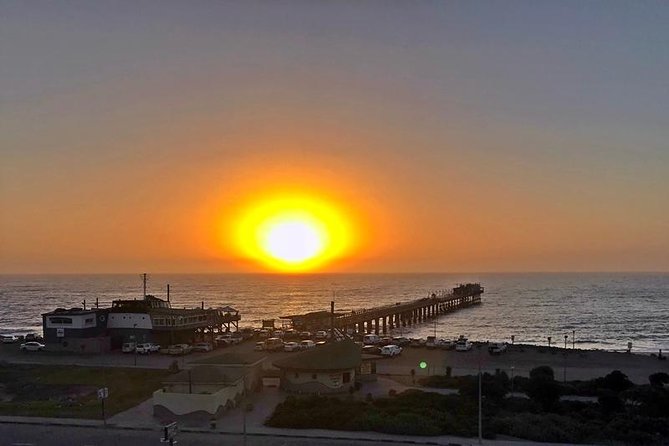
After an early breakfast, you head west toward Swakopmund. The route crosses broad Namib gravel plains, with flat open ground broken by large mountain inselbergs.
You cross the Tropic of Capricorn at 23.5 degrees south and stop at the roadside sign for photographs. It is a simple stop, but it breaks up the long drive and gives you a clear marker for the day’s route.
The road then reaches the Gaub River canyon and the Kuiseb Pass. The Kuiseb River has carved a dramatic route through the mountains on its way toward the Atlantic. This part of the drive is valuable because the journey itself becomes the attraction. You see how quickly Namibia changes from dune country to gravel plain, canyon, mountain, and coast.
Swakopmund is described as the adventure capital of the Skeleton Coast. The two nights based there give you a change from camping in the desert, though the supplied details do not specify the exact accommodation or which optional activities are offered.
That uncertainty is worth noting. Optional activities are not included, so ask about prices and schedules if you want to add anything in Swakopmund. The town is your chance to build in extra adventure, but the cost and availability should be checked before you rely on a particular activity.
The driving portion takes about six hours. After two days of desert scenery and early starts, Swakopmund provides a different rhythm, with accommodation instead of a tent and a coastal setting instead of inland sand.
A few more safaris around the world worth a look
- Cape Town: Garden Route and Addo Elephant Park 6-Day Safari
★ 4.7 · 175 reviews - 6 Days Private Budget Safari
★ 5.0 · 163 reviews - 6 Days Tanzania Budget Camping Safari
★ 5.0 · 145 reviews - 6-Day Dunes and Wildlife Accommodated Safari from Windhoek
★ 5.0 · 123 reviews
Day 4: Entering Etosha and settling beside Okaukuejo waterhole
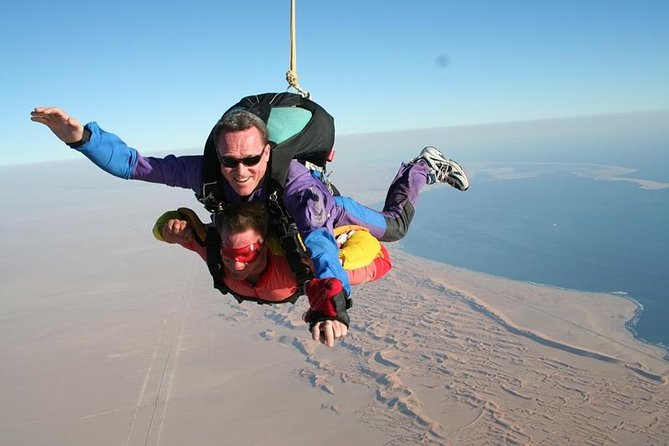
After breakfast, the plan is to leave around 9:00 a.m. A paved scenic road carries you toward Etosha National Park, where you arrive in the afternoon.
You make your first game drive into the park while setting up camp. This is a smart use of the arrival day. You are not spending the whole afternoon inside camp, and your first look at Etosha begins as soon as you enter the park.
The evening is spent at the Okaukuejo waterhole. This is one of the strongest features of the trip because it lets you watch the park’s wildlife without continually bouncing along the road. Etosha is dry, and water is scarce. That scarcity draws animals to known water sources, making waterholes central to the safari experience.
The day is listed at about seven hours, including the transfer and park activity. The combination of a long road journey and camp setup can leave you tired, but the evening waterhole provides a calm end to the day.
Etosha camping is included for two nights. The national park entry fees and other park fees are also covered, which makes the price easier to assess. You are paying not only for transport, but also for access to one of Namibia’s main wildlife areas and guided game driving in the Chameleon Safaris vehicle.
Day 5: Waterhole watching from Okaukuejo to Halali
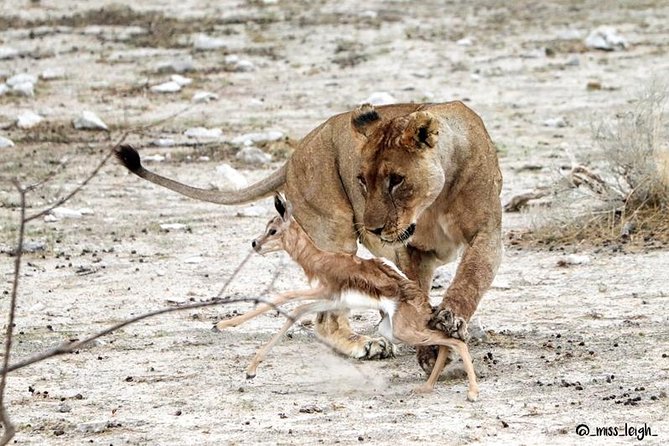
This is the main wildlife day. The safari approach is straightforward: visit as many waterholes as possible and let the animals come to drink.
The morning starts around the waterhole, when wildlife may gather for an early drink. You then continue on a game drive toward Halali, stopping at a designated picnic area for a quick breakfast along the way.
The route uses water as the organizing idea. In a dry park, that makes sense. Instead of racing from one distant sighting to another, you spend time checking the places animals have a practical reason to visit. Sightings can never be promised, but the method gives you a sensible chance to see more than one kind of animal.
Halali is the next camp, and its name comes from a bugle call once used to signal that a European hunt was over. That small piece of background adds context to the place, while the day itself remains focused on wildlife and the dry Etosha setting.
The game drive lasts about seven hours. Bring patience. Wildlife viewing is not a scheduled stage show, and long periods of watching, waiting, and driving are normal. The small group limit helps here because you have fewer people sharing the vehicle, but everyone still needs to respect the guide’s timing and the group’s shared space.
Breakfast, lunch, and dinner arrangements matter on this day. The package includes five breakfasts, six lunches, and four dinners across the trip, though the supplied schedule does not assign every meal to a precise day. Since drinks are extra, budget separately for them.
Day 6: Returning through Otjiwarongo and Okahandja
After breaking camp, you head south toward Windhoek. The first practical stop is Otjiwarongo, where the vehicle refuels.
You then pass through Okahandja, home to Namibia’s largest wood carving market. Artists from around the country bring large and small carved items here, giving you a chance to buy a distinctly Namibian souvenir and support local makers.
This is a better final stop than a generic roadside shop. It connects the return journey with local craft, and it gives you something tangible from the trip beyond photographs. Keep in mind that the tour description does not specify how much time is available at the market, so your shopping window may be limited.
The drive takes about eight hours, making this the longest listed day. You aim to reach Windhoek in the late afternoon, followed by a shuttle to accommodation within the city limits.
Do not schedule an important evening flight without allowing plenty of extra time. The return is planned for late afternoon, but long road journeys can be affected by delays. The included shuttle is convenient if you are staying within Windhoek, though the pickup and drop-off details apply to city-limit accommodation.
What $1,355.66 includes, and what it does not
At $1,355.66 per person, this is not the cheapest way to see Namibia. It is a reasonable package if you want transport, park access, meals, camping equipment, guided game drives, and the Sossusvlei excursion arranged together.
The value is strongest for someone who would otherwise need to rent a vehicle, plan long intercity drives, organize park fees, find camping equipment, and manage the route alone. Two nights in Etosha are particularly useful because a single rushed park visit would give you less time to work the waterholes.
The package includes:
- Camping equipment, excluding a sleeping bag
- National park entry and park fees
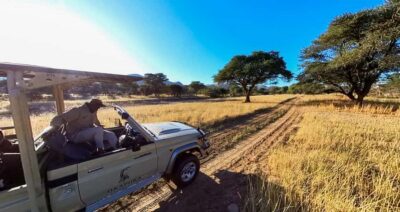
- Game drives in the Chameleon Safaris vehicle
- The Sossusvlei excursion
- Six lunches
- Four dinners
- Five breakfasts
- Tap water
You pay extra for drinks, bottled mineral water, sleeping bag hire, optional activities, and tips. Those costs can add up, so the advertised price should be treated as the base cost rather than your complete spending total.
The meal coverage is generous for a six-day budget safari, but it is not full board. Ask how much water you should carry each day, especially for the desert portion, and plan for any snacks or preferred drinks you may want.
Who will get the most from this safari
I would choose this trip if you want Namibia’s major sights but have only six days. It gives you a strong first look at the country without requiring you to plan the route yourself.
It also suits a first-time camper. Guide Raymond has been praised for making a nervous new camper feel comfortable and for showing people how to put up the tents. That hands-on help matters if you are unsure about sleeping outdoors.
The trip is a good match for you if you enjoy:
- Early starts and long scenic drives
- Basic camping with supplied equipment
- Desert photography
- Wildlife watching at waterholes
- Small-group travel
- A mix of included meals and optional personal spending
You may prefer a longer or more settled trip if you dislike changing scenery every day, want private rooms throughout, or need a relaxed morning schedule. The tour offers variety, but variety comes through movement.
The 4.9 rating from 36 reviews and 97 percent recommendation figure suggest strong overall satisfaction, with guide quality and organization receiving particular praise. Still, those numbers should not hide the practical facts: this is an active camping safari with early mornings, long road days, and some self-management around drinks and sleeping gear.
Should you book the Sand, Sea and Etosha safari?
Book it if you want a compact route through Namibia’s desert, coast, and wildlife country, and you are comfortable trading comfort and free time for coverage. The strongest reasons are the sunrise at Dune 45, two nights in Etosha, a group capped at nine, and a package that includes the major park costs and many meals.
Think twice if you want luxury, private accommodation every night, or a slow photographic tour. The Sossusvlei morning begins before dawn, the final drive lasts about eight hours, and optional Swakopmund activities cost extra.
For a budget-minded first visit, I see real value here. Bring patience, sun protection, a sleeping bag or money to hire one, and a willingness to help with camp. If that sounds like a good trade for Namibia’s biggest sights, this safari earns its place on your shortlist.
FAQ
Where does the safari start?
Pickup is offered from accommodation within Windhoek city limits at 7:00 a.m. on the first day, followed by a short pre-departure meeting at Chameleon headquarters.
How long does the safari last?
The tour lasts six days.
What is the maximum group size?
The maximum group size is nine people.
Is camping equipment provided?
Camping equipment is included, but a sleeping bag is not. A sleeping bag can be hired.
Are national park fees included?
Yes. National park entry fees and park fees are included.
Are meals included?
The package includes six lunches, four dinners, and five breakfasts. Drinks and mineral water are not included.
Are game drives included?
Yes. Game driving in the Chameleon Safaris vehicle is included, with time at Etosha waterholes and a route toward Halali.
What happens if I cancel?
The experience is non-refundable and cannot be changed for any reason. Cancellations or amendment requests do not receive a refund.
Just added around the world
- Dubai Desert Safari With BBQ dinner★ 5.0 · 15 reviews
- Dubai Private Morning Desert Safari: Camel Ride & Sandboarding★ 5.0 · 19 reviews
- Deluxe Premium Dubai Desert Safari with Camel Ride, and Live Show★ 5.0 · 82 reviews
- Premium Deluxe Dubai Safari with Camel Ride, Sandboard & BBQ★ 5.0 · 55 reviews
- Dubai Morning Desert Safari: Camel Ride & Sandboarding!★ 5.0 · 116 reviews
- Camel Trekking and Morning Safari with Sand Boarding★ 5.0 · 19 reviews
- Thrilling Desert Safari Dubai Adventure with Sand Boarding and Barbecue Dinner★ 3.5 · 30 reviews
- Dubai Desert Safari★ 4.5 · 15 reviews
Windhoek Safaris, compared.
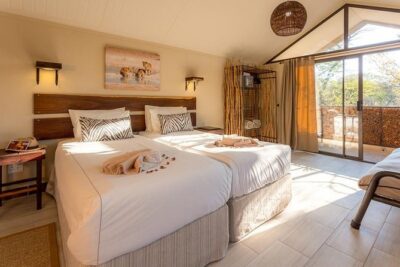
6-Day Dunes and Wildlife Accommodated Safari from Windhoek
Read our review →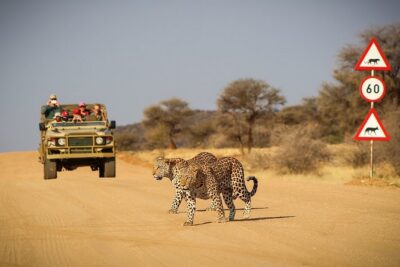
Browse the lists this tour appears in