
REVIEW · WINDHOEK
12 Day Classic Namibia Camping Safari
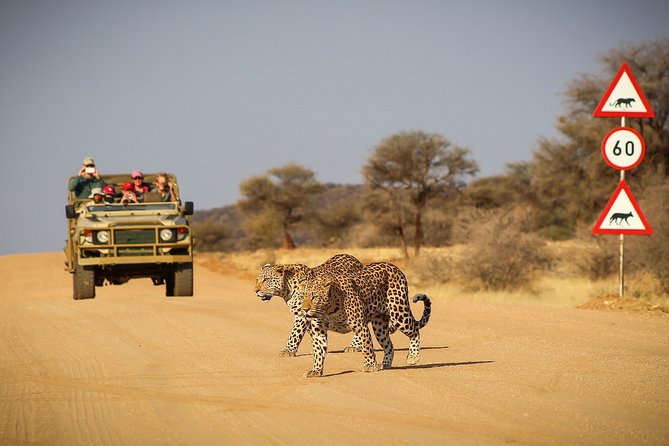
Namibia’s great strength is variety, and this 12-day camping safari packs in an impressive amount: rhinos at Mount Etjo, wildlife around Etosha’s waterholes, Himba culture, the Skeleton Coast, Sossusvlei’s giant dunes, Kolmanskop, Fish River Canyon, and the Quiver Tree Forest. You spend long hours on the road, but the scenery keeps changing.
I like the small maximum group of 10, which makes camp life and game drives more manageable. I also like the practical rhythm: guides such as Tulimo and Gregory cook over the fire, arrange the tents, and keep the days moving, leaving you free to watch sunsets and wildlife.
The main drawback is simple: this is a fast, camping-heavy trip. You sleep in tents for 10 nights, cover great distances, and face early starts, basic facilities, and one very long return drive to Windhoek. Bring patience, a sleeping bag, and a good tolerance for dust.
Key things to know before booking
- Etosha takes center stage: Two nights inside the park give you repeated chances at waterholes, including the famous floodlit waterhole at Okaukuejo.
- The route covers nearly all of Namibia’s headline sights: You reach the north, Atlantic coast, central desert, and far south in one trip.
- Dune 45 and Deadvlei require effort: The pre-dawn start is worth it, but climbing sand and walking in heat can be tiring.
- Swakopmund is your comfort break: You get a night away from camping, plus time for optional activities and restaurant meals.
- Camping keeps the price in check: At $3,071.21 per person, the tour includes most meals, transport, guiding, park visits, and 10 nights under canvas, but not drinks or a sleeping bag.
- Cultural visits need a thoughtful approach: The Otjikandero Himba Village offers insight into traditional life, but you should arrive ready to listen and follow local guidance.
Why this route works for a first look at Namibia
This trip is designed as a broad sampler rather than a slow stay in one region. You move from the scrub and game reserves near Windhoek to Etosha, then west to the Atlantic, south through the Namib Desert, and on to the dry country around Lüderitz, Aus, and the Fish River Canyon.
That sweep is the reason to choose it. In less than two weeks, you see wildlife, desert, coast, colonial buildings, old mining sites, and unusual plants. You also experience Namibia in the most direct way possible, from a tent beside a reserve or desert camp rather than from a string of city hotels.
The trade-off is distance. Namibia is enormous, and the route cannot offer long, lazy mornings every day. Some drives last much of the day, and the final return to Windhoek is especially lengthy. If you want a relaxed safari with plenty of downtime, choose a shorter route. If you want a strong first taste of the country and accept the miles, this plan makes sense.
The price deserves a closer look. You receive 10 nights of camping, one night in accommodation, 11 breakfasts, 11 lunches, and 10 dinners. Park and attraction visits are built into the program, and the guide prepares many meals at camp. You still pay for drinks, including mineral water, soft drinks, and alcohol, as well as optional activities in Swakopmund.
More Overnight Safaris in the world:
- Dubai: Overnight Safari, Dinner, Stargazing & Al Khayma Camp
★ 4.8 · 2,562 reviews - Dubai Overnight Desert Safari, BBQ & Stargazing at Al Khayma Camp
★ 5.0 · 2,327 reviews - 4 Days Group Camping Safari
★ 5.0 · 1,101 reviews
Day 1: Woodcarvers, rhinos, and a first camp at Mount Etjo
The morning begins at Chameleon Safaris headquarters in Windhoek with a short briefing. You then stop at the Okahandja Mbangura Woodcarvers Craft Market, where artists from across Namibia sell carved work. It is a quick, useful introduction to local craft, and a good place to practice polite bargaining while supporting the makers directly.
The main event is Mount Etjo Game Reserve. The reserve supports conservation work, including efforts to protect Namibia’s black and white rhinos. You reach camp around lunchtime, set up, eat, and head out for an afternoon game drive.
This first drive gives you an early chance to see how safari works here. The focus is on rhinos, but the real pleasure is the change of pace: the vehicle slows, everyone watches, and the open country turns golden as the sun drops. Your guide prepares dinner over an open fire afterward.
The listed timing for this stop runs into the night, so do not expect a hotel-style arrival. You are joining an active camping trip from the first afternoon.
Days 2 and 3: Waterholes and night wildlife in Etosha
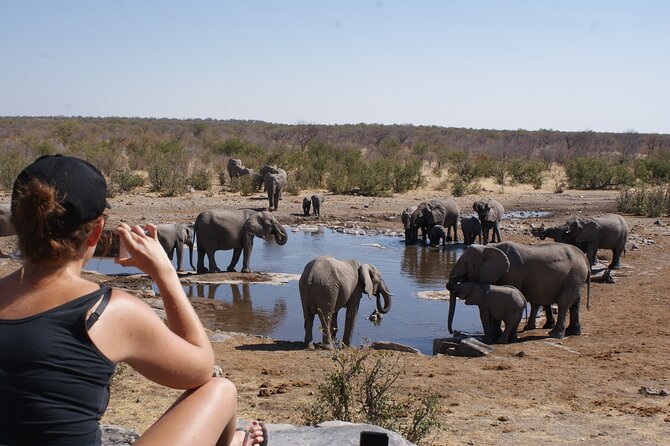
On Day 2, you leave after breakfast, stop in Otjiwarongo for supplies, and continue to Etosha National Park. Entering the park begins the central wildlife portion of the journey. Rather than racing from one landmark to another, the drives move between waterholes, where animals gather in a dry setting.
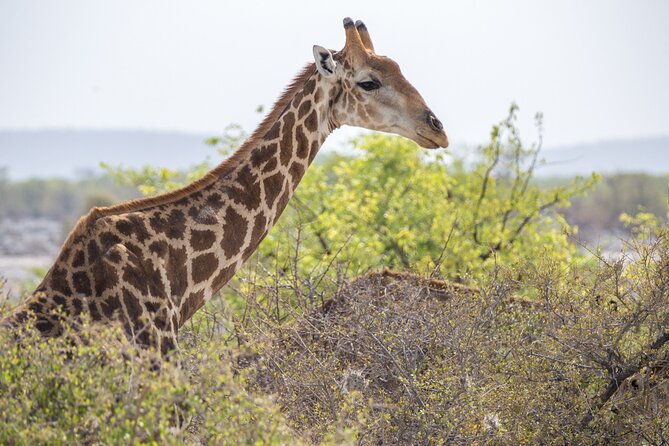
You set up at Okaukuejo, eat lunch, and head out again in the afternoon. Possible sightings include predators, plains animals, birds, reptiles, elephants, giraffes, lions, hyenas, and rhinos. Wildlife is never guaranteed, but Etosha’s waterhole system gives you a clear reason to keep watching.
After dinner, visit the floodlit waterhole at Okaukuejo. This is one of the smartest details in the schedule because the park does not simply end when the sun goes down. Rhinos, elephants, giraffes, lions, and hyenas are frequent visitors to the water, and the lighting lets you watch without another drive.
Day 3 starts before sunrise. You move from waterhole to waterhole, stopping at a fenced picnic area for breakfast. The early start matters because predators may still be active, and the cooler hours are easier for both animals and people.
You then reach Etosha Pan, the huge saline desert at the heart of the park. The pale, open surface feels completely different from the wildlife areas, and you can get out of the vehicle here. Afterward, the route continues to Halali, the central camp, where you can use the pool, visit the waterhole, and have lunch.
The afternoon drive returns to Okaukuejo. Two nights inside Etosha give you a better chance of seeing changing animal activity than a single pass through the park. Still, expect hours in a vehicle, rough roads, heat, and a basic camp routine. The reward is the chance to watch animals on their terms.
Day 4: A Himba village and the dry country around Palmwag
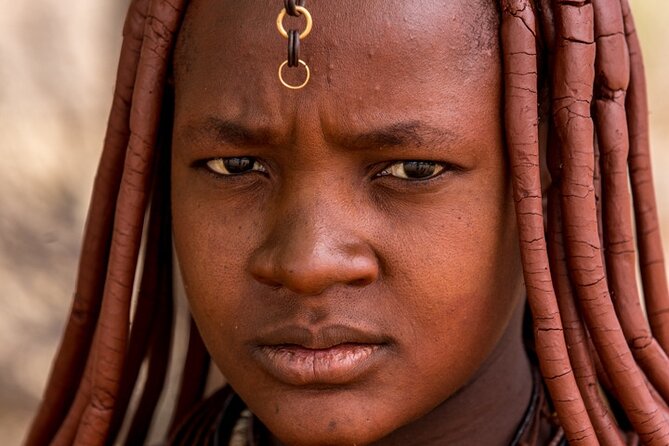
After a final sunrise drive out of Etosha, you continue toward Kamanjab and the Otjikandero Himba Orphan Village. A guided visit introduces you to Himba customs, daily life, and traditional culture. You also have the chance to exchange a little of your own experience rather than simply look at the village from a distance.
Approach this stop with respect. It is a cultural visit, not a staged wildlife sighting, and the quality of the experience depends partly on your willingness to listen, ask appropriate questions, and follow the guide’s instructions about photographs and interaction.
Later, you camp at Palmwag. The afternoon is quieter, with the possibility of watching for desert elephants near camp. This is a good example of the trip’s broad range: the day begins with a final park drive, shifts to a cultural encounter, and ends in dry country where elephants have adapted to sparse water.
Dinner again comes from the guide and an open fire. By this point, you will understand the pattern: pack, drive, set up, eat, watch the sunset, and do it again.
A few more safaris around the world worth a look
- Dubai: Desert Safari, Quad Bike, Camel Ride & Al Khayma Camp
★ 4.9 · 68,962 reviews - Dubai: Desert Safari, Quad Bike, Camel Ride and Sandboarding
★ 4.9 · 43,505 reviews - Dubai: Safari, Quad Bike, Camel Ride, and Buffet Dinner
★ 4.9 · 33,424 reviews - Dubai: Red Dune Safari, Quad Bike, Camel Ride, BBQ Dinner
★ 4.9 · 32,185 reviews
Days 5 and 6: The Skeleton Coast and the seals at Cape Cross
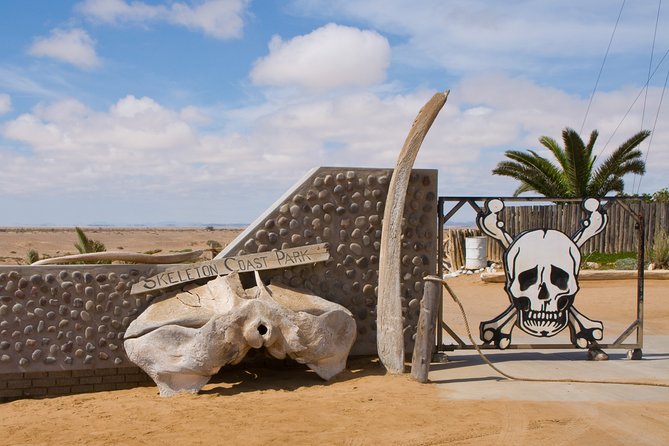
Day 5 takes you west to the Atlantic through Skeleton Coast National Park. The coast is known for fog, rough seas, unpredictable currents, and shipwrecks. It is not a beach holiday setting. The appeal comes from the stark meeting of ocean, sand, wind, and empty country.
You reach Cape Cross in the afternoon and set up camp. There is time for a beach walk, and the bold may try the Atlantic, though the coastal conditions can be chilly and rough. The guide prepares dinner at camp, giving you a night beside one of Namibia’s most unusual stretches of coast.
On Day 6, you visit the Cape Cross Seal Reserve. The breeding colony can reach more than 200,000 Cape fur seals during November and December. It is a spectacular sight, but also a powerful sensory experience: the noise and smell are part of it. Keep your expectations realistic and your camera ready, but do not expect a quiet nature walk.
You continue south to the Zeila shipwreck, a more recent wreck from 2007. It adds a human time scale to the coast’s long record of stranded ships. By early afternoon, you reach Swakopmund.
The contrast is welcome. Swakopmund offers streets, shops, restaurants, and a bed after several nights of camping. Dinner is at your own expense, and the guide can recommend or book a restaurant. That extra meal is not included, but it gives you a chance to choose what you want after camp cooking.
Day 7: Swakopmund activities before the Namib Desert
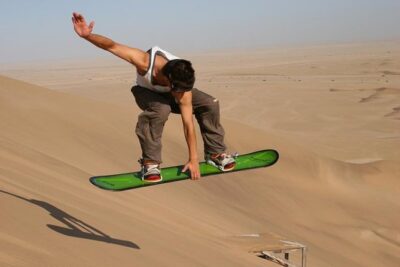
You leave Swakopmund at 11:30 a.m., so this is your chance to sleep longer, enjoy breakfast, or book an optional activity. Choices listed for the town include quad biking and sandboarding, with the latter sending you down a dune at speeds of up to 60 km/h.
The late departure is practical. It gives you a short break from the early alarms that shape the safari. Optional activities cost extra, so add room to your budget if you want more than a walk around town.
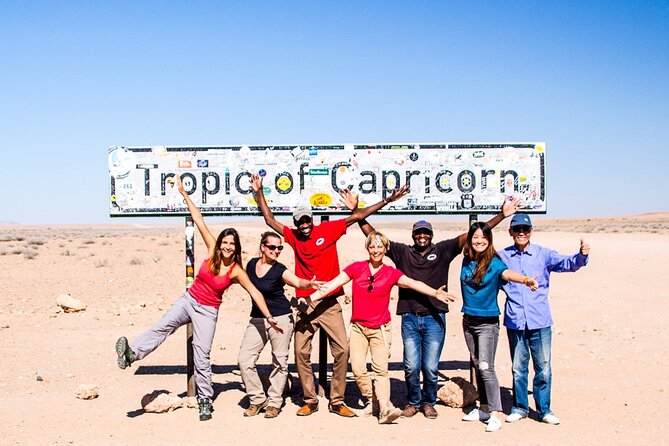
The afternoon drive crosses the Namib Desert by way of Kuiseb Pass and the Tropic of Capricorn. You stop at Solitaire for a snack and a stretch before reaching Sesriem late in the day.
At camp, you can use the pool and bar, watch the desert sunset, and eat a meal prepared by the guide. An early night is wise because the next morning starts before dawn.
Day 8: Dune 45, Deadvlei, and Sesriem Canyon
The pre-dawn departure is one of the trip’s major moments. You drive along an ancient river bed toward Dune 45, where you can climb the sand in the first light and watch the sunrise from above.
The climb is not technically complicated, but sand makes every step work harder. Take it at your own pace, carry water, and remember that the view improves as the sun rises over the ridges. Afterward, breakfast helps restore your energy.
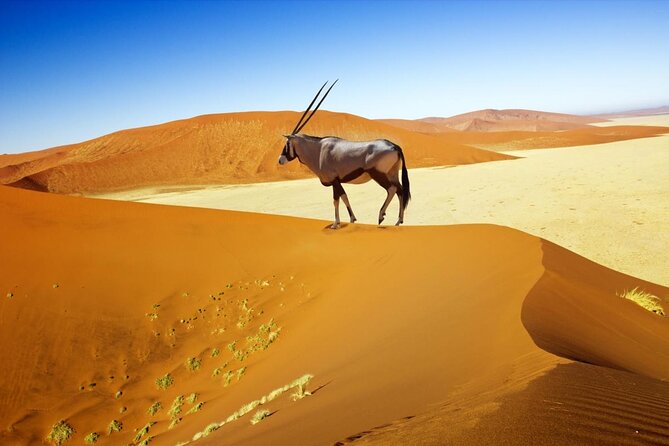
The route continues to Sossusvlei, where you explore on foot. Deadvlei is the visual centerpiece: bleached clay, dead camel thorn trees, and enormous orange dunes. The scene is stark and easy to photograph, but walking across sand and cracked clay in rising heat takes effort.
You return to Sesriem around lunchtime for food, a swim, or a siesta. That pause is important. Trying to push through the hottest part of the day would make the afternoon less enjoyable.
Later, you visit Sesriem Canyon. It is a smaller-scale contrast to the open dunes, with a chance to walk through a narrow natural formation before dinner and another night at camp.
Days 9 and 10: Aus, Kolmanskop, Lüderitz, and desert horses
Day 9 leads south through the Namib Rand area toward Klein Aus Vista. This section is about the view from the road and the feeling of distance. You arrive in the afternoon, set up camp, and may choose one of the short hiking trails before sunset.
The Aus Mountains provide a fine setting for an evening outdoors. There is no major attraction to rush toward, which makes this one of the calmer parts of the route. You can walk, watch the light change, and eat around the fire.
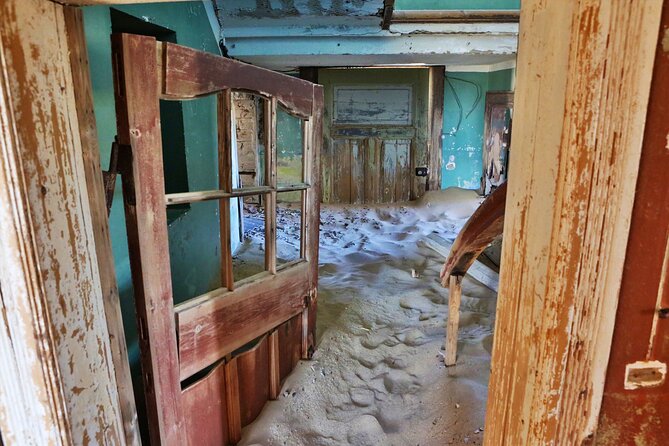
Day 10 begins with Kolmanskop, the abandoned diamond town outside Lüderitz. During the diamond boom, the settlement had unusually modern facilities for its time, including the southern hemisphere’s first X-ray machine, a bowling alley, and luxury housing. Once the diamonds declined, the residents left and desert sand began to take over the buildings.
This is a strong stop for photographers, but the appeal is more than decaying walls. Kolmanskop shows how quickly a settlement can appear, prosper, and disappear when its economy depends on one resource. Wear practical shoes and expect sand inside and around the old structures.
You then visit Lüderitz, with its colorful colonial-era buildings on the Atlantic, followed by Diaz Point and the original Diaz Cross. On the return toward Aus, keep watch for the wild horses of the Namib Desert. Sightings are not assured, so treat them as a bonus rather than a promise.
The night returns you to Klein Aus Vista. The second sunset here gives you another quiet evening before the long drive east.
Day 11: Fish River Canyon and the Quiver Tree Forest
An early start takes you to Hell’s Bend viewpoint at Fish River Canyon. The canyon was formed by water erosion and movements in the earth’s crust, and the lookout gives you a broad view over one of the world’s largest canyon systems.
This is a viewpoint stop rather than a canyon hike, so keep your expectations clear. You get a dramatic look across the gorge, but not a full trek into it.
After lunch, you continue toward the Quiver Tree Forest near Keetmanshoop. Around 250 quiver trees grow here, and some are estimated to be 200 to 300 years old. The trees are Namibia’s national tree, and the forest became a national monument in 1995.
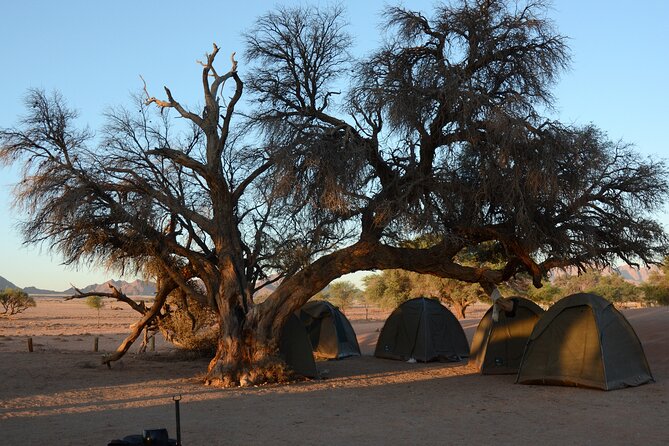
Your final night is spent camping under the stars. The location is especially appealing if you enjoy night photography, though permits for night photography are not included. Even without special equipment, sunrise among the unusual trees gives the trip a fitting final scene.
Day 12: Sunrise trees and a long road to Windhoek
You explore the Quiver Tree Forest at sunrise, then begin the return to Windhoek. Lunch is picnic-style and taken on the road, with the route passing through Mariental and Rehoboth before arrival in the late afternoon.
This is the least glamorous day because much of it is transport. Do not schedule a flight for this day, and leave room for delays or a late arrival. The tour ends back at the Windhoek meeting point, with drop-off at your accommodation.
What the $3,071 price really includes
At $3,071.21 per person, this is not a shoestring outing, but the cost covers a large amount of ground and a lot of practical work. You receive transport, guiding, most attraction access, 10 camping nights, one night of accommodation, and nearly all meals.
The included food matters. A guide such as Tulimo or Gregory is not only leading drives and keeping the schedule on track, but also preparing breakfast, lunch, or dinner over the fire. That saves you from arranging meals in remote areas and adds to the camp experience.
You need to budget separately for drinks, including water, and for Swakopmund activities. A sleeping bag is also not supplied. Since this is a 12-day camping trip, that omission is worth handling before departure rather than after you reach Windhoek.
The tour has a maximum of 10 people, which is a useful middle ground. You get the efficiency of a shared safari without the feel of a large coach group. A moderate level of physical fitness is required for tent routines, dune walking, and long days in a vehicle.
Who should book this Namibia safari?
Book it if you want one organized route through Namibia’s biggest sights and do not mind camping. It suits an active first-time visitor, a photographer who wants changing scenery, and anyone who prefers an escorted trip with meals and transport handled.
It is especially good for people who want more than wildlife. Etosha is excellent, but this route also gives you the Himba village, the Skeleton Coast, desert dunes, a vanished mining town, colonial Lüderitz, wild horses, a huge canyon, and ancient-looking trees.
Think twice if you need daily comfort, private rooms, or slow travel. You spend long hours driving and camping, and the cancellation terms are strict: the booking is non-refundable and cannot be changed for any reason.
The published rating is 5 from 77 ratings, with 100 percent recommending the experience. The strongest praise centers on the itinerary and on guides Tulimo and Gregory, who are singled out for both guiding and cooking. That combination is important on a trip where camp skill can shape your whole day.
FAQ
How long is the safari?
The safari lasts 12 days, beginning and ending in Windhoek.
Where does the tour start?
It starts at Chameleon Safaris on Ferry Street in Windhoek. The start time is 7:00 a.m.
Where does the tour end?
The activity ends back at the meeting point in Windhoek, with drop-off at your accommodation.
How many people can join the tour?
The tour has a maximum group size of 10 people.
How many nights are spent camping?
You spend 10 nights camping and 1 night in accommodation.
Is a sleeping bag included?
No. You need to bring or arrange your own sleeping bag.
Are meals included?
Breakfast is included on all 11 mornings, lunch is included on 11 days, and dinner is included on 10 days. Drinks, including mineral water, soft drinks, and alcohol, are not included.
Can I fly out of Windhoek on Day 12?
No flights are recommended on Day 12 because the return journey to Windhoek is long and arrival is scheduled for late afternoon.
Just added around the world
- Dubai Desert Safari With BBQ dinner★ 5.0 · 15 reviews
- Dubai Private Morning Desert Safari: Camel Ride & Sandboarding★ 5.0 · 19 reviews
- Deluxe Premium Dubai Desert Safari with Camel Ride, and Live Show★ 5.0 · 82 reviews
- Premium Deluxe Dubai Safari with Camel Ride, Sandboard & BBQ★ 5.0 · 55 reviews
- Dubai Morning Desert Safari: Camel Ride & Sandboarding!★ 5.0 · 116 reviews
- Camel Trekking and Morning Safari with Sand Boarding★ 5.0 · 19 reviews
- Thrilling Desert Safari Dubai Adventure with Sand Boarding and Barbecue Dinner★ 3.5 · 30 reviews
- Dubai Desert Safari★ 4.5 · 15 reviews
Windhoek Safaris, compared.
6-Day Dunes and Wildlife Accommodated Safari from Windhoek
Read our review →
6 Day Sand, Sea & Etosha Budget Camping Safari
Read our review →
Browse the lists this tour appears in