
REVIEW · USA
Yellowstone Winter Wildlife Safari from Bozeman
The best part of this Yellowstone winter safari is the chance to spend a full day in the park’s northern range, where wildlife is often easier to spot against snow and open country. Guides such as Gabrielle, Gary, Zach, Elizabeth, and Alan bring sharp eyes, park knowledge, and the patience needed for distant animals.
I like the small maximum group of eight, which gives you room to ask questions and use the spotting scopes without feeling rushed. I also like the thoughtful food: a locally sourced picnic, organic snacks when possible, and non-alcoholic drinks keep a long winter day moving.
The main drawback is the early start and long drive from Bozeman. At $350 per person, this is not a cheap park outing, and the $20 Yellowstone entrance fee is extra. Wildlife is never guaranteed, either, though the guides work hard to make the day worthwhile in all conditions.
What makes this Yellowstone safari worth considering
- Northern Yellowstone in winter: Visit Mammoth Hot Springs, Tower Fall, the Yellowstone River, Slough Creek, and Lamar Valley while the park is quieter.
- Serious viewing gear included: UHD binoculars and spotting scopes help you see distant wolves, bison, eagles, and other animals.
- Guides who actively scout: Gary, Zach, Gabrielle, Elizabeth, Grant, and others have been praised for finding wildlife and explaining what you are seeing.
- A full day with food covered: The package includes a seasonal picnic lunch, local snacks, and non-alcoholic drinks.
- Wildlife plus geology: The day is not only about animals. You also get thermal terraces, petrified trees, waterfalls, historic buildings, and the Roosevelt Arch.
- A useful choice for a short Yellowstone visit: If you have only one day for the park, a guide can help you cover ground and make better use of your time.
Why winter changes the Yellowstone experience
Winter gives Yellowstone a different mood. The northern part of the park offers broad valleys, mountain views, river corridors, and open slopes where animals can be easier to locate. The reduced crowds are another major benefit. You spend more time looking through a scope and less time dealing with busy summer conditions.
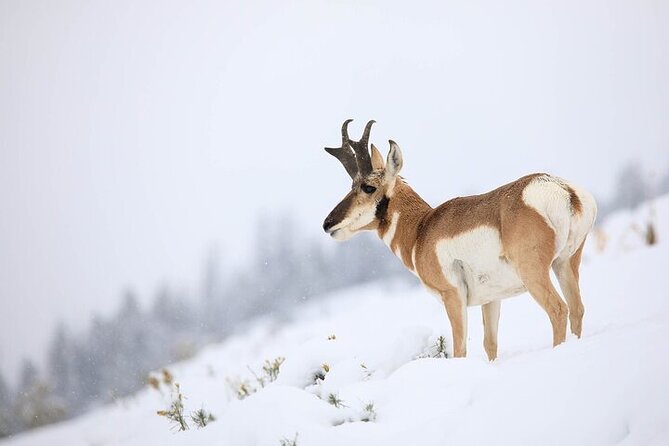
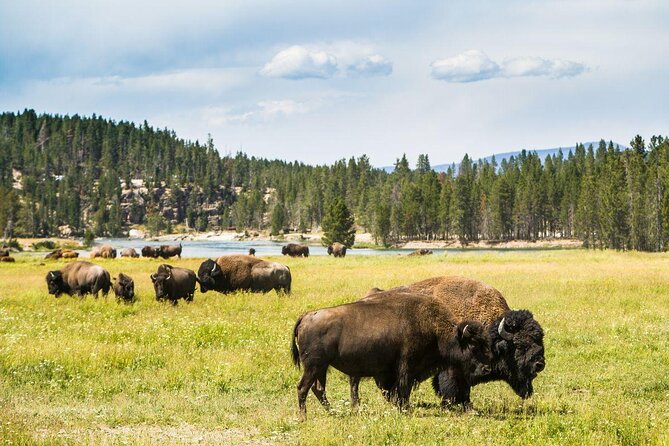
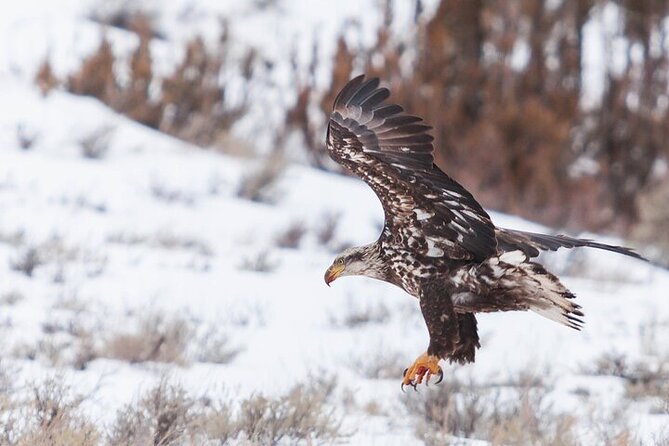
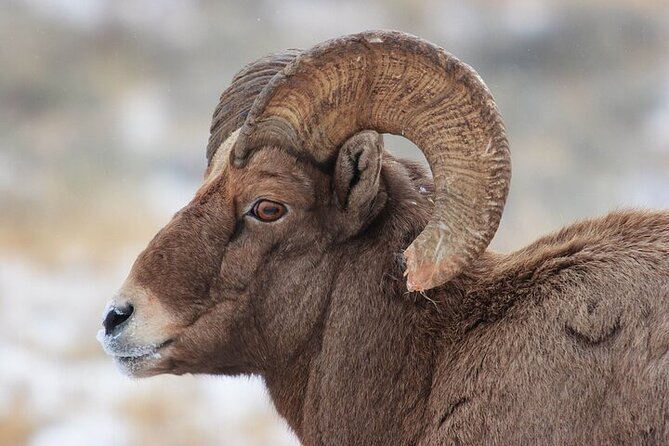
This is a wildlife safari, not a sightseeing bus with a fixed animal checklist. You might see bison, elk, mule deer, pronghorn, coyotes, wolves, foxes, moose, bighorn sheep, bald eagles, or other birds. Past outings have also produced bear sightings, including a mother with cubs and bears visible near a den. Those encounters are special, but they are not promised.
The guide’s job is part naturalist, part tracker, and part teacher. You can ask questions throughout the day about animal behavior, geology, park history, and the Greater Yellowstone Ecosystem. Guides have also used phone adapters with the spotting scopes to share short photos and videos after the outing, a useful extra if you want something more than a distant memory of a wolf on a hillside.
More Wildlife Safaris in the USA
- Grand Teton Wildlife Safari in a Enclosed or Open-Air Vehicle (season dependent)
★ 5.0 · 1,212 reviews - Half-Day Wildlife Safari Tour in Grand Teton National Park
★ 5.0 · 341 reviews - Half Day Grand Teton Wildlife Safari Tour
★ 5.0 · 259 reviews
The 7 a.m. start from Bozeman
You meet at Café M, 777 E. Main Street in Bozeman, at 7 a.m. The activity lasts about 10 to 11 hours and returns to the same meeting point. Hotel pickup and drop-off are not included, so plan your own way to the café and allow extra time for the early start.
The schedule is demanding but sensible for the amount of ground covered. You will spend much of the day in a vehicle, with stops for wildlife viewing, scenery, food, and short walks or explorations. The group is capped at eight people, a useful limit for a day when everyone needs a clear view through a scope.
Children must be at least eight years old. If your child needs a booster or car seat, you must bring it. Most people can take part, but remember that winter conditions, long hours, and repeated getting in and out of the vehicle can make this tiring.
Mammoth Hot Springs and the North Entrance
Mammoth Hot Springs is one of the best early stops because it introduces Yellowstone’s volcanic character before the wildlife search takes over. Its travertine terraces form as mineral-rich water deposits calcium carbonate over time. The terraces can look like frozen cascades, with pale stone and pools marked by brown and reddish algae.
Your guide explains the geological and historical meaning of the area rather than leaving you to simply snap a photo and move on. This is also a good place to get oriented to the park’s north entrance region.
The nearby Roosevelt Arch adds a human layer to the morning. Built in 1903 from hexagonal blocks of columnar basalt, the arch rises 52 feet at the entrance in Gardiner, Montana. It was intended as a grand gateway to the world’s first national park. The park entrance later shifted south of Gardiner, but the arch remains an important historic marker.
The Albright Visitor Center and Museum continues that story. It occupies a historic building once used as quarters for cavalry troops who protected Yellowstone before the National Park Service was created. The one-hour stop gives you a chance to warm up, learn about park management, and see how Yellowstone was guarded and administered in its early years.
Petrified trees and the volcanic past
The petrified redwood is a quick stop, about 30 minutes, but it gives the guide a chance to explain why Yellowstone looks so different now from millions of years ago. A redwood in this setting seems odd until you learn that ancient volcanic activity and changing environments helped preserve trees as stone.
This stop is less about a long walk and more about connecting the visible object to the park’s past. If you enjoy geology, it adds welcome variety to a day focused on animals. If your priority is wildlife alone, it is one of the shorter stops you may value mainly for the guide’s explanation.
More Big Five and Wildlife Safaris in the USA:
- Yellowstone Wildlife Safari from Bozeman – Private Tour
★ 5.0 · 140 reviews - Half Day Group Sunset Wildlife Safari
★ 5.0 · 134 reviews - Offshore Wildlife Safari and Reef Snorkel
★ 5.0 · 43 reviews - Yellowstone Wildlife Safari in Lamar Valley from Bozeman
★ 5.0 · 35 reviews
Tower Fall and the Yellowstone River
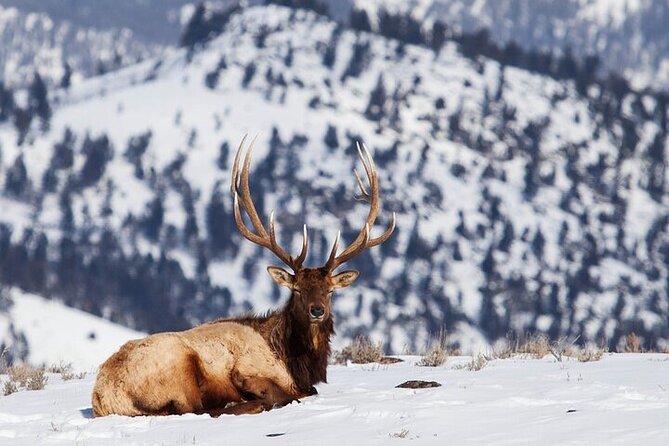
Tower Fall takes about 30 minutes. The waterfall gets its name from the tall rock pinnacles near its brink, shaped by erosion. That same erosion is slowly pushing the falls upstream, though the change is far too gradual to watch during one visit.
The Yellowstone River stop shifts attention back to wildlife. The river begins in the Absaroka Range at the Continental Divide, runs north through Yellowstone and Paradise Valley, then continues across Montana toward the Missouri River. Its tributaries support a large river system and provide habitat for many species.
The river is also known for trout, though this safari is not a fishing trip. Your guide may use the river corridor as a place to scan for animals and birds. Water, open banks, and nearby slopes can make a productive viewing area, but you should expect the guide to keep moving if conditions or sightings call for it.
Slough Creek and the search for wildlife
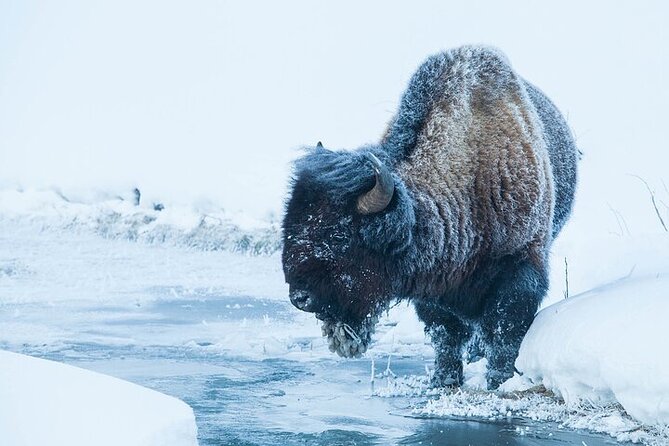
Slough Creek is a tributary of the Lamar River, flowing down from the Absaroka Range. The area supports varied plant and animal life, so the safari makes multiple stops rather than treating it as a quick photo break.
This is where the supplied optics matter most. An animal may be far across a valley or partly hidden near a slope. Binoculars give you a personal view, while the spotting scope helps the group examine details that your eyes would miss. Grant, for example, has been praised for setting up a scope that made distant wolves visible.
Do not expect a nonstop parade of animals. Good wildlife viewing includes quiet stretches, scanning, waiting, and learning how to read the terrain. A patient guide can make that process interesting even when the animals stay far away.
Two hours in Lamar Valley
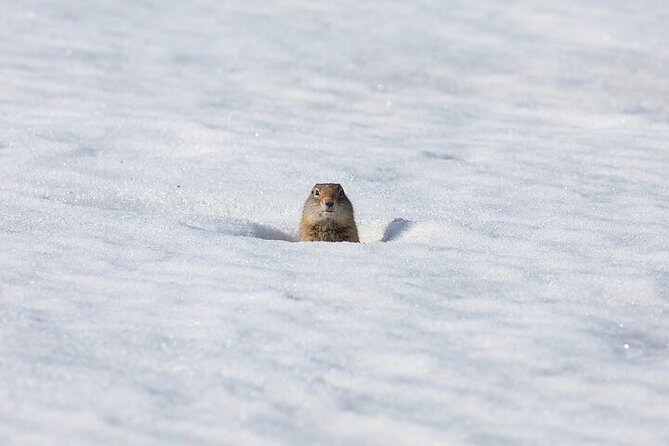
Lamar Valley is the heart of the safari. The valley is often called the Serengeti of North America because of its open country and concentration of wildlife. The two-hour visit, with several stops, gives you the best chance to slow down and search properly.
You might see bison grazing or moving across the road, elk in open areas, coyotes working the valley, foxes, pronghorn, mule deer, moose, bighorn sheep, or bald eagles. Wolves are among the most exciting possibilities, especially when the guide locates a pack at a distance and positions the scope.
The wide views are part of the reward. Even when wildlife is scarce, the Absaroka Range and the broad valley make the drive worthwhile. One guide, Adam, was praised for making a day successful even with limited animal sightings by finding every available opportunity and adjusting the pace to the group.
That flexibility matters. You may want a quick walk to a viewpoint, while another person in your group may need a slower pace or more frequent breaks. Guides have accommodated elderly family members, dietary needs, bathroom stops, and different levels of walking ability. The experience is still active, but it is not built around strenuous hiking.
Lunch, snacks, and the practical details
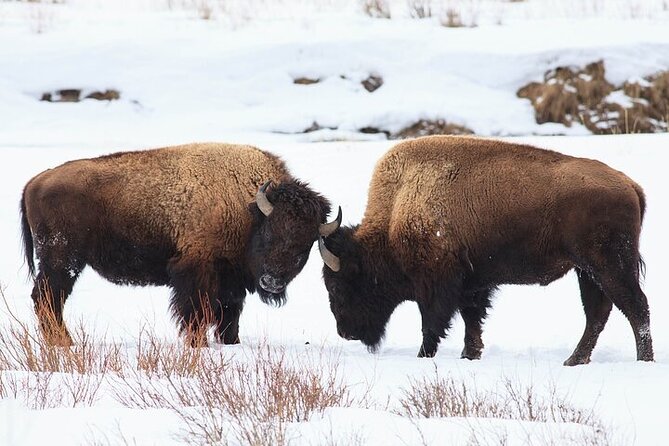
A picnic lunch is included and uses local, seasonal ingredients. It is packed with recyclable and compostable materials, a small but sensible touch in a national park setting. Local snacks, organic when possible, and non-alcoholic drinks are also provided.
The food helps justify part of the price because you do not need to organize lunch during a long day away from Bozeman. It also keeps the schedule flexible. Instead of losing time searching for a meal, the group can eat during an appropriate stop.
Dietary needs have been accommodated on past outings, but you should communicate those needs when booking. The supplied information confirms that food can be adapted, but it does not list a standard menu, so do not assume a particular meal or snack.
The Yellowstone entrance fee is not included. Budget another $20 per person for the park admission. The listed tour price is $350 per person, with group discounts available. For that price, you are paying for transport during the day, a professional naturalist guide, optics, food, drinks, and the benefit of having someone else manage the route and wildlife search.
That is good value if you have one Yellowstone day and want to focus on the northern range. It is less compelling if you already have a vehicle, plenty of time, and a strong interest in exploring independently.
Weather, wildlife, and the limits of the promise
This activity requires good weather. If poor weather causes cancellation, you are offered another date or a full refund. Yellowstone winter conditions can change quickly, so this policy matters.
The tour cannot promise bears, wolves, or any particular animal. Recent outings have included impressive sightings such as grizzlies, bear dens, wolves, moose, bison, coyotes, eagles, and pronghorn. Other days may produce fewer animals but still offer geology, scenery, history, and a skilled search.
That uncertainty is part of the experience. The strongest guides do not simply drive you to a viewpoint and hope for luck. They scan, listen to reports, explain animal behavior, and use the scope to help you see what is already there. Gabrielle, Gary, Elizabeth, Zach, Alan, Grant, and other guides have been praised for their energy, patience, and ability to answer questions.
Who should book this day out
I would choose this safari if you want Yellowstone’s wildlife but do not want to plan roads, stops, optics, lunch, and animal searches yourself. It also suits families with older children, couples, solo visitors, and anyone with just one available day.
It is especially useful for first-time visitors who might otherwise miss small animals or distant wolves. A guide can point out what you are looking at and explain why an animal is using a particular riverbank, slope, or open meadow.
You may want to skip it if you dislike early mornings, long vehicle days, or uncertain results. The tour covers a lot of territory, and winter weather can make the day feel long. It is also not the right choice if your main goal is hiking, since the focus is wildlife viewing from roads and short stops.
Should you book the Yellowstone Winter Wildlife Safari?
Book it if wildlife is your main Yellowstone goal and you value a guide who can find animals, explain the park, and provide the gear you need. The small group, full-day schedule, included lunch, and strong record of sightings make the $350 price easier to accept, even after adding the $20 entrance fee.
I would book early, since the experience is often reserved about 30 days ahead and the group holds only eight people. Choose it with realistic expectations: you may see wolves, moose, bears, or bison, but the guaranteed experience is a well-organized day of searching, learning, and seeing Yellowstone’s northern country in winter.
FAQ
Where does the Yellowstone Winter Wildlife Safari start?
The safari starts at Café M, 777 E. Main Street in Bozeman, Montana.
What time does the safari begin?
The start time is 7 a.m.
How long does the experience last?
The safari lasts approximately 10 to 11 hours and ends back at the Bozeman meeting point.
Is hotel pickup and drop-off included?
No. Hotel pickup and drop-off are not included. You meet at the specified café and return there at the end.
What is included in the price?
The price includes the winter wildlife safari, a professional naturalist guide, UHD binoculars, spotting scopes, a locally sourced picnic lunch, local snacks, and non-alcoholic beverages.
Is the Yellowstone entrance fee included?
No. The Yellowstone National Park entrance fee is listed separately at $20 per person.
How many people can join the group?
The activity has a maximum of eight travelers.
Can children participate?
Children aged eight and older may participate. If your child needs a booster seat or car seat, you must bring it.
Can I cancel for a full refund?
Yes. You can cancel at least 24 hours before the start time for a full refund. Cancellations or changes made less than 24 hours before the start time are not accepted for a refund. If the operator cancels because of poor weather or too few participants, you are offered another date or a full refund.
More Winter Adventures in the USA
- Private Yellowstone Winter Wolf Watching and Wildlife Safari
★ 5.0 · 26 reviews - Yellowstone Winter Wildlife & Snowshoe Tour | PRIVATE
★ 5.0 · 19 reviews - Yellowstone Snowshoe Safari from Bozeman – Private Tour
★ 5.0 · 18 reviews - Levi: Winter Wilderness Husky & Reindeer Safari Combo Tour
★ 4.4 · 156 reviews
Just added around the USA
- 3 Hour See Crystal River Wildlife Safari Boat Cruise★ 4.5 · 25 reviews
- Northern Yellowstone Safari from Cody, WY★ 4.5 · 24 reviews
- Red Canyon Wild Mustang Tours And Safaris In Cody Wyoming★ 5.0 · 27 reviews
- Wetlands Safari Eco-Cruise in Cape May (Osprey Birding By Boat)★ 5.0 · 113 reviews
- Yellowstone Wildlife Safari from Bozeman – Private Tour★ 5.0 · 140 reviews
- Yellowstone Winter Wildlife & Snowshoe Tour | PRIVATE★ 5.0 · 19 reviews
- Yellowstone Wildlife Safari in Lamar Valley from Bozeman★ 5.0 · 35 reviews
- Yellowstone Snowshoe Safari from Bozeman – Private Tour★ 5.0 · 18 reviews
USA Safaris, compared.
Grand Teton Wildlife Safari in a Enclosed or Open-Air Vehicle (season dependent)
Read our review →
Everglades Airboat Safari Adventure with Transportation
Read our review →
Off the Beaten Path Ketchikan Photo Safari – 3 hr.
Read our review →
Kauai Deluxe Waterfall Safari: Helicopter Tour
Read our review →
Wild Florida Drive-Thru Safari and Gator Park Admission
Read our review →
Wild Dolphin Watching and Snorkel Safari Off West Coast of Oahu
Read our review →
Dana Point Dolphin and Whale Watching with Underwater Viewing
Read our review →Browse the lists this tour appears in