
REVIEW · ARUSHA
6 Days Mid-Range Tanzania Safari
The best part of this safari is the range packed into six days: Tarangire’s baobabs and elephants, the open Serengeti, and a close look into Ngorongoro Crater. I like the private format, which lets you shape the pace with your guide, and the chance to finish with a local market visit rather than only ticking off national parks.
I also like that airport pickup, meals, park fees, transport, and onboard WiFi are included. The main caution is the amount of driving. Day 3 is a long transfer into the Serengeti, and the schedule shown for the start time, 11:30 pm, should be confirmed before booking.
Key points to know before booking
- Private safari vehicle: Your group travels alone, with private transportation rather than a shared departure.
- Three major wildlife areas: Tarangire, Serengeti, and Ngorongoro each offer a different setting and wildlife experience.
- Season matters: The Great Migration and calving season are tied to animal movement, so sightings cannot be promised on fixed dates.
- Useful family option: The operator has experience hosting a family with a five-year-old and providing a child-friendly guide.
- Local guide service: Guides associated with the company include Sway, Emma, Abuu, and French-speaking guides, though your assigned guide should be confirmed.
- Good onward connection: Day 6 returns you to Arusha for lunch before a possible flight to Zanzibar or home.
Why this six-day route works
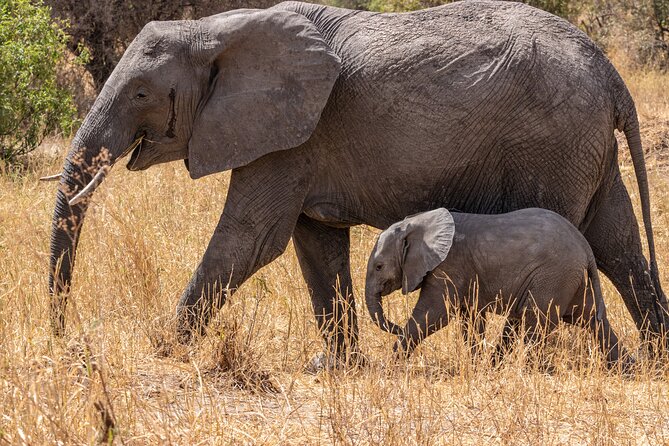
Northern Tanzania gives you some of Africa’s most famous wildlife areas in a compact route. You begin near Arusha, head to Tarangire, cross toward the Serengeti through the Ngorongoro Conservation Area, then return through Ngorongoro before finishing in Arusha.
That route is efficient, but not easygoing. You spend several hours in a safari vehicle on some days, often over rough park roads. I would choose this trip for the parks, animals, and private guiding, not for long stretches of relaxed hotel time.
The advertised cost is $2,740 per person. That is a serious sum, but the value depends on what is included. Private transportation, park charges, five breakfasts, five lunches, four dinners, and five nights of accommodation are part of the package. Flights, visas, travel insurance, and tips are extra.
For a private six-day safari across three major destinations, the price can make sense, especially if you are traveling as a couple or small private group. Still, ask for the exact accommodation names before paying. Mid-range can mean a comfortable lodge in one place and a simpler tented camp in another.
The company has also handled customized trips, French-language guiding, airport transfers, and combinations of safari with Zanzibar. That flexibility matters if you want to adjust the route or continue to the coast.
A few more safaris around Arusha worth a look
- Private 6-Day Tarangire Manyara Crater and Serengeti with Mid-Range Lodges
★ 5.0 · 238 reviews - 6 Days Private Budget Safari
★ 5.0 · 163 reviews - 6 Days Tanzania Budget Camping Safari
★ 5.0 · 145 reviews
Day 1: Arusha, airport pickup, and a first look at Tanzania
Your trip begins with a pickup at Kilimanjaro International Airport, followed by a transfer to your Arusha hotel. The plan also includes a town tour and a possible view of Mount Kilimanjaro.
Arusha is the practical gateway to Tanzania’s northern parks. It is where many safari companies organize vehicles, guides, food, and park permits. A short town visit gives you a gentler start than driving directly into a game park after a long international flight.
The Kilimanjaro view is a pleasant extra, but do not treat it as guaranteed. Clouds can cover the mountain, and the route description does not specify a dedicated mountain excursion.
One detail needs attention here: the listed meeting time is 11:30 pm, while the first day is described as airport pickup and a town tour. That may be a platform error, a late-night arrival time, or a special pickup arrangement. Confirm the actual start time, airport meeting point, and hotel transfer before you travel.
Day 2: Tarangire’s elephants and baobab trees
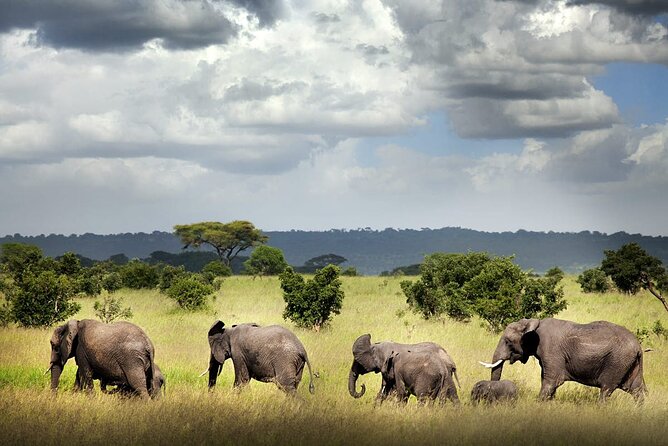
After breakfast, you collect a packed lunch and drive to Tarangire National Park for a full-day game drive. The park is known for its large elephant population and giant baobab trees, two features that give it a different feel from the Serengeti.
Tarangire is not just a warm-up park. Its mix of open grass, woodland, river country, and old baobabs can produce a varied day in the vehicle. You may see elephants, giraffes, zebras, wildebeest, buffalo, baboons, lions, leopards, cheetahs, hippos, and many bird species. No sighting is assured, but the list reflects the park’s broad wildlife range.
The day is shown as about eight hours. That includes driving to the park, game viewing, and the return journey, so the exact time inside the park may depend on your accommodation and the road conditions.
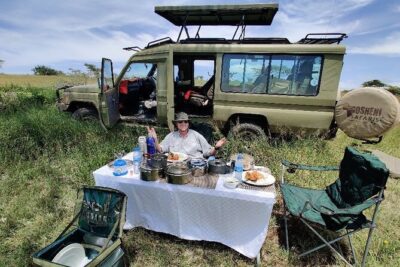
I like the picnic lunch setup here because it keeps the day moving. You avoid returning to a lodge in the middle of the game drive, giving your guide more freedom to follow wildlife activity. The tradeoff is simple: you eat outdoors or in a designated park setting rather than at a dining table.
Tarangire is a strong choice for people who want elephants and striking scenery early in the trip. If you prefer a slower start after arriving from overseas, ask how long the drive will be from your accommodation.
Day 3: Crossing the Ngorongoro area into the Serengeti
Day 3 is the route’s big transition. After breakfast in the Karatu area, you leave with a picnic lunch, pass through the Ngorongoro Conservation Area, and continue toward Serengeti National Park with game viewing along the way.
This is a long, full day in a vehicle. The listed activity time is about six hours, but the actual day may feel longer because it combines a transfer, changing roads, and an afternoon game drive. Confirm the expected departure and arrival times with the operator.
The payoff is the first sight of the Serengeti plains. The name comes from the Maasai word Siringeti, meaning endless plains, and the open country explains why the park has such a strong place in safari culture. The Serengeti covers about 14,763 square kilometers and supports large populations of grazers and predators.
Your afternoon drive may bring zebras, wildebeest, giraffes, buffalo, lions, and many bird species. The park is also one of Tanzania’s best places to look for the Big Five, though the timing and location of animals always matter.
The Great Migration is an important point to understand. Animal movement changes through the year, and the southern plains are especially associated with wildebeest and zebra during certain periods. If migration sightings are your main goal, ask the company where the animals are expected to be during your travel dates instead of assuming the itinerary guarantees them.
Same country, a different kind of drive:
- Balloon Safari & Bush Breakfast in Serengeti – Miracle Experience
★ 5.0 · 1,646 reviews - 4 Days Group Camping Safari
★ 5.0 · 1,101 reviews - 5 Days Group Camping Safari
★ 5.0 · 730 reviews - 3 Days Serengeti & Ngorongoro Group Camping Safari
★ 5.0 · 574 reviews
Day 4: A full Serengeti game-drive day
You get a full day in the Serengeti, with two lunch choices. You can return to your lodge or camp for a hot lunch, or take a packed lunch and remain out for the day.
This is one of the strongest parts of the program. A full day gives your guide room to search different areas rather than rushing back for a fixed meal. It also gives you more time to wait quietly near an active sighting, follow tracks, or simply enjoy the plains without treating every stop like a race.
The hot-lunch option suits you if comfort matters and your accommodation is close enough to make the return worthwhile. The packed lunch is better if you want the longest possible wildlife day. Ask your guide which choice fits the day’s animal activity and the distance from camp.
The Serengeti is not a small park with animals gathered around one viewing point. Drives can involve long quiet stretches, but those open spaces are part of the experience. You may see nothing for a while, then come upon a herd, a lion, or a bird of prey without warning.
A good guide makes a major difference here. The company has used guides named Sway, Emma, and Abuu, and its safari programs include French-speaking guiding. Those names do not confirm who will lead your trip, so request the assigned guide and language before departure. The most useful guide is not simply someone who points out animals. You want someone who explains behavior, answers questions, and adjusts the day to your interests.
Day 5: Ngorongoro Crater and the Maasai setting
You leave for the Ngorongoro Conservation Area with a picnic lunch and spend the day on a crater tour. The Ngorongoro Crater is the world’s largest unbroken, unflooded caldera, formed when a large volcano erupted and collapsed inward.
The crater’s enclosed setting can make wildlife viewing feel concentrated. You may look for elephants, lions, buffalo, hippos, and other animals in a relatively compact area. The Big Five are possible, but sightings depend on season, weather, and luck.
Ngorongoro is also different from a national park because Maasai pastoralists share the wider conservation area with wildlife. That human presence is important context. The region is not simply empty wilderness, and the itinerary recognizes the connection between wildlife protection and local livelihoods.
The Ndutu area, north and northwest of the crater, is linked with wildebeest and zebra calving from December through April. That does not mean every crater tour reaches the calving area, so ask whether Ndutu is part of your route if calving season is a priority.
The crater day is listed at about seven hours. It may be shorter than the Serengeti day, but crater roads can still be rough, and the descent and ascent add time. The picnic lunch keeps the schedule practical.
I would not choose this safari only for the crater. Its value comes from the contrast between the crater, Tarangire’s baobabs, and the wide Serengeti. Each place gives you a different type of day.
Day 6: Mto wa Mbu market and return to Arusha
Your final morning takes you to Mto wa Mbu for a local market visit. The goal is to see daily life, meet local people, and experience the market atmosphere before returning to Arusha for lunch.
This is a smart ending. After several days focused on animals and national parks, a market stop brings you back to ordinary Tanzanian life. It also gives you a chance to buy small goods or souvenirs, though the exact market activities and shopping options are not specified.
The return to Arusha is followed by a hot lunch and then a possible flight to Zanzibar or home. The activity time is listed at about five hours, but flight connections require careful planning. Ask for a realistic drop-off time and leave enough margin before any onward flight.
If you are flying to Zanzibar, this itinerary can work well as the safari portion of a longer Tanzania trip. The company has also arranged safari and beach combinations, so you can ask whether they will coordinate the transfer and flight booking, even though flights are not included in the price.
Private travel, meals, and comfort
The private format is a major advantage. Only your group participates, so you are not tied to strangers’ interests or a shared vehicle schedule. You can discuss wildlife priorities, lunch timing, photography stops, and the balance between longer drives and time at camp.
Private does not mean luxurious. The trip is described as mid-range, and the included meals are practical safari meals rather than a full luxury package. Breakfast, lunch, and dinner coverage is generous, but the exact distribution is four dinners and five breakfasts and lunches, so confirm which meals are included on arrival and departure days.
Onboard WiFi is included, though signal strength in remote park areas can vary. Use it as a useful extra, not as a reason to expect steady internet during every game drive.
The listed physical requirement is moderate fitness. You should be comfortable with long vehicle rides, uneven roads, getting in and out of a safari vehicle, and full days outdoors. No special hiking program is described.
Guide service and the human side of the trip
The strongest personal element in the available feedback is the guide service. Specific guides named include Sway, Emma, and Abuu, with praise for patience, humor, kindness, and careful attention to requests. One family with a five-year-old found the guide especially good with children.
That is useful information, but you should turn it into a booking question. Ask who your guide will be, what languages they speak, how many people will share the vehicle, and whether the guide has experience with children or photography.
The company is local, and its staff has helped people shape five- and six-day programs, arrange airport pickup, and continue trips to Zanzibar or Mafia Island. If you have special interests, raise them before booking rather than hoping the standard route will cover them.
Is $2,740 per person good value?
At $2,740 per person, this is not a budget safari. It can still be fair value for a private six-day trip that covers three major wildlife areas, park fees, transport, meals, and accommodation.
The price makes more sense when you consider the distance involved and the need for a dedicated vehicle and guide. It makes less sense if the accommodation is very basic, if the vehicle is shared despite the private-tour description, or if you expect flights and insurance to be included.
Before confirming, request a written breakdown with:
- Exact lodge and camp names
- Number of nights at each property
- Vehicle and group arrangement
- Assigned guide and language
- Airport pickup and final drop-off times
- Any extra conservation or crater fees
- Cost of onward flights to Zanzibar
Tips for the driver-guide are not included. Travel insurance, visas, and all flights are also your responsibility.
Who should book this safari?
I would recommend it to couples, families, and small groups who want a private northern Tanzania route without paying for a luxury camp-only program. It suits you if seeing major parks matters more than spending long hours at one lodge.
Families should discuss the child’s age and daily driving times in advance. The operator has handled a trip with a five-year-old, which is encouraging, but every child responds differently to early starts and rough roads.
First-time safari visitors may appreciate the airport pickup, town orientation, included meals, and the option to continue to Zanzibar. Experienced safari visitors should ask sharper questions about seasonal wildlife locations, camp quality, and the exact vehicle.
The cancellation terms are generous if your plans change: you can receive a full refund when canceling at least 24 hours before the local start time. Changes or cancellations within 24 hours are not refunded.
Should you book it?
Book this safari if you want a private, well-rounded introduction to northern Tanzania and you are comfortable with long drives. The route gives you elephants and baobabs in Tarangire, broad Serengeti game viewing, Ngorongoro’s crater, and a final local market stop.
I would pause before booking if you need luxury accommodation, guaranteed migration sightings, or a relaxed schedule with few transfers. Confirm the strange 11:30 pm start time, exact lodging, guide, vehicle, and seasonal wildlife plan first. With those details settled, this looks like a practical way to combine Tanzania’s headline parks with personal guiding and a useful Zanzibar connection.
FAQ
Where does the safari start?
The listed meeting point is Arusha Clock Tower at the Clocktower Roundabout in Arusha, Tanzania. Airport pickup from Kilimanjaro International Airport is also included in the first day’s plan.
Where does the safari finish?
The activity ends back at the meeting point in Arusha. On Day 6, you may also fly to Zanzibar or return home after lunch, but flights are not included.
How long is the safari?
The safari lasts approximately six days.
Which national parks and conservation areas are included?
The route includes Tarangire National Park, Serengeti National Park, and the Ngorongoro Conservation Area.
Is this a private tour?
Yes. The tour is described as a private activity, so only your group participates.
Are meals included?
Yes. The package includes four dinners, five breakfasts, and five lunches. Picnic lunches are used on several game-drive days.
Are flights included?
No. All flights are excluded, including flights to Zanzibar or flights home.
What happens if I cancel?
You receive a full refund if you cancel at least 24 hours before the experience start time. Cancellations or changes made within 24 hours are not refunded.
Just added around Arusha
- 6 days Tanzania budget safari★ 5.0 · 65 reviews
- 7 days great migration safari★ 5.0 · 77 reviews
- serengeti, ngorongoro & tarangire 5days private tour★ 5.0 · 77 reviews
- 5 days safari, hiking & culture (Serengeti & kilimanjaro)★ 5.0 · 27 reviews
- 5-Day Mid-Range Safari in Tanzania★ 5.0 · 33 reviews
- 4 days safari★ 5.0 · 34 reviews
- serengeti & ngorongoro 3 days private tour★ 5.0 · 15 reviews
- serengeti, ngorongoro & tarangire 4 days private tour★ 5.0 · 18 reviews
Arusha Safaris, compared.
Balloon Safari & Bush Breakfast in Serengeti – Miracle Experience
Read our review →
3 Days Serengeti & Ngorongoro Group Camping Safari
Read our review →
7-Day Premium Luxury Tanzania Safari All-Inclusive
Read our review →
5-Day Highlights mid-Range Crater, Serengeti, Tarangire
Read our review →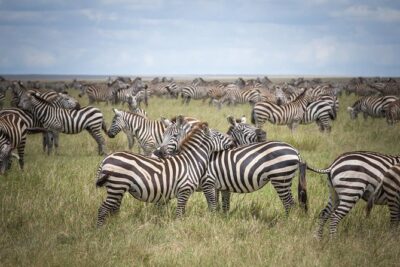
8 Days Great Wildebeest Calving Migration Safari from Arusha
Read our review →Browse the lists this tour appears in