
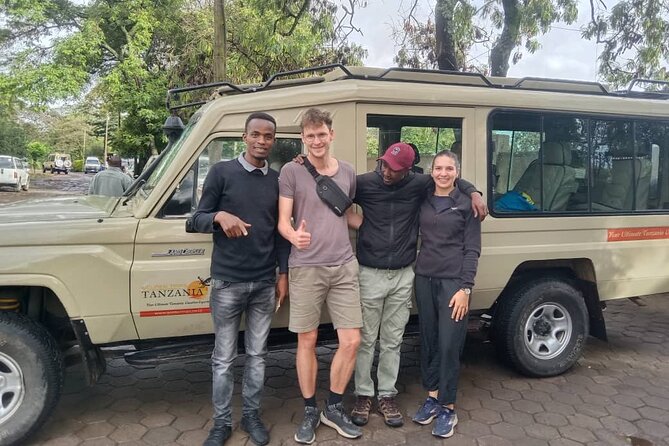
REVIEW · ARUSHA
4 Days Wildlife Safari and Cultural Experience in Tanzania
Tarangire’s great elephant herds, Ngorongoro Crater’s crowded wildlife plain, and a possible hunt with the Hadzabe make this four-day safari unusually varied. You move from classic game drives to a direct cultural encounter, rather than spending every day looking for animals from the same road.
I like the private vehicle and guide-chef team, which give your group more control over stops and meals. I also like the price: $1,231 per person covers park fees, camping equipment, food, water, and guiding across four major destinations. The main consideration is pace. Ten-hour days, basic camping, and long road transfers can leave you tired.
Key points to know before booking
- Elephant country on day one: Tarangire is famous for herds that can reach about 300 animals.
- Four very different settings: You see Tarangire, Lake Manyara, Ngorongoro Crater, and Lake Eyasi in one compact trip.
- A private safari setup: Only your group takes part, with a driver-guide and chef traveling with you.
- Camping keeps the price reasonable: Tents, sleeping mats, chairs, tables, meals, water, and park fees are included.
- The Hadzabe visit is not guaranteed: Their nomadic lifestyle means the cultural encounter depends on where they are and whether arrangements can be made.
- Expect long, full days: The first three days are listed at about 10 hours, followed by an eight-hour Lake Eyasi day.
Four days from Arusha, with wildlife and culture in one route
This is a compact northern Tanzania safari for someone who wants more than a single national park but does not have a week to spare. Starting and ending in Arusha, the trip links four destinations with very different moods.
Tarangire gives you big elephant sightings and broad open country. Lake Manyara brings forest, birds, hippos, and the possibility of lions resting in trees. Ngorongoro Crater offers the strongest concentration of large animals. Lake Eyasi changes the focus from wildlife to people, with the chance to spend time near the Hadzabe, one of East Africa’s last hunter-gatherer communities.
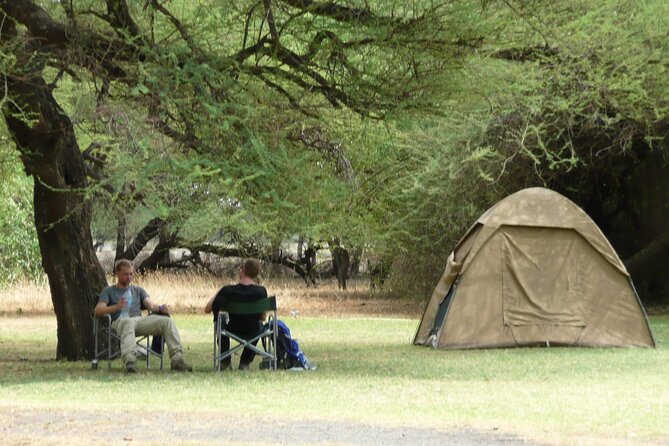
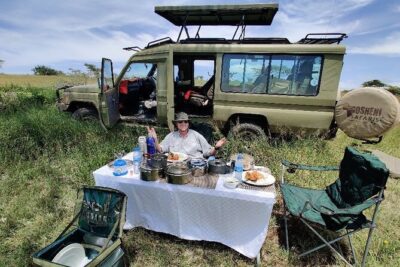
The trip is private, but that does not mean luxurious. You share the safari vehicle only with your own group, while a driver-guide handles the roads and wildlife viewing and a chef prepares the meals. Accommodation is in the basic camping category at public campsites in Tarangire and Ngorongoro.
One point needs clarification before you pay. The description refers to public campsites, then also mentions access to Wi-Fi, a swimming pool, a restaurant, bathrooms, and dining rooms. Those facilities may depend on the specific camp or lodge used. Ask Golden Trips Tanzania exactly where you sleep each night and what facilities are available.
More Wildlife Safaris in Arusha
- Big Five Luxury Safari in Tanzania
★ 5.0 · 68 reviews - 6 Day Tanzania Wildlife Mid range Safari
★ 5.0 · 54 reviews - 7-Day Midrange Tanzania Safari Adventures (Big 5)
★ 5.0 · 43 reviews
Day one: elephant country in Tarangire National Park
Your pickup is from an Arusha hotel, followed by a drive south toward Tarangire. The park is the first major wildlife stop, and it makes a strong opening because elephants are the headline attraction rather than a lucky extra.
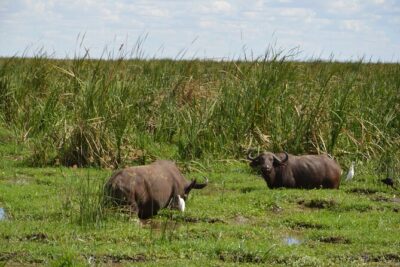
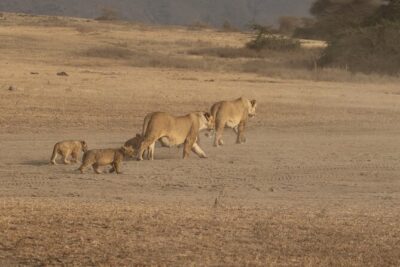
Tarangire is often called the Elephant Playground. Herds of up to 300 may gather, especially when dry conditions draw wildlife toward water and marshy areas near Lake Burungi. You might also see buffalo, lion, wildebeest, zebra, and gazelle, along with many smaller creatures that give the park its character.
The day begins early, with arrival at a picnic site around midday. After lunch, the afternoon game drive becomes the main event. Your guide’s ability to read animal behavior matters here. A good guide can help you pause for a herd crossing, position the vehicle for photographs, and explain why animals gather in one area rather than another.
Birdlife adds plenty of interest. Giant kingfishers, hoopoes, and white-bellied go-away birds are among the species named for this area. You do not need to be a serious birdwatcher to enjoy them. They give you something to look for between large mammal sightings and make the drive less dependent on finding a lion.
The drawback is the length of the day. A 10-hour schedule includes pickup, the road from Arusha, lunch, and game viewing. You will want a practical travel outfit, sun protection, and patience with rough park roads. The first day is exciting, but it is not gentle.
Day two: Lake Manyara’s trees, water, and birdlife
After breakfast at camp, you collect a picnic lunch and head to Lake Manyara National Park. The park is famous for tree-climbing lions, though you should treat them as a possibility rather than a promise.
Manyara offers a different kind of safari from Tarangire. The park includes woodland, open areas, and water, so the animal list can change quickly. You might see elephant, hippo, wildebeest, buffalo, and giraffe during the afternoon drive. Flamingos can add a pink flash near the lake, and the park has recorded around 400 bird species.
This is a useful day for anyone who enjoys variety. You can spend part of a drive watching large animals and another part looking into trees or scanning the water’s edge. The setting changes the way you search. At Tarangire, you may watch the road and open plains. At Manyara, you need to look up as well.
The itinerary returns to camp after the afternoon drive for dinner and rest. That sounds simple, but it matters. Safari days can involve dust, heat, jolting roads, and constant attention. A chance to sit down, eat a hot meal, and repack your day bag is part of the value of having a chef with the group.
Again, plan for about 10 hours. A picnic lunch keeps you in the park instead of sending you out for a restaurant meal, but it also means you spend much of the day outdoors. If you prefer relaxed sightseeing with late starts, this schedule may feel demanding.
Day three: Ngorongoro Crater’s concentrated wildlife
Ngorongoro is the trip’s major wildlife showpiece. The early morning game drive takes you into a huge volcanic caldera, where grassland, forest, and swamp create a striking setting for animal watching.
The crater floor supports more than 25,000 large mammals, helped by permanent water. You might see elephant, lion, leopard, hyena, jackal, hippo, waterbuck, baboon, and, with luck, the rare black rhino. No safari can guarantee a particular animal, but Ngorongoro gives you a strong chance to see a wide range in a relatively contained area.
The early start is worth taking seriously. Morning light is attractive for photographs, and animals are often active before the heat of the day. It also gives you more time to appreciate how unusual the crater is. You are not simply driving through open country. You are looking across a vast volcanic bowl with animals and Maasai cattle sharing the same protected area.
That human presence is important. The Maasai have grazed cattle in the conservation area, which has had separate conservation status since 1956 and UNESCO World Heritage status since 1978. The experience is not just about checking off the Big Five. You are also seeing how wildlife protection and pastoral life exist side by side, with limits and rules that shape the area.
Ngorongoro is also where you may feel the pressure of a basic camping trip most clearly. The day is long, the roads can be rough, and the early departure leaves little room for a slow morning. In exchange, you get one of Tanzania’s most memorable wildlife settings.
More Wildlife Safaris in Tanzania
- 5 Days 4 Nights Tarangire, Serengeti , Ngorongoro & Manyara Wildlife Safari
★ 5.0 · 40 reviews - Big Five Classic Safari in Tanzania **Sustainable Travel approach
★ 5.0 · 31 reviews - 2 days Mid Range Safari in Ngorongoro and Tarangire Big 5 Parks
★ 5.0 · 27 reviews - Elephant Special Serengeti & Ngorongoro Crater 5 Days / 4 Nights
★ 5.0 · 21 reviews
Day four: Lake Eyasi and the Hadzabe encounter
The final day shifts away from conventional game drives. At Lake Eyasi, you may spend time at camp with your guide or take part in activities connected with the Hadzabe.
The Hadzabe are a nomadic hunter-gatherer community, and the visit is not guaranteed. Their movement and daily priorities come first, so your guide can try to arrange the meeting, but no responsible operator should promise it as a fixed performance.
If the visit takes place, the most active option is a walk with members of the community during a hunt. Walks can cover 5 to 8 kilometers and may move quickly. If the group finds sizeable game, they may leave at speed, making it impossible for everyone to keep up. In that case, the guide brings you back to camp.
This is a useful point to consider before booking. The Lake Eyasi portion is not a polished cultural show with a fixed timetable. It is less predictable and more physically active. That uncertainty is part of its value, but it also means you need an open mind and reasonable fitness for walking.
You should also approach the visit with respect. The goal is not to treat people as a photo opportunity. Listen to your guide, follow local instructions, and understand that the community’s way of life is not arranged around your schedule.
The day is listed at about eight hours, making it shorter than the first three days. It is still a travel day, but the change of pace can be welcome after several wildlife drives.
What the private vehicle and guide setup really adds
The private format is one of the strongest features of this trip. Your group does not share the activity with unrelated parties, so you can discuss how long to spend at a sighting, how often to stop, and how much time to devote to birds or scenery.
The driver-guide is central to the quality of the safari. Names associated with the company include Gasper, Dan, Joseph, Ombeni, Manaki, and Samwel, though your assigned guide should be confirmed before departure. Past trips have been praised for careful driving, good animal spotting, patience with photographs, and a strong grasp of local wildlife and culture.
There is one useful caution. Some accounts describe guides who explained animals and nature very actively, while others wanted more commentary. If interpretation matters to you, tell the company before the trip that you want detailed explanations, not just transport between sightings.
The chef is another practical advantage. Three breakfasts, three dinners, and four lunches are included, along with mineral water. Dietary needs such as vegetarian, vegan, and gluten-free meals can be accommodated, but you should provide those details at booking.
Camping, comfort, and what to pack
The camping is described as basic, with tents, sleeping mats, chairs, tables, and related equipment supplied. A sleeping bag is not included, but you can rent one for $15.
This is not the right choice if you expect a private lodge room each night. It is a better fit if you are willing to trade some comfort for a lower safari price and a closer connection to the outdoors. The mention of bathrooms, toilets, dining areas, Wi-Fi, a restaurant, and a swimming pool suggests some camp or lodge facilities may be available, but confirm the exact arrangements.
Pack light, useful items: comfortable walking shoes, sun protection, a refillable water bottle, warm layers for early drives, and a small bag for each day. Alcoholic and soft drinks cost extra, as do souvenirs and personal purchases.
The safari starts and ends at the stated meeting point in Arusha. Airport pickup and drop-off are not included, but each can be booked for $50 per car. Visa fees, flights, insurance, and tips are also outside the package.
Is $1,231 a fair price?
At $1,231 per person, the cost is attractive for a private four-day safari covering four major destinations. Park fees, a professional English-speaking guide, a chef, camping equipment, meals, and water are included. Those inclusions prevent the price from being misleadingly low.
The value is strongest for two or more people sharing a private vehicle and for anyone who wants variety without adding Serengeti days. You receive three major wildlife parks or conservation areas plus a cultural stop, rather than spending the whole budget on one premium camp.
The tradeoff is clear: this is basic camping, not a luxury safari. Airport transfers, drinks, sleeping bag rental, tips, insurance, and visas add to your final spending. Ask for a written breakdown of camp facilities and any extra vehicle or conservation charges before confirming.
Who should book this safari?
I would recommend it to an active first-time safari visitor who wants elephants, big cats, crater wildlife, birds, and a cultural element in four days. It also suits couples, families with older children, and small private groups who value a dedicated vehicle.
It is less suitable for anyone who needs short driving days, guaranteed cultural meetings, or lodge-level comfort. The itinerary is full, and the Hadzabe visit depends on circumstances beyond the operator’s control.
The company’s strongest pattern is its guide team. Gasper and Dan are repeatedly associated with safe driving, animal knowledge, and careful attention to photographs, while Joseph, Ombeni, Manaki, and Samwel are also praised for kindness, organization, and field skills. Since guide quality can shape an entire safari, request a named guide if possible, or ask how assignments are made.
Should you book the four-day route?
Book this trip if you want a high-value, fast-moving safari with a real mix of wildlife and culture. Tarangire and Ngorongoro are the major draws, Manyara adds variety, and Lake Eyasi gives the route a human dimension.
Do not book it expecting a slow luxury holiday. Confirm the sleeping arrangements, ask about the exact guide, prepare for long days, and understand that the Hadzabe visit cannot be guaranteed. If those conditions suit you, $1,231 buys an impressively full introduction to northern Tanzania.
Cancellation is allowed for a full refund up to three full days before the start time. Changes or cancellations within three days are not refunded.
FAQ
Where does the safari start and finish?
The activity starts at the meeting point in Arusha, Tanzania, and ends back at that same meeting point.
Is airport pickup included?
No. Airport pickup is not included, but it can be arranged for $50 per car. Airport drop-off is also available for $50 per car.
Is this a private tour?
Yes. Only your group participates in the activity, and you travel in a private vehicle with your guide and chef.
What meals are included?
The package includes four lunches, three dinners, and three breakfasts. Mineral water is also included.
Is camping equipment provided?
Yes. Tents, sleeping mats, chairs, tables, and related camping equipment are included. A sleeping bag is not included, but rental is available for $15.
Is a visit with the Hadzabe guaranteed?
No. Because the Hadzabe are nomadic, the visit cannot be guaranteed. Your guide will try to arrange it when possible.
Can dietary requirements be accommodated?
Yes. Vegetarian, vegan, gluten-free, and other dietary requirements can be accommodated when provided in advance.
More 4-Day Experiences in Arusha
- 4 Days Group Camping Safari
★ 5.0 · 1,101 reviews - 4 Days Join Group tour Tarangire Serengeti and Ngorongoro crater
★ 5.0 · 219 reviews - 4-Day Safari from Arusha: Tarangire, Serengeti and Ngorongoro
★ 5.0 · 173 reviews - 4 Days safari Tour Tanzania
★ 5.0 · 159 reviews
More Big Five and Wildlife Safaris in Arusha
- Big Five Luxury 7 Days Safari Tour in Arusha
★ 5.0 · 20 reviews - Arusha: 3-Day Serengeti & Ngorongoro Crater Big Five Safari
★ 4.6 · 20 reviews - Big Five Dream Safari
★ 5.0 · 19 reviews - 8 Days 7 Nights Tanzania Wildlife & Culture Lodge Safari
★ 5.0 · 17 reviews
Just added around Arusha
- 6 days Tanzania budget safari★ 5.0 · 65 reviews
- 7 days great migration safari★ 5.0 · 77 reviews
- serengeti, ngorongoro & tarangire 5days private tour★ 5.0 · 77 reviews
- 5 days safari, hiking & culture (Serengeti & kilimanjaro)★ 5.0 · 27 reviews
- 5-Day Mid-Range Safari in Tanzania★ 5.0 · 33 reviews
- 4 days safari★ 5.0 · 34 reviews
- serengeti & ngorongoro 3 days private tour★ 5.0 · 15 reviews
- serengeti, ngorongoro & tarangire 4 days private tour★ 5.0 · 18 reviews
Arusha Safaris, compared.
Balloon Safari & Bush Breakfast in Serengeti – Miracle Experience
Read our review →
3 Days Serengeti & Ngorongoro Group Camping Safari
Read our review →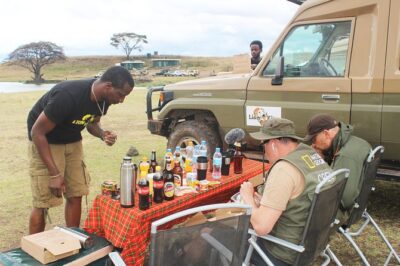
7-Day Premium Luxury Tanzania Safari All-Inclusive
Read our review →
5-Day Highlights mid-Range Crater, Serengeti, Tarangire
Read our review →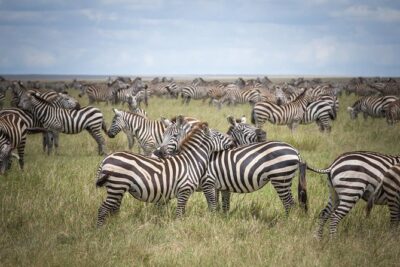
8 Days Great Wildebeest Calving Migration Safari from Arusha
Read our review →Browse the lists this tour appears in