
REVIEW · ARUSHA
3 Days Small Group Safari to Serengeti NP and Ngorongoro Crater Tour in Tanzania
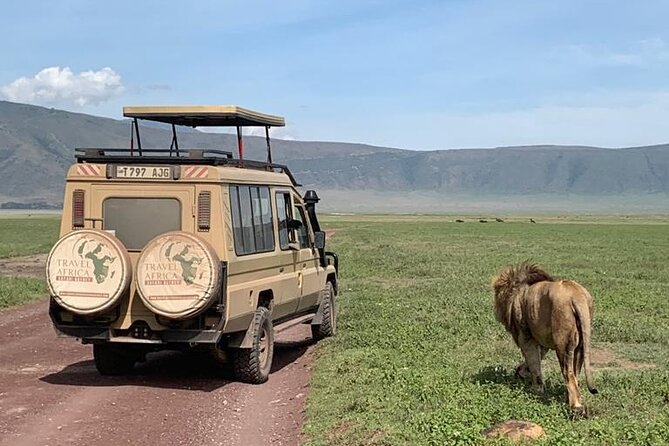
The great hook here is the two-park route. In only three days, you reach the open grasslands of the Serengeti, then descend into Ngorongoro Crater, where wildlife gathers in a natural bowl. I like the small maximum of six people and the fact that park fees, camping gear, meals, and an English-speaking guide are built into the price.
I also like the chance to travel with guides such as Omary or George, both praised for working hard to find animals and explain what you are seeing. The trade-off is the pace: day one includes about six hours on the road, and budget camping can be basic, with one reported stay lacking showers, lights, and cleanliness.
Key points to know before booking
- The route covers two very different wildlife areas: Serengeti plains and Ngorongoro Crater.
- The group is capped at six people, giving you a better chance to ask questions and share good viewing positions.
- Camping gear, park fees, and meals are included, which keeps the $815 price easier to judge.
- The first drive is long: about 335 kilometers to the southern Serengeti via the Ngorongoro gate.
- Guides matter greatly here: Omary and George are names associated with especially strong safari experiences.
- Camping standards may vary, so this suits you best if you value access to the parks over hotel comfort.
Two famous parks in three demanding days
This safari is built for a visitor who wants the classic northern Tanzania route without committing to a week in the bush. You leave Arusha, reach the Serengeti, spend time among its wildlife, continue to the Ngorongoro Conservation Area, descend into the crater, and return to Arusha.
The price is $815 per person. That includes all park fees, a professional English-speaking driver-guide, two breakfasts, three lunches, and two dinners. Camping gear is included as well. Travel insurance and tips for the guide and safari cook are extra.
That package offers solid value if you are comfortable with long road days and simple camping. A lodge-based safari covering both parks would normally cost more, but this is not the right choice if you expect polished accommodation every night.
The group limit is six people. That matters in a safari vehicle. You have more room to see out, fewer people competing for the best view, and a better chance to get your guide’s attention when you want to ask about tracks, animal behavior, or the next stop.
More National Park Safaris in Arusha
- 5-Day Highlights mid-Range Crater, Serengeti, Tarangire
★ 5.0 · 296 reviews - Private 6-Day Tarangire Manyara Crater and Serengeti with Mid-Range Lodges
★ 5.0 · 238 reviews - 5 Days Camping Tarangire, Serengeti & Ngorongoro crater & Visiting Maasai
★ 5.0 · 229 reviews
Day one: the long road to Serengeti
The day begins with breakfast at about 7 a.m. Pickup is listed for around 8 a.m. from Arusha Tourist Inn on Sokoine Road. From there, you face a roughly six-hour drive covering about 335 kilometers, heading toward the southern Serengeti through the Ngorongoro gate.
This is the part of the trip you need to understand before booking. The Serengeti is not close to Arusha, and reaching it by road takes time. The benefit is that the drive connects the journey to the parks instead of requiring a separate flight or a more expensive private transfer. The cost is a long first day, especially if road conditions or park entry procedures slow things down.
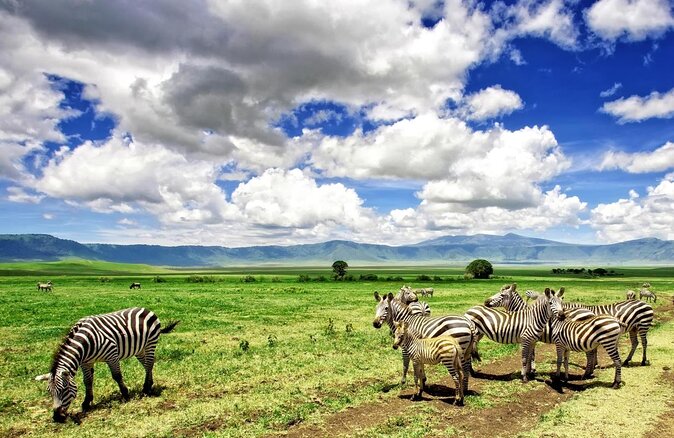
Once you reach the southern and central Serengeti, the scenery changes into broad savannah grassland. The Maasai name Serengeti is commonly explained as meaning endless plains, and the description fits the southern zone. The open ground supports wildebeest, zebra, Coke’s hartebeest, waterbuck, Grant’s gazelle, Thomson’s gazelle, impala, and other grazing animals.
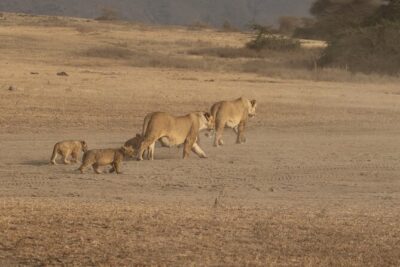
You are not simply driving through empty grass. The southern zone offers wide sight lines, which can make it easier to scan for large herds and predators. Your guide’s skill matters here. A good guide will watch the behavior of grazing animals, look for unusual movement, and use radio communication or local knowledge to improve the odds of finding wildlife.
The Seronera Valley adds more variety. Acacia trees and rocky kopjes break up the open grass. These rock outcrops give predators a high point from which to watch for prey, while smaller animals such as hyrax use the rocks for shelter. Leopards are noted as common in this area, although no safari can promise a particular sighting.
The first day includes game viewing after the drive, so you do not lose the entire afternoon to transport. Still, the timing may feel tight. You are covering a great distance, entering the park, and beginning a game drive on the same day. Keep your expectations realistic: this is an efficient route, not a leisurely camp-based safari.
Why the Seronera Valley matters
Seronera is a useful middle ground between open plains and thicker acacia growth. The mix creates better conditions for different types of wildlife, and the kopjes give the area a distinctive look. You might see grazers in the open, then shift your attention to rocks and trees where predators or smaller animals may be resting.
The itinerary also refers to a hippo habitat. Hippos add a different kind of wildlife encounter from the usual big cats and grazing herds. You may see them gathered in water, with only their eyes and ears visible, or hear their calls before you get a clear view.
This is where a professional guide earns the cost of the safari. The animals are not arranged for easy viewing, and the most interesting moments can be small: a predator watching from cover, a herd changing direction, or a family group reacting to danger. An English-speaking guide can also give useful context rather than simply pointing at animals.
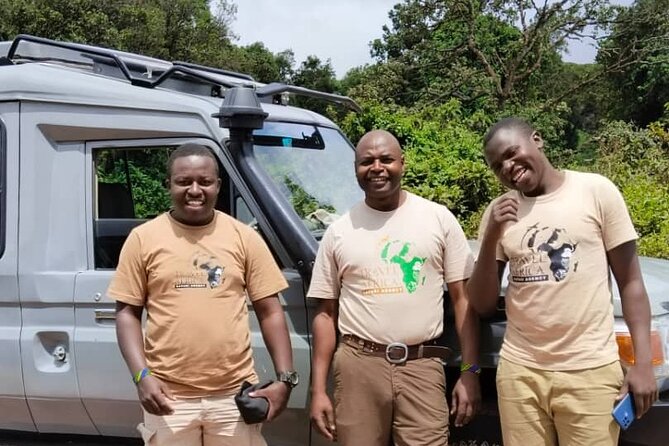
If you are assigned Omary or George, the information supplied for this experience points to guides who are friendly, attentive, and determined to help you see the animals you came for. Guide assignments can vary, so treat those names as helpful possibilities rather than a guarantee.
Day two: morning wildlife, then Simba Campsite
Day two begins in the Serengeti with a half-day game drive and a packed lunch. You continue looking for wildlife until the afternoon, then travel toward the Ngorongoro Conservation Area with game viewing along the way.
This route is valuable because the drive between parks is not dead time. The scenery and animal sightings can continue as you move toward the crater. It is also another demanding day, with a morning game drive followed by a transfer to camp. You should expect an active schedule rather than a slow morning.
The overnight stop is Simba Campsite near Ngorongoro. Camping gear is included, which makes this practical for people who do not want to bring a full set of outdoor equipment from home. Dinner is included too, as are the other meals specified in the package.
The important caution is comfort. This is a budget camping trip, and the standard may not be uniform every night. One poor accommodation experience described a Serengeti camp without a shower or lights and with dirty conditions. That is a serious concern, not a minor detail, so ask the provider for the current campsite arrangements before paying if cleanliness and washing facilities are important to you.
You should also clarify how the camping setup works, since the supplied details confirm that equipment is included but do not spell out every item. The experience is best approached as functional safari camping, not as a luxury tented camp.
More National Park Safaris in Tanzania
- 4 Days Join Group tour Tarangire Serengeti and Ngorongoro crater
★ 5.0 · 219 reviews - 4 Days Tarangire Serengeti Ngorongoro Crater
★ 5.0 · 117 reviews - 5 Days Tanzania Group Joining Safari, Tarangire/Serengeti/Ngorongoro Crater
★ 5.0 · 85 reviews - 5 day safari Tarangire Serengeti and Ngorongoro crater
★ 5.0 · 83 reviews
Day three: descending into Ngorongoro Crater
Breakfast is scheduled for about 7 a.m., with the crater descent beginning around 9 a.m. You spend roughly half a day below the rim, with a picnic lunch, before beginning the return toward Arusha.
Ngorongoro Crater is the visual counterpoint to Serengeti. Instead of wide plains stretching toward the horizon, you look down into a contained natural basin. The crater floor gathers grassland, water, and wildlife in a relatively compact area, making it one of the most efficient places on this route for a concentrated game drive.
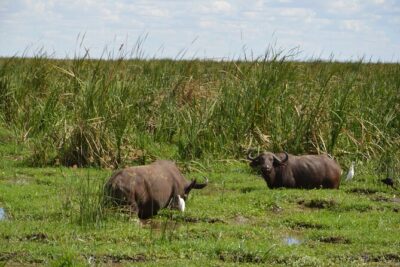
The itinerary describes Ngorongoro as a place where you may see a wide range of animals in a single visit, including elephants, wildebeest, gazelles, golden jackals, bat-eared foxes, hippopotamuses, buffalo, eland, serval, and possibly black rhino. Big Five sightings are possible, but no responsible guide can guarantee all five.
The crater also has limits. Giraffe, oribi, topi, spotted hyena, cheetah, and impala are listed as absent or rarely seen in the area. That does not make the visit less worthwhile. It simply shows why the Serengeti and Ngorongoro work well together. The Serengeti offers greater scale and habitat variety, while the crater can provide concentrated viewing.
The Ngorongoro Conservation Area also has cultural and archaeological importance. Maasai families live in circular homesteads called bomas, and the area is linked to research into early human evolution by Mary and Louis Leakey. The route may give you views and context connected to both subjects, but the core activity here remains the crater game drive.
After the crater visit, the listed return time is late evening, around 7 p.m. That makes day three long. You have an early breakfast, a crater descent, several hours of wildlife viewing, a picnic lunch, and the drive back to Arusha. Plan nothing important for that night.
What the $815 price really buys you
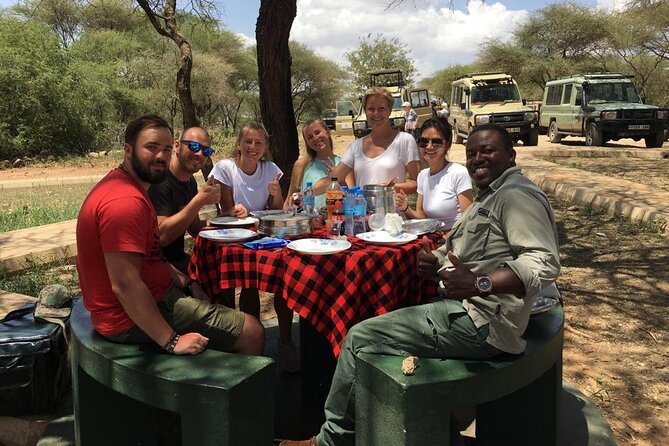
The value is strongest in the included park access and the amount of ground covered. Serengeti and Ngorongoro are costly places to visit independently because of entry charges, vehicle costs, guide services, food, and camping equipment. Here, the main expenses are grouped into one booking.
Meals are also covered: two dinners, three lunches, and two breakfasts. Lunch is often packed for game-drive days, which lets you stay out in the park rather than return to a base for a midday meal.
The price does not include insurance or gratuities. Tips are normally given at the end of a safari if you feel the guide and cook have provided good service. Build that extra cost into your budget instead of treating the listed price as the complete amount you may spend.
The price is less attractive if your main goal is comfort. A low-cost safari has to save money somewhere, and the accommodation warning suggests that camping quality can be a weak point. I would choose this package for access, scenery, and wildlife rather than for sleep quality.
Who should book this safari?
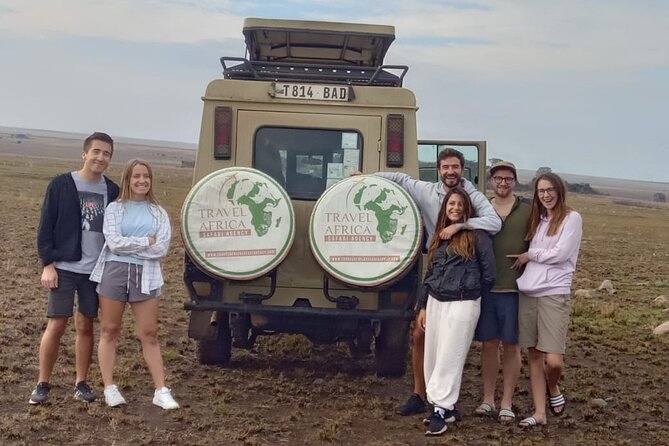
I would recommend it to you if you have only three days, want both Serengeti and Ngorongoro, and are happy to trade comfort for a lower price. It also suits first-time safari visitors who want a guide to handle the driving, park access, meals, and basic camping arrangements.
The six-person limit is a strong fit for solo visitors, couples, or small groups who want some social contact without joining a large coach tour. The professional guide can answer questions throughout the route, and the small vehicle group should make it easier to adjust attention to wildlife sightings.
This is less suitable if you dislike long drives, need dependable showers and electricity, or want a relaxed schedule. The first day is a major road transfer, and the final day may not return to Arusha until late evening. You should also be comfortable with wildlife viewing that depends on luck, season, animal movement, and the guide’s ability to locate them.
The tour is often booked well ahead, with an average booking point around 55 days before departure. That suggests planning early is sensible, especially if your Tanzania dates are fixed. Confirmation is provided at booking, and pickup is offered from the stated meeting point.
Practical details that affect the experience
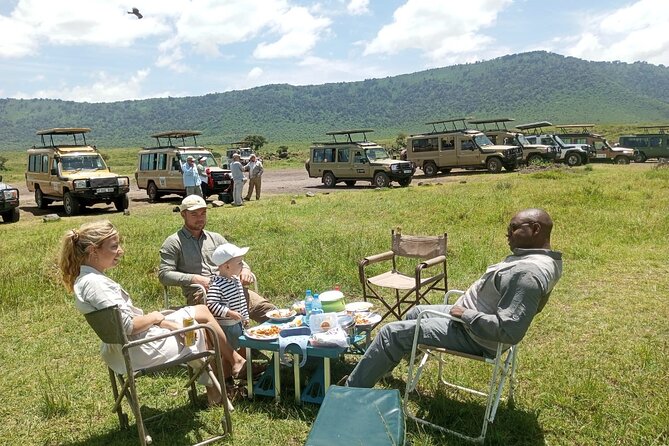
The starting point is Arusha Tourist Inn, JMGJ+9QV, Sokoine Road, Arusha. The activity ends back at the same meeting point. The listed start time is 7 a.m., while the day-one schedule gives pickup at about 8 a.m. Confirm the exact pickup time with the operator so you are ready before departure.
Most people can take part, and the tour is near public transportation. The mobile ticket makes access simple after booking. Free cancellation is available up to 24 hours before the experience begins. Changes or cancellations within 24 hours are not accepted for a refund, and the operator may cancel if the minimum number of participants is not reached.
The professional guide is listed as English-speaking. Park fees are included, as are the meals and camping gear. Insurance is not included, and tips for the driver-guide and safari cook are separate.
Should you book it?
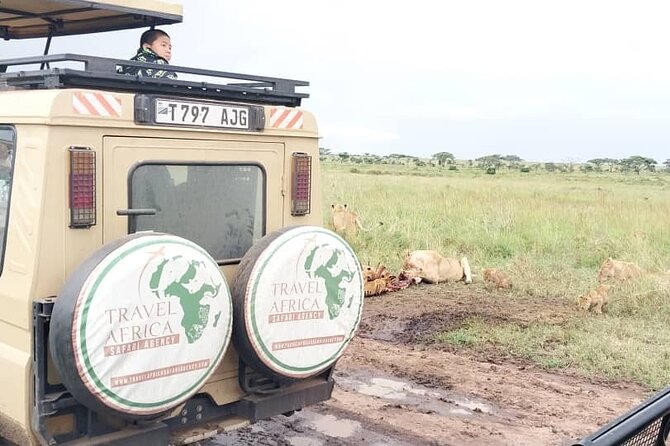
Book this safari if your priority is seeing two of Tanzania’s best-known wildlife areas in three days at a controlled price. The route is efficient, the group size is small, and the included park fees, food, guide, and camping equipment remove many extra costs.
Think carefully before booking if basic camping would spoil the trip for you. The accommodation can be rough, and the road time is substantial. If you accept those limits, this is a practical way to reach the Serengeti and Ngorongoro without paying for a higher-end safari. If you need comfort, ask about the current campsites first or choose a longer lodge-based option.
FAQ
How long is the safari?
The safari lasts approximately three days, beginning in Arusha and ending back at the Arusha meeting point.
What parks and protected areas does it visit?
The route visits Serengeti National Park and the Ngorongoro Conservation Area, including a game drive inside Ngorongoro Crater.
Where does the safari start?
Pickup is offered from Arusha Tourist Inn on Sokoine Road in Arusha, Tanzania.
What is the maximum group size?
The tour has a maximum of six participants.
Are meals included?
Yes. The package includes two dinners, three lunches, and two breakfasts.
Is camping equipment included?
Yes. Camping gear is included in the tour price.
Is a guide included?
Yes. A professional English-speaking driver-guide is included.
Can I cancel for a full refund?
Yes, if you cancel at least 24 hours before the scheduled start time. Cancellations or changes made less than 24 hours before departure are not refunded or accepted.
More 3-Day Experiences in Arusha
- 3 Days Serengeti & Ngorongoro Group Camping Safari
★ 5.0 · 574 reviews - 3-Day Classic Serengeti Safari
★ 5.0 · 263 reviews - 3 Days Tarangire, Ngorongoro & Lake Manyara Group Camping Safari
★ 5.0 · 102 reviews - 3 Days Private Safari – manyara, Ngorongoro & Tarangire
★ 5.0 · 94 reviews
Just added around Arusha
- 6 days Tanzania budget safari★ 5.0 · 65 reviews
- 7 days great migration safari★ 5.0 · 77 reviews
- serengeti, ngorongoro & tarangire 5days private tour★ 5.0 · 77 reviews
- 5 days safari, hiking & culture (Serengeti & kilimanjaro)★ 5.0 · 27 reviews
- 5-Day Mid-Range Safari in Tanzania★ 5.0 · 33 reviews
- 4 days safari★ 5.0 · 34 reviews
- serengeti & ngorongoro 3 days private tour★ 5.0 · 15 reviews
- serengeti, ngorongoro & tarangire 4 days private tour★ 5.0 · 18 reviews
Arusha Safaris, compared.
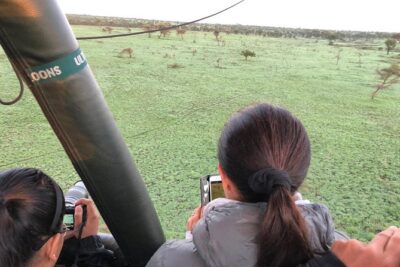
Balloon Safari & Bush Breakfast in Serengeti – Miracle Experience
Read our review →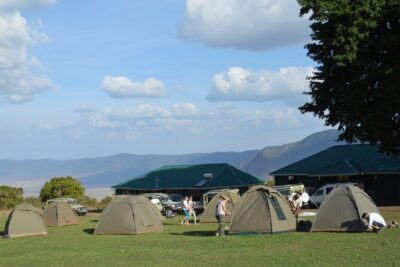
3 Days Serengeti & Ngorongoro Group Camping Safari
Read our review →
7-Day Premium Luxury Tanzania Safari All-Inclusive
Read our review →
5-Day Highlights mid-Range Crater, Serengeti, Tarangire
Read our review →
8 Days Great Wildebeest Calving Migration Safari from Arusha
Read our review →Browse the lists this tour appears in