
REVIEW · SAFARIS
Safari – Finding the most endangered monkey in the World
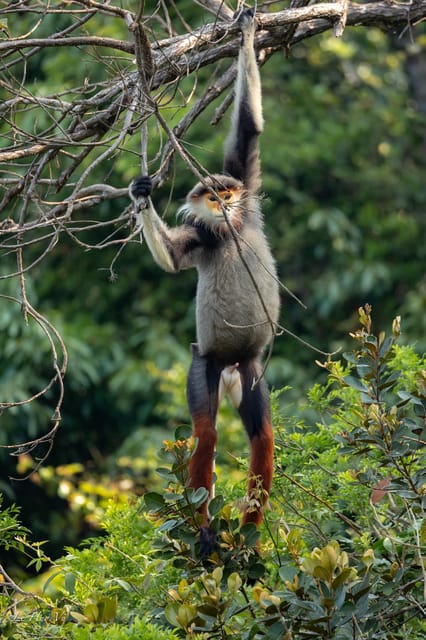
The rare red-shanked douc langur is the star here, but the real pleasure is the search. You ride a motorbike into Son Tra Nature Reserve, leave the busy coast behind, and follow your guide’s sharp eyes into quiet forest spaces where these critically endangered monkeys feed, rest, and care for their young. Cillian, Tam, Huy, and Binh are among the guides named for this outing.
I like two things right away: the small maximum of five people, which keeps the forest visit calm, and the useful field lesson on telling males from females and estimating an animal’s age. You also help record basic observations, turning a pretty wildlife trip into a small piece of real conservation work. The main caution is simple: wild monkeys do not follow a timetable. Weather, animal behavior, and luck decide what you see.
Key points to know before you book
- Red-shanked douc langurs are the main prize: You may see adults, babies, females, males, and possibly an alpha male, but no sighting is guaranteed.
- Motorbike access reaches remote slopes: Your guide drives you through Son Tra, with walking sections on mountain roads and forest paths.
- A very small group keeps things quiet: No more than five participants join, useful when watching shy animals.
- Wildlife guides teach as they search: You learn how to identify sex and age, while helping collect simple field data.
- The outing includes practical extras: Binoculars, drinking water, fruit snacks, and an English-speaking guide-driver are provided.
- Bring little and dress for a moving day: There is no space for luggage or a backpack, and riders over 85 kilograms may pay an extra 250,000 Vietnamese dong.
Why Son Tra’s rare monkey deserves your time
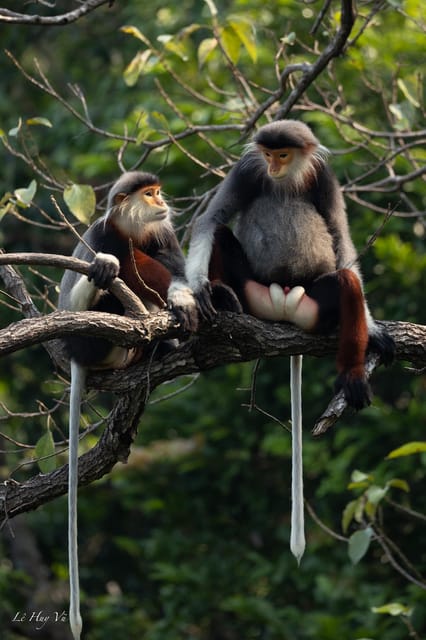
The red-shanked douc langur is not an ordinary zoo-style monkey. It is a critically endangered primate with a very limited range, and Son Tra Nature Reserve is one of the places where you can look for it in its natural home.
That word, look, matters. This is not a wildlife park with animals waiting beside a feeding area. The monkeys may be high in the trees, partly hidden by leaves, or moving away before you reach a viewing spot. Your guide may notice a small shift in the branches long before you do.
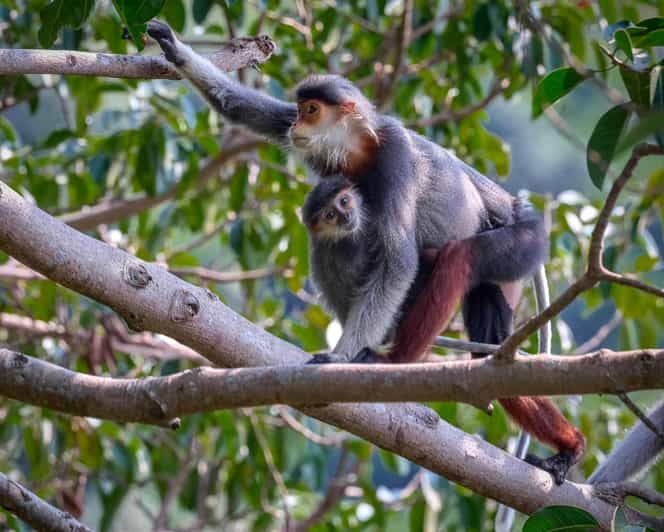
The reward is a far better kind of sighting. You might see a family group, a mother with a young monkey, or adults moving through the canopy. The outing also keeps its attention on the forest around the langurs. Birds, butterflies, plants, and sometimes a mongoose may appear along the route.
I would choose this trip for the chance to see an animal behaving naturally, not for a guaranteed close-up photograph. That difference is important. If you need certainty, a wildlife sanctuary may suit you better. If you enjoy patience, quiet observation, and the thrill of spotting something before everyone else, Son Tra offers a more meaningful outing.
A few more safaris around the world worth a look
- Dubai: Desert Safari, Quad Bike, Camel Ride & Al Khayma Camp
★ 4.9 · 68,962 reviews - Dubai: Desert Safari, Quad Bike, Camel Ride and Sandboarding
★ 4.9 · 43,505 reviews - Dubai: Safari, Quad Bike, Camel Ride, and Buffet Dinner
★ 4.9 · 33,424 reviews
Starting at sunset near Monkey Mountain
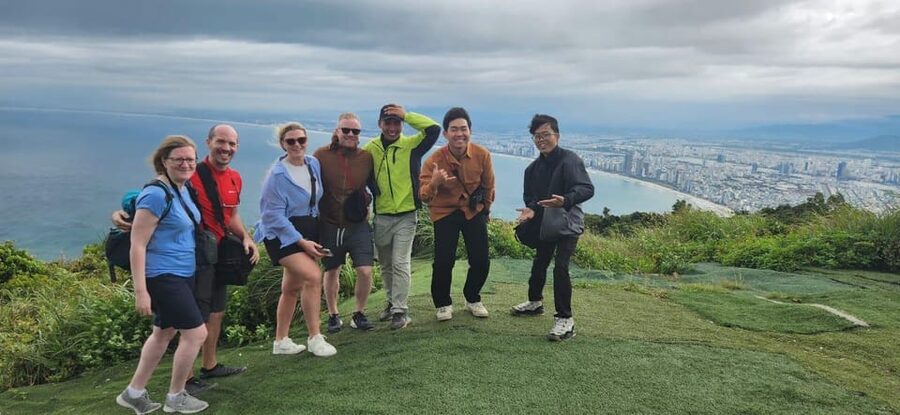
The trip meets in front of Esco Beach Bar in Da Nang. This is the stated meeting point for people coming from Hoi An or for anyone without a pickup location in Da Nang. The activity finishes at the same place.
The timing depends on availability, and the outing is described as a sunset safari. Plan for about two and a half hours overall, with walking portions included. Some of the description refers to an easy three-hour stroll, so check the exact duration shown when you book. The core idea remains the same: ride into Son Tra during the cooler late-day period, then search the slopes and forest roads while the light softens.
That timing adds atmosphere, but it also has a practical effect. Light changes quickly in the late afternoon, so your best view may last only a short time. A guide who knows where the groups have been seen can make that limited daylight count.
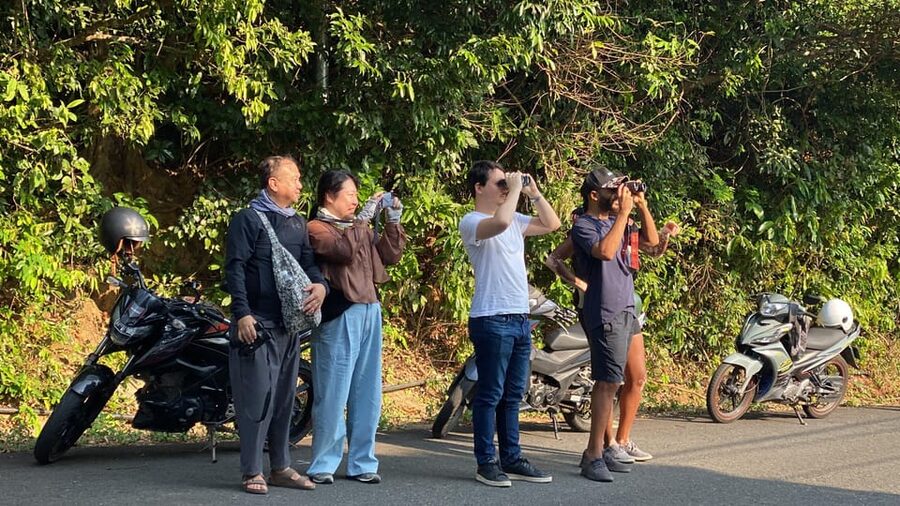
The group is capped at five people. I consider that one of the strongest features. A large crowd would make it harder to keep voices low and easier to disturb a shy troop. In a small group, you can ask questions, share binoculars when needed, and stop without creating a traffic jam on a narrow mountain road.
Riding into Son Tra by motorbike
Your guide is also your private driver. The motorbike carries you along twisting mountain roads and up several slopes in the forest. This is not just transport between two fixed attractions. The riding is part of the experience, giving you access to places that would be slow or awkward to reach on foot.
Some riders describe the motorcycle portion as a highlight, and I can see why. The route adds movement, fresh air, and views over Monkey Mountain. It also gives the guide freedom to check more than one area if a troop is not found at the first stop.
There are limits. You need to be comfortable as a passenger on a mountain road, and you should travel light. The operator says there is no space for a backpack or luggage, so leave large bags at your accommodation. Carry only what you need for a short outdoor outing.
Weight rules are also specific. People weighing more than 85 kilograms and up to 100 kilograms are asked to pay an additional 250,000 Vietnamese dong because a more powerful bike is prepared for the hills. The activity is not suitable for people over 100 kilograms, or 220 pounds.
Children under five are not suited to this activity. The information provided does not set out a detailed age range beyond that restriction, so parents should consider the motorbike ride and walking sections carefully before booking.
Leaving the bike for the forest search
The motorbike gets you to remote areas, but it does not replace walking. You will walk along mountain roads and into quieter forest spaces while the guides search the trees.
This is where the trip becomes more than a scenic ride. Your guide will scan branches, listen for movement, and explain what to watch for. You may spend time waiting for a better angle rather than marching from one attraction to the next. That slower rhythm is normal for wildlife watching.
The walking is described as easy, but the route includes twisting mountain terrain and slopes. Wear secure shoes and clothes suited to outdoor walking. The supplied information does not give a precise trail surface, distance, or elevation gain, so anyone with mobility concerns should ask before reserving.
The guides also ask you to keep a respectful distance from the monkeys. That is good practice and a key part of the outing. Getting closer is not always better. A calm animal that continues feeding or traveling is a better sight than one that has been pushed away for a photograph.
Same country, a different kind of drive:
- Dubai: Red Dune Safari, Quad Bike, Camel Ride, BBQ Dinner
★ 4.9 · 32,185 reviews - Dubai: Premium Safari, Camel Ride & Al Khayma Camp 3-Buffets
★ 4.9 · 30,335 reviews - Dubai: Desert Safari with BBQ Dinner & Quad Biking Options
★ 4.9 · 20,485 reviews - Dubai: Half-Day Desert Safari, Camel Ride, ATV & Dune Buggy
★ 4.9 · 19,221 reviews
Learning to read a douc langur troop
A useful part of the trip is the field lesson. You learn how to tell a female from a male and how to estimate age. The guide may also point out differences between adults and young animals, helping you understand what you are seeing instead of simply counting monkeys in the trees.
You may encounter young offspring during breeding season, adult animals, or an alpha male. Those possibilities are not promises, but they show the range of sightings the guides are looking for. Even when the animals stay partly hidden, the search teaches you how primate observation works.
The activity also includes participation in real-time research by helping collect information about the monkeys encountered. The supplied details do not specify the exact form or scientific use of those records, so think of this as guided observation rather than a formal research course. Still, it adds purpose to each stop. You are paying attention to group size, behavior, location, and identity instead of simply pointing a camera.
The guides are described as especially good at finding the animals. Tam is singled out for locating several doucs, while Cillian is noted for spotting monkeys with unusual ease and for riding considerately. Huy and Binh are also named as part of the guiding team. Guide assignments can change, but these names give you a sense of the people associated with the experience.
Binoculars, snacks, and the view beyond the monkeys
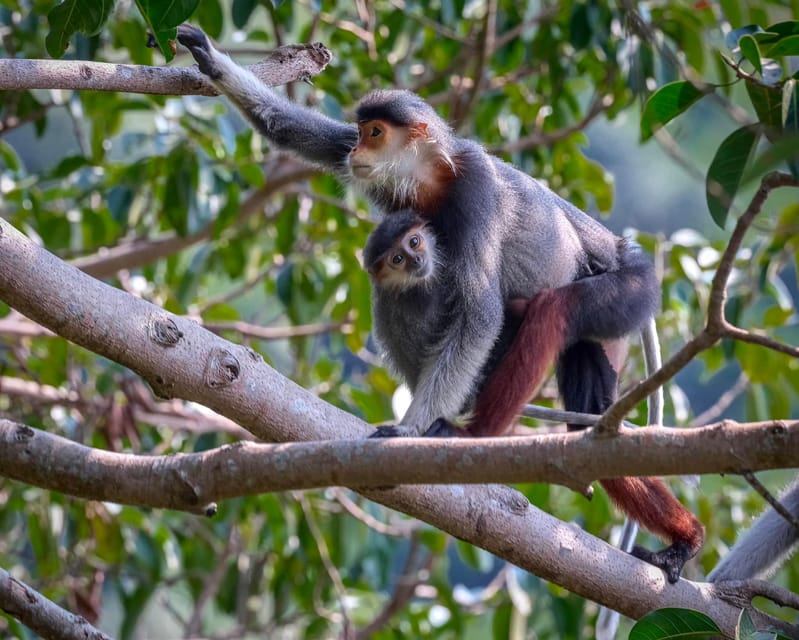
Binoculars are provided, which is essential for a shy canopy-dwelling animal. You may be looking across a slope or up into a tall tree, so binoculars can turn a vague patch of movement into a clear face, tail, or family group.
Water and fruit snacks are also included. That is a modest detail, but it matters on a warm ride and walk. You do not need to plan a full meal during the two-and-a-half-hour outing, though you should eat beforehand if you tend to get hungry outdoors.
Bring your own camera if you want one. Cameras are not included. Some outings have included access to photographs taken by the guides with professional cameras, and the trip information indicates that the guides may share a link afterward. Treat that as a useful possibility rather than the main reason to book, and ask your guide what is available on your date.
Son Tra offers more than monkey watching. The route can include mountain viewpoints, lesser-known slopes, and a secluded beach area. These places help fill the trip if the langurs remain hidden, and they give you a broader look at the reserve. The views are a genuine bonus, but they should not be confused with a separate sightseeing tour. The activity is built around the forest search.
What the price gives you at $48
At $48 per person, this is not the cheapest way to spend an afternoon in Da Nang. The price makes more sense when you count the private motorbike driving, English instruction, small group, binoculars, drinks, snacks, and access to areas you would be unlikely to find on your own.
The strongest value is the guide’s local skill. A self-guided visit might give you the same mountain roads, but not the trained eye that can locate a troop high in the trees or explain the behavior you are seeing. With a maximum of five participants, you are paying for attention as well as transport.
The price is less compelling if your main goal is a guaranteed photograph. No one can promise monkeys on every outing, and rare animals may remain out of sight. Weather and behavior can change the result. I would book this as a wildlife search with a strong chance of interesting scenery and forest life, not as a fixed show.
There is also a stated service charge of 300,000 Vietnamese dong during the Lunar New Year holiday from January 28 to February 1, 2025. Since those dates have passed, check the current booking details for any updated seasonal charge.
Keeping the encounter respectful
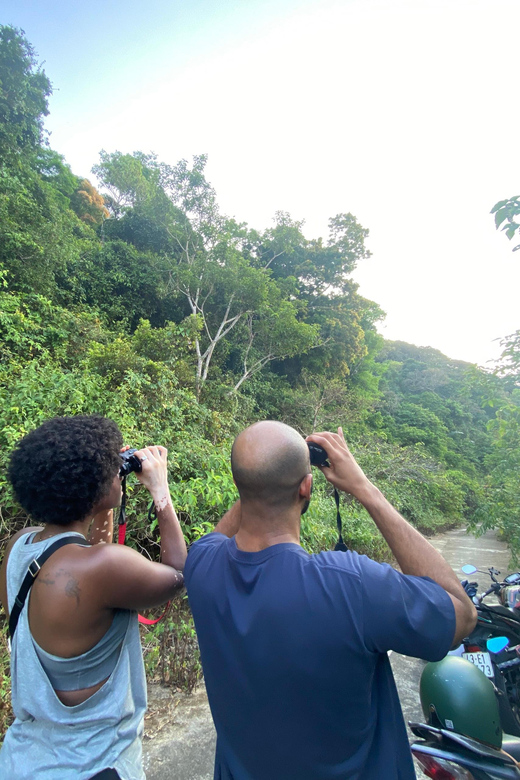
The activity is at its best when the monkeys remain wild. The guides are described as careful about keeping a safe distance and limiting disturbance. You should follow their lead, keep your voice down, avoid sudden movements, and never try to feed or touch an animal.
Do not bring alcohol or drugs. Keep your equipment simple, since there is no room for luggage. A phone, small camera, water-resistant layer, and comfortable shoes are enough for most people, based on the information provided.
The late-day setting can be beautiful, but wildlife comes first. If your guide stops the group for a distant view rather than moving closer, that is a sign of responsible practice, not a missed opportunity. A rare monkey deserves room to act like a monkey.
Who will enjoy this outing most
I would recommend this for adults and older children who enjoy nature, photography, and patient searching. It suits people who want something different from Da Nang’s beach and food scene, especially if a motorbike ride through Son Tra sounds as appealing as the animals themselves.
It is a good match for photographers, but only if you accept that the light, distance, and animal behavior are outside your control. The provided binoculars help, and your guide may help with photos, but you should bring realistic expectations.
It is less suitable if you dislike motorcycles, need a guaranteed schedule of sightings, carry large luggage, or are uncomfortable walking on mountain terrain. It is also not suitable for children under five or anyone over 100 kilograms.
Should you book this Son Tra monkey safari?
Book it if you value a small group, an English-speaking wildlife guide, and a real chance to see one of Vietnam’s most unusual primates in its natural home. The motorbike access, binoculars, snacks, forest search, and mountain views make the $48 worthwhile for nature-minded visitors.
Skip it if you need certainty or a close-range animal encounter. The monkeys may hide, and luck matters. For everyone else, this is a thoughtful way to spend a late afternoon in Da Nang, with the rare langur as the prize and Son Tra itself as a strong second reason to go.
FAQ
Where does the safari start and finish?
It starts in front of Esco Beach Bar in Da Nang and finishes back at the same meeting point.
How long does the activity last?
The stated duration is two and a half hours. The description also refers to an easy three-hour stroll, so check the exact duration and starting time available for your chosen date.
What animals might I see?
The main target is the critically endangered red-shanked douc langur. You might also see birds, butterflies, plants, or sometimes a mongoose.
Is seeing the monkeys guaranteed?
No. Sightings depend on weather, the monkeys’ behavior, and luck. Rare animals may not appear on every outing.
Are binoculars provided?
Yes. Binoculars are provided to help you view the shy monkeys from a suitable distance.
What else is included?
The activity includes motorbike transport with your guide as driver, walking sections, water, and fruit snacks.
How many people are in the group?
The group is limited to five participants.
Can I bring luggage?
No. There is no space for backpacks or luggage, so you should travel light.
Are there weight or age restrictions?
Children under five are not suitable for the activity. People over 100 kilograms, or 220 pounds, cannot join. Those weighing over 85 kilograms and up to 100 kilograms must pay an extra 250,000 Vietnamese dong for a more powerful bike.
Just added around the world
- Dubai Desert Safari With BBQ dinner★ 5.0 · 15 reviews
- Dubai Private Morning Desert Safari: Camel Ride & Sandboarding★ 5.0 · 19 reviews
- Deluxe Premium Dubai Desert Safari with Camel Ride, and Live Show★ 5.0 · 82 reviews
- Premium Deluxe Dubai Safari with Camel Ride, Sandboard & BBQ★ 5.0 · 55 reviews
- Dubai Morning Desert Safari: Camel Ride & Sandboarding!★ 5.0 · 116 reviews
- Camel Trekking and Morning Safari with Sand Boarding★ 5.0 · 19 reviews
- Thrilling Desert Safari Dubai Adventure with Sand Boarding and Barbecue Dinner★ 3.5 · 30 reviews
- Dubai Desert Safari★ 4.5 · 15 reviews