
REVIEW · ARUSHA
Amazing 4 Days Tanzania Budget Camping Group Joining Safari
Tarangire’s giant baobabs and elephant herds make a strong opening to this four-day Northern Tanzania safari, but the real prize comes later: a full day in the Serengeti followed by a game drive inside Ngorongoro Crater. You get three of Tanzania’s best-known wildlife areas without arranging separate transport, meals, camps, and park fees.
I like the practical setup: a safari Land Cruiser, professional driver-guide, cook, accommodation, and all meals are included. I also like the route itself, which moves from Tarangire’s elephants to the Serengeti’s open plains and then into the crater, giving you a good range of scenery and wildlife in a short time.
The main caution is that this is called both a group-sharing safari and a private tour, while the maximum group size is listed as 200. Confirm the actual number of people in your vehicle, the standard of the camps, and what private means before paying. Budget camping can be excellent, but it is not a lodge holiday.
Key points to know before booking
- Three major parks in four days: Tarangire, Serengeti, and Ngorongoro Crater form the core of Tanzania’s Northern Circuit.
- The wildlife focus is strong: Expect particular attention to elephants, lions, cheetahs, hyenas, buffaloes, zebras, wildebeest, giraffes, birds, and possible rhino sightings.
- Camping keeps the price down: You receive accommodation and meals, but the description does not specify tent facilities, bedding, showers, or campsite standards.
- The schedule is demanding: The Serengeti transfer takes about eight hours, and game drives begin early and often finish late.
- Transport is a major benefit: A safari Land Cruiser is more suitable for rough park roads than an ordinary car.
- The price includes the big-ticket basics: At $1,283 per person, park fees, meals, accommodation during the safari, guide services, and transport are included, but tips, visas, insurance, flights, and pre- and post-safari hotels are not.
Why this route works in only four days
A four-day safari can feel rushed, yet this route makes a sensible attempt at covering the main wildlife areas around Arusha. You begin in Tarangire, continue through the Ngorongoro Conservation Area to the Serengeti, spend a full day in the Serengeti, and finish inside Ngorongoro Crater.
That order matters. Tarangire gives you an early wildlife fix without sending you straight into the longest transfer. The Serengeti then receives the most time, with an arrival game drive followed by a full day. Ngorongoro comes last, when you can make an early descent into the crater and return toward the meeting point afterward.
You should think of this as an active safari, not a slow lodge-based break. There are several long drives, early breakfasts, packed lunches, and substantial time in the vehicle. The reward is variety. In four days, you get woodland and baobabs, open grassland, highland views, and a compact crater floor with a dense mix of animals.
The itinerary begins at Shoppers Supermarket in Arusha at 6:00 a.m. Hotel pickup is offered, but the meeting point is also listed as the start location, so confirm the exact pickup arrangement. The safari ends back at the meeting point.
More Overnight Safaris in Arusha
- 4 Days Group Camping Safari
★ 5.0 · 1,101 reviews - 5 Days Group Camping Safari
★ 5.0 · 730 reviews - 3 Days Serengeti & Ngorongoro Group Camping Safari
★ 5.0 · 574 reviews
Day 1: Tarangire’s elephants and baobab country
Your first morning begins after breakfast at a budget hotel, followed by the drive from Arusha toward Tarangire National Park. The park is famous for its large elephant herds and towering baobabs, which give the first game drive a look very different from the Serengeti.
Tarangire is also a good place to watch for giraffes, buffaloes, wildebeest, zebras, and a large range of birds. More than 500 bird species are recorded in the park, so the experience is not only about spotting large mammals. If you enjoy photography, the baobabs provide strong subjects even when animals are farther from the road.
The plan includes lunch, then an afternoon game drive. This split gives you a useful first look at the park before returning in the late evening to Mto wa Mbu for dinner and an overnight stay at a campsite.
The stated day length is about six hours, though the actual timing depends on road conditions, park entry procedures, and how far you drive inside Tarangire. You should expect a full day out, not six hours of constant animal viewing.
Tarangire is a particularly good opening for anyone who wants elephants. The drawback is that you may wish for more time here, especially if the park is rewarding that day. This route uses Tarangire as an introduction rather than giving it a second full day.
Day 2: Crossing the highlands into the Serengeti
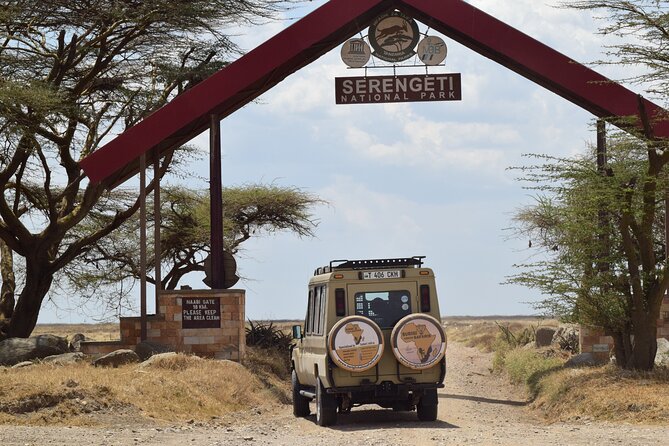
After breakfast, you leave the Tarangire area and travel toward Serengeti National Park through Karatu and the Ngorongoro Conservation Area. The road passes through high-lying farmland before reaching the open country associated with the Serengeti.
This is one of the most scenic transitions on the trip. The character of the journey changes from cultivated highlands to the broad plains of the park. The name Serengeti is commonly translated as endless plains, and the first sight of that open country helps explain why the park has such a powerful reputation.
The itinerary aims for the Seronera area in central Serengeti. Seronera is important because its river supplies water and draws animals, making it a productive part of the park for game viewing. It is also the place where you have a fair chance of seeing a broad mix of species in one area.
You are scheduled to arrive around lunchtime, then head out for an afternoon game drive. Dinner and overnight accommodation are at Nyani Campsite.
This is the most driving-heavy day. The listed duration is about eight hours, and that includes the transfer as well as the game drive. You should pack water, sun protection, and anything you need to stay comfortable in the vehicle. The route is rewarding, but it leaves limited room for a leisurely stop-by-stop pace.
Day 3: A full Serengeti game drive
Day three is the strongest part of the schedule for serious wildlife viewing. Instead of moving between parks for most of the day, you spend the day exploring the Serengeti with breakfast and a packed lunch included.
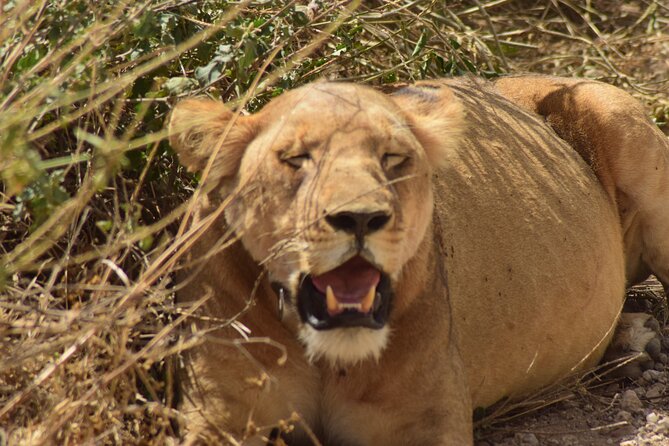
Your driver-guide takes you to game-viewing areas in and around central Serengeti. The stated targets include lions, cheetahs, hyenas, and other wildlife, with the wider park also known for elephants, buffaloes, leopards, rhinos, wildebeest, zebras, and more than 500 bird species.
No guide name is supplied, but a professional driver-guide is included. In a safari vehicle, the guide’s skill matters greatly. The guide handles park roads, watches animal behavior, and decides how long to remain at a sighting. You should ask before departure how the guide communicates sightings and how much say you have in the day’s pace.
The game drive continues until late afternoon, followed by the drive toward the Ngorongoro Crater rim. You spend the night there, ready for the next morning’s descent.
The wording gives the impression of a full day in the park, but the transfer to the crater rim still comes afterward. This can make day three long. The upside is that you wake closer to Ngorongoro instead of spending the morning driving there from the Serengeti.
A packed lunch is included, which keeps the day moving. You should not expect a return to camp for a midday rest. If you need regular breaks, mention this when you join the group.
More Overnight Safaris in Tanzania
- 5 Days Camping Tarangire, Serengeti & Ngorongoro crater & Visiting Maasai
★ 5.0 · 229 reviews - 2 Days Tarangire and Ngorongoro Group Camping Safari
★ 5.0 · 146 reviews - 6 Days Tanzania Budget Camping Safari
★ 5.0 · 145 reviews - Multi-Day Tanzania Odssey Safari from Arusha
★ 5.0 · 120 reviews
Day 4: Into Ngorongoro Crater
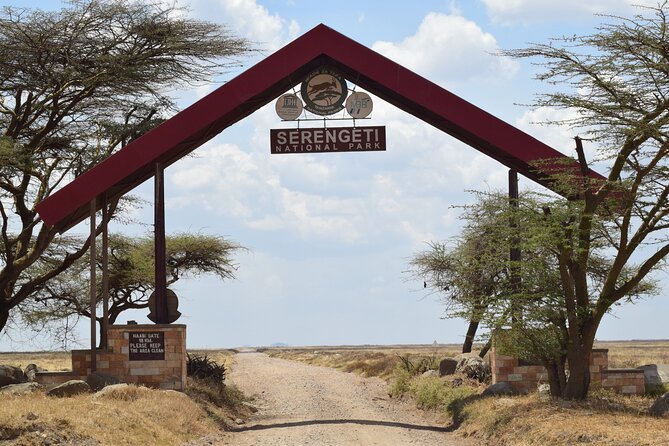
The final day starts with an early breakfast and a descent of more than 600 meters into Ngorongoro Crater. The crater is one of the most concentrated wildlife settings on this route, thanks to its permanent water sources and grazing areas.
Inside, you may see wildebeest, zebra, buffalo, eland, warthogs, hippos, and large African elephants. The crater is also known for predators, including lions, hyenas, jackals, cheetahs, and leopards. A leopard is never guaranteed, but the guide will know the kinds of places where a careful search is worthwhile.
Lake Magadi, a shallow alkaline lake in the southwestern part of the crater, is another scheduled feature. The lake adds variety to the drive and may attract birds and other animals. The itinerary includes a packed lunch, so you remain on the crater floor for much of the day rather than breaking away for a separate meal.
The stated duration is about eight hours. That includes the crater visit and the return journey, so this is another long day. The early start is useful because you get more time in the crater and avoid wasting the best morning hours at camp.
Ngorongoro can feel more crowded than a remote section of the Serengeti because it is a compact and famous destination. Still, its combination of scenery, wildlife, and easy-to-understand geography makes it a strong final stop. You are looking down into a contained natural world rather than scanning an enormous open plain.
Camping, meals, and comfort levels
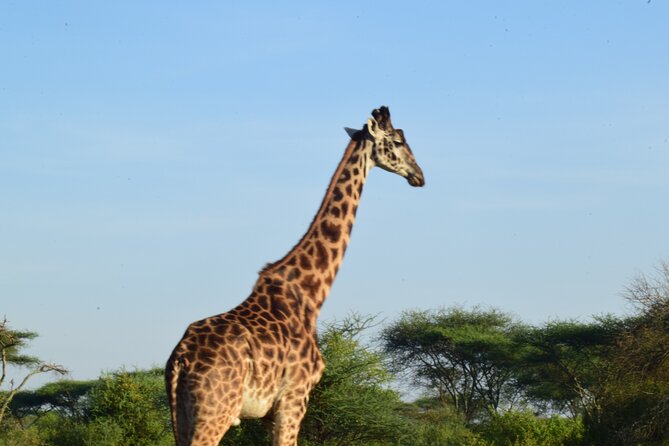
The safari includes hotel accommodation during the trip, dinner four times, lunch four times, and breakfast four times. The day-by-day plan specifically names campsites at Mto wa Mbu and Nyani Campsite, with an overnight near the crater rim.
The word budget is important here. The experience is not presented as a luxury lodge safari, even though the vehicle is described as a luxury safari jeep. Camping can be a fine way to keep costs down and stay close to the parks, but the information does not state whether tents are private or shared, if beds are supplied, or whether bathrooms are attached or communal.
You should ask these questions before booking:
- Is camping equipment supplied?
- Are tents already erected?
- Are toilets and showers available at each campsite?
- Is the hotel night before the safari included, or only breakfast?
- What happens if you arrive late at camp?
- Are special diets possible?
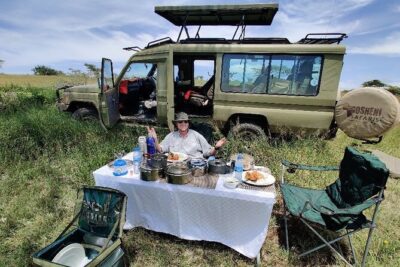
A cook is included, which is a real advantage on a camping safari. It means meals are part of the daily operation rather than something you must arrange at every stop. Still, bring personal snacks if you need food between meals, since the plan does not list snack service.
What $1,283 per person really covers
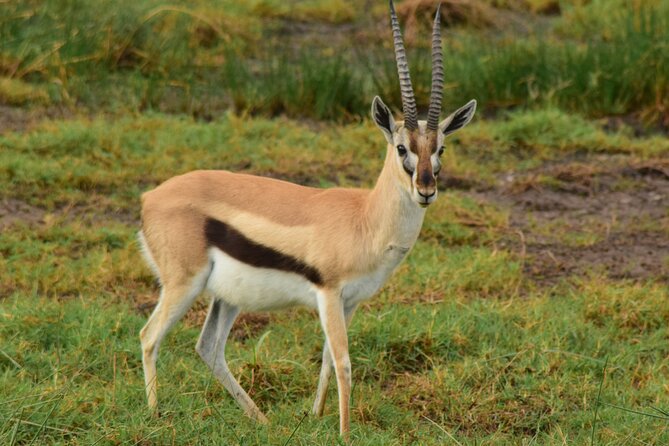
The price is $1,283 per person. For four days, that is not a bargain-basement figure, but the value depends on the inclusions and the number of people sharing the vehicle.
You receive park fees and taxes, a professional driver-guide, accommodation during the safari, transport, and all listed breakfasts, lunches, and dinners. Those are the costly and complicated parts of a Northern Tanzania safari. Booking them separately can take time, and park access alone adds a substantial expense.
The value improves if the vehicle carries a small group. You get a better view from the window, more room for camera equipment, and more control over stops. If the group is large, the same price becomes harder to justify, especially since the maximum group size is listed as 200. That number may refer to the overall booking capacity rather than one vehicle, but you should not guess.
The trip does not include international or domestic flights, personal purchases, travel insurance, visa fees, tips, or hotel nights before and after the safari. Build those costs into your budget. You may also need to pay for airport transfers or an Arusha hotel separately, depending on your plans.
The package is best value for someone who wants the main safari structure handled in one booking and accepts camping-level accommodation. If you want a private vehicle, upscale lodges, or a slower pace, expect to pay more or choose a different plan.
Group size and the private-tour wording
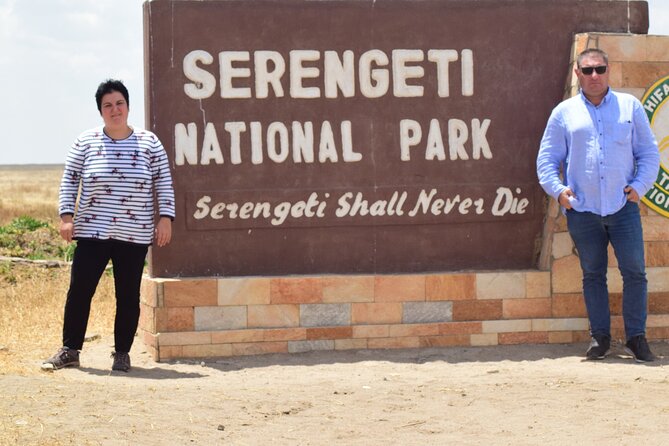
The description uses both group sharing and private tour language. Those terms can mean very different things. A group-sharing safari usually places people who booked separately into one vehicle. A private tour normally means the vehicle and schedule are reserved for your party.
The listed maximum of 200 is too broad to tell you how the actual ride will feel. Ask for the expected vehicle size in writing. Also ask if the driver-guide and cook travel with the same vehicle and whether the route can be adjusted for your party.
This matters most on the Serengeti days. A small group can spend longer at a sighting or leave when it has had enough. A larger group may need to balance different interests, from bird watching to predator sightings to photography.
Who should choose this safari
I would recommend this trip to you if you want the classic Northern Tanzania route in a compact format, prefer a controlled budget, and do not mind early mornings and long drives. It suits first-time safari visitors who want Tarangire, Serengeti, and Ngorongoro without planning every transfer themselves.
It is also a good fit if you care more about time in the parks than polished accommodation. The cook, included meals, and safari vehicle remove several practical worries from a camping trip.
I would hesitate if you need a quiet, comfortable holiday with short driving days. Four days leaves little spare time, and two days include long transfers. I would also hesitate if you are booking for a large family or group without first confirming sleeping arrangements and vehicle capacity.
Practical advice for getting more from the four days
Start with the basics: bring comfortable clothing for warm days and cooler mornings, sun protection, insect repellent, sturdy shoes, and a camera with enough storage. The information provided does not specify luggage limits, so ask how much space is available in the Land Cruiser.
Keep your day bag organized. You will want quick access to water, a jacket, sunglasses, and your camera without unpacking your main luggage during a game drive.
Use the early starts well. Wildlife viewing is a central purpose of the trip, and the Ngorongoro day in particular begins early. Late breakfasts and long personal stops can reduce time inside the parks.
Treat the guide as part of the experience, not just the driver. Ask about the day’s plan, the likely route, and the kind of wildlife you hope to see. Tips for the guide and cook are not included, so prepare for that separate cost if their service meets your expectations.
Finally, remember that no safari can promise every animal. The itinerary names the Big Five, but sightings depend on season, water, animal movement, and luck. The strength of this route is the range of habitats and the amount of time spent in major parks, not a guarantee of a particular predator or rhino encounter.
Should you book it?
Book this safari if your priority is seeing Tanzania’s major Northern Circuit parks while keeping the arrangements and meals in one package. Tarangire’s elephants, central Serengeti, and Ngorongoro Crater give you a strong four-day wildlife program, and the included guide, cook, vehicle, park fees, and food add real value at $1,283.
Before you commit, get clear answers about the group size, the meaning of private tour, camping equipment, bathroom facilities, and the hotel nights before and after the safari. If those details suit you, this is a practical choice for an active first safari. If you want spacious lodges and an unhurried schedule, spend more time and money on a longer or more private trip.
FAQ
Where does the safari start?
It starts at Shoppers Supermarket in Arusha, Tanzania. Hotel pickup is offered, and the listed start time is 6:00 a.m.
Where does the safari end?
The activity ends back at the meeting point in Arusha.
How long does the safari last?
The safari lasts approximately four days.
Which parks are included?
The route includes Tarangire National Park, Serengeti National Park, and Ngorongoro Crater.
Is accommodation included?
Yes. Hotel accommodation during the safari is included, with campsites named in the daily schedule. Accommodation before and after the safari is not included.
Are meals included?
Yes. The package includes four breakfasts, four lunches, and four dinners.
Is a guide included?
Yes. A professional driver-guide is included. No guide name is provided.
Is a cook included?
The highlights state that a cook is included with the safari.
Are park fees included?
Yes. All fees and taxes are included, including the admission listed for Ngorongoro Crater.
Are flights, visas, and tips included?
No. International and domestic flights, visa fees, travel insurance, personal items, and tips for the guide and cook are not included.
More 4-Day Experiences in Arusha
- 4 Days Join Group tour Tarangire Serengeti and Ngorongoro crater
★ 5.0 · 219 reviews - 4-Day Safari from Arusha: Tarangire, Serengeti and Ngorongoro
★ 5.0 · 173 reviews - 4 Days safari Tour Tanzania
★ 5.0 · 159 reviews - 4 Days Tarangire Serengeti Ngorongoro Crater
★ 5.0 · 117 reviews
Just added around Arusha
- 6 days Tanzania budget safari★ 5.0 · 65 reviews
- 7 days great migration safari★ 5.0 · 77 reviews
- serengeti, ngorongoro & tarangire 5days private tour★ 5.0 · 77 reviews
- 5 days safari, hiking & culture (Serengeti & kilimanjaro)★ 5.0 · 27 reviews
- 5-Day Mid-Range Safari in Tanzania★ 5.0 · 33 reviews
- 4 days safari★ 5.0 · 34 reviews
- serengeti & ngorongoro 3 days private tour★ 5.0 · 15 reviews
- Serengeti & Ngorongoro fly in safari★ 5.0 · 76 reviews
Arusha Safaris, compared.
Balloon Safari & Bush Breakfast in Serengeti – Miracle Experience
Read our review →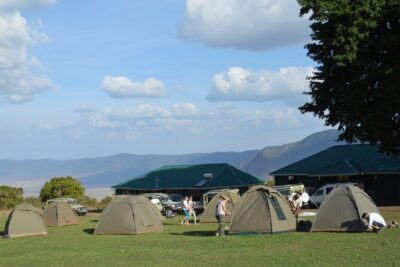
3 Days Serengeti & Ngorongoro Group Camping Safari
Read our review →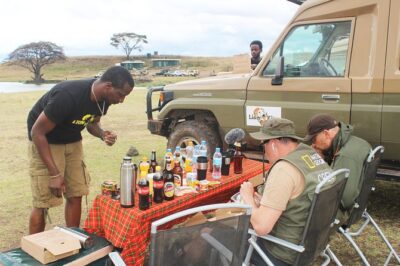
7-Day Premium Luxury Tanzania Safari All-Inclusive
Read our review →
5-Day Highlights mid-Range Crater, Serengeti, Tarangire
Read our review →
8 Days Great Wildebeest Calving Migration Safari from Arusha
Read our review →Browse the lists this tour appears in