
REVIEW · KAMPALA
Steve Kampala Walking tours (Airpals Safaris tour)
Kampala is best understood on foot, one sharp contrast at a time. This tour takes you from Makerere University and a craft market to Katanga, Nakasero Market, the Old Taxi Park, and Namirembe Cathedral, giving you a direct look at daily city life rather than only the polished sights.
I like the compact group, capped at 10 people, and the mix of history, shopping, food, religion, and transport. I also like that guides such as Steve, Gertrude, and Ben can help you make sense of Uganda’s political past while pointing out the practical details of present-day Kampala.
The main caution is pace and consistency. The route is advertised at about four hours, but one unhappy customer finished in roughly three, and some stops may feel rushed. You should also expect a busy city walk, not a slow museum tour.
Key points to know before you book
- Ten stops in about four hours: The route covers a lot, from Makerere University to Namirembe Cathedral, with short visits at most locations.
- A frank look at Kampala: Katanga and Owino Market bring you into parts of the city you may not visit alone.
- Strong history content: The Independence Monument and World War II Memorial connect Kampala to Uganda’s past and political story.
- Markets are central to the experience: Bagala Craft, Nakasero Market, and Owino provide shopping, fruit tasting, and street-level activity.
- Several guides lead the tour: Steve is the named host, while past bookings have also been led by Gertrude and Ben.
- Good value for a first orientation: At $28, the tour is most useful if you want a guided introduction and local advice in one morning or afternoon.
A brisk introduction to Kampala
This is not a tour built around grand interiors or long visits at one attraction. It is a moving lesson in how Kampala works, with short stops and plenty of walking between them.
You will see university life, informal housing, craft sellers, food markets, religious architecture, public transport, and memorials. That range is the real point. Kampala can feel confusing at first, with hills, traffic, markets, and neighborhoods folding into one another. A local guide helps connect the pieces.
The tour runs in the morning or afternoon and uses a mobile ticket. The small-group limit matters here. In a city where roads and markets can be crowded, a group of 10 is easier to manage than a large coach party.
You should not expect every stop to receive equal attention. The itinerary allows only 10 to 20 minutes at most locations. That is enough for an explanation, photographs, and a quick look, but not enough for extended shopping or detailed sightseeing.
More Walking Tours in the world:
- Düsseldorf: Altbier-Safari Beer Walking Tour
★ 4.4 · 1,150 reviews - Aqua Safari Introductory Helmet Dive (Underwater Walk)
★ 5.0 · 428 reviews - Madeira: Santana Jeep Safari and Referta Levada Walk
★ 4.8 · 239 reviews
Makerere University and Katanga
The walk begins at the main gate of Makerere University. You spend about 15 minutes walking through the university grounds, which gives the tour an early academic and civic setting.
This is a useful opening because it moves you away from the traffic and into a place tied to Uganda’s education and public life. The visit is brief, so think of it as orientation rather than a full campus tour.
From there, the mood changes at Katanga. The route spends about 20 minutes walking through the informal settlement, offering a broader view of how people live in the city.
This can be one of the more serious parts of the morning. A walk through a low-income neighborhood should be handled with care and respect. Go ready to listen rather than treat the area as a photo backdrop. One booking described the experience as emotional and humbling, while another account felt the passage through the area was too rushed and lacked explanation.
That contrast tells you what to watch for. The value depends heavily on the guide’s approach on the day. Steve, Gertrude, or Ben may offer useful context, but you should ask questions if you want to understand what you are seeing instead of simply walking through it.
Bagala Craft and the art of sensible shopping
Bagala Craft is described as Kampala’s biggest craft market, with souvenirs and handmade goods. The scheduled shopping time is about 20 minutes.
I like having this stop early in a city walk because it gives you a chance to see local design and perhaps pick up gifts before the day gets away from you. You may find carved items, textiles, and other crafts, although the exact selection can change.
Twenty minutes is not long if you want to browse carefully, compare prices, and bargain. If shopping matters to you, tell the guide early. The tour is designed to show you the market, not provide a long buying session.
You should also remember that a craft market can be a sales environment. Take your time, check the item, and buy only what you really want. The guide can help with navigation and may be able to offer practical advice, but the final choice is yours.
Independence Monument and Uganda’s political story
The Independence Monument receives about 20 minutes, including time to sit and learn about Uganda before and after independence.
This is one of the strongest stops for anyone who wants more than a quick city walk. The monument provides a fixed place to discuss Uganda’s transition from colonial rule, the meaning of independence, and the political forces that shaped the country afterward.
The tour’s description promises a broader view of Uganda’s geopolitical setting, and this is where that promise matters most. Ask the guide to connect the monument to the wider city around you. Kampala is not only a collection of markets and roads. It is also the national capital, and its public spaces carry political meaning.
The short visit works well if the guide is clear and willing to answer questions. It may feel thin if the commentary becomes a list of dates and names. Several strong experiences came from guides who adjusted to questions and interests, so do not be shy about asking for more explanation.
A few more safaris around the world worth a look
- Dubai: Desert Safari, Quad Bike, Camel Ride & Al Khayma Camp
★ 4.9 · 68,962 reviews - Dubai: Desert Safari, Quad Bike, Camel Ride and Sandboarding
★ 4.9 · 43,505 reviews - Dubai: Safari, Quad Bike, Camel Ride, and Buffet Dinner
★ 4.9 · 33,424 reviews - Dubai: Red Dune Safari, Quad Bike, Camel Ride, BBQ Dinner
★ 4.9 · 32,185 reviews
Nakasero Market and a taste of everyday food
At Nakasero Market, you spend about 15 minutes looking at fruit and other produce. Uganda grows a great deal of its own food, and this stop gives you a chance to see that side of Kampala.
The market is useful because food tells you plenty about a place without requiring a formal attraction. You can observe what is sold, how it is arranged, and the range of produce available in the capital.
The schedule mentions tasting different fruits, but the exact tasting experience may vary. Consider this a quick market visit rather than a dedicated food tour.
This is also a good place to ask the guide what is seasonal, what people commonly eat, and how the market serves the city. A few well-placed questions can turn a short stop into a more meaningful lesson.
Temple architecture and the World War II Memorial
The Temple SSDM Shree Sanatan Dharma Mandal receives about 15 minutes. The group goes inside to see the building’s architecture and decoration.
This stop adds a religious and cultural layer that is easy to miss if you only visit the capital’s major national sights. It also breaks up the market visits with a quieter look at a place of worship.
The visit is brief, so you should follow the guide’s instructions and treat the temple respectfully. The supplied information does not specify a dress code or worship schedule, so do not assume there will be a full religious ceremony or extended tour.
The World War II Memorial follows, with about 10 minutes devoted to Uganda’s participation in the war and its positive and negative results. It is a small stop, but the subject broadens the tour beyond local streets and colonial independence.
I appreciate this kind of inclusion. Many city walks mention only the country’s best-known political events. A war memorial can open a discussion about Uganda’s role in a global conflict and the effects that followed. Ten minutes will not cover the subject in detail, but it gives you a useful starting point.
The Old Taxi Park and Owino Market
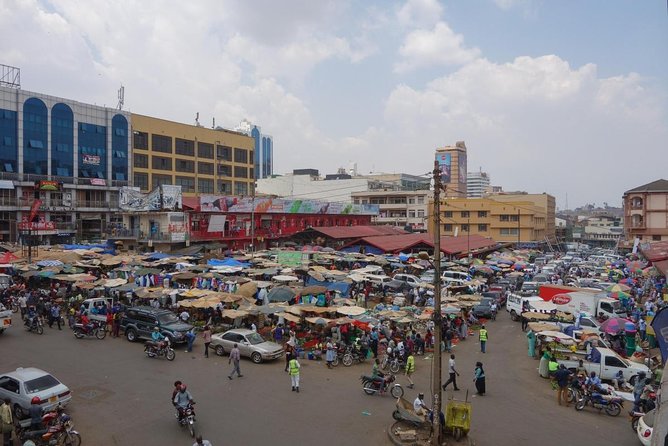
The Old Taxi Park is one of the most visually intense stops. The tour pauses for about 10 minutes to observe thousands of commuter taxis competing for passengers.
This is Kampala in working mode: transport, noise, movement, and people trying to get across the city. You will not be taking a taxi as part of the scheduled experience, but the stop helps explain how residents move around Kampala.
The area can be confusing if you are alone, so having a guide is particularly useful here. Stay close to the group and keep an eye on your belongings. The information provided does not promise a formal safety briefing, but ordinary care is sensible in any crowded transport hub.
Owino Market receives about 15 minutes. It is described as Kampala’s biggest market and is known for second-hand clothing and a wide range of other goods.
This is another stop where the tour offers access and orientation more than a long shopping session. You can see how large-scale informal trade works and get a sense of the market’s size. If the guide explains what you are seeing, Owino can be one of the most memorable parts of the walk.
If the guide is quiet or rushes through, the stop may feel like a corridor between attractions. One critical experience described exactly that problem in the markets and Katanga. I would ask questions and make your interests clear, especially if you want to understand the market rather than simply pass through it.
Namirembe Cathedral and the view over Kampala
The route finishes at Namirembe Cathedral, on Cathedral Hill Road. The cathedral sits high enough to offer a broad view of the city, and the scheduled visit lasts about 10 minutes.
That elevated setting gives the tour a natural ending. After seeing Kampala at street level, you can look back across the city and get a clearer sense of its hills and spread.
The itinerary says the first part ends at Namirembe Cathedral and refers to a second part ending at Kasubi Tombs. However, Kasubi Tombs are not included among the 10 listed stops, so you should confirm the exact ending when you book. The practical point is simple: do not assume that a visit to Kasubi is included unless the guide confirms it.
The cathedral stop itself is short. You may get a view and a quick introduction, but not an extended architectural visit. One strong experience ended with helpful advice about getting around Kampala and a restaurant recommendation. Another found the ending abrupt. Again, the guide and the day’s timing can make a real difference.
How the guides shape the experience
Steve is the central name attached to this walk, but you may be led by Gertrude or Ben. The best accounts describe guides who explain Kampala’s history, answer questions patiently, adapt to physical limitations, and offer practical help after the formal walk ends.
One guide even waited while a customer sorted out an Uber. Steve also helped one person find a first Rolex, meaning the local street food snack, not a luxury watch. That kind of small, practical help can be worth a lot when you are new to Kampala.
The less positive experience described commentary that felt memorized, quiet stretches between stops, a rushed market visit, and a finish after roughly three hours rather than four. You should take that possibility seriously. A good walking tour needs more than facts. It needs attention to the people in the group and a willingness to explain what is happening around you.
If you want more detail, ask direct questions about politics, transport, markets, food, and daily life. That can help make the experience more conversational and less like a recital.
Price, walking time, and practical value
At $28 per person, the price is reasonable if you want one organized introduction to central Kampala. You are paying for a local guide, a route that links several parts of the city, and the confidence to enter places you might skip on your own.
The tour does not include paid admission to the listed stops, and the schedule is built around walking rather than transport. That keeps the cost down, but it also means you need to be comfortable spending several hours on foot in a busy city.
A four-hour tour covering 10 stops is necessarily brisk. The listed stop times total about two hours and 30 minutes, leaving the rest for walking and commentary. If the tour lasts the full advertised time, that is a sensible structure. If it ends after three hours, the value becomes less convincing.
Most people can participate, and service animals are allowed. The tour runs in most weather, but poor weather can lead to a different date or a full refund. You can cancel for a full refund up to 24 hours before the start time. Within 24 hours, changes and refunds are not accepted.
Who will enjoy this Kampala walk?
I would choose this tour for a first visit, especially if you want an orientation before exploring more of Kampala on your own. It suits people who prefer markets, public spaces, and local neighborhoods to a list of formal monuments.
It is also a good match if you want history explained in place. The Independence Monument, World War II Memorial, Makerere University, and the cathedral give the route more substance than a simple shopping walk.
You may want something else if you need a slow pace, long visits, or a tightly controlled schedule. The tour includes sensitive areas, crowded markets, and short stops. It may feel too quick if you want detailed photography, extended shopping, or quiet time at each location.
Ask about the pace if you have physical limitations. One booking was adjusted successfully for a participant with mobility concerns, but the route still involves substantial walking and time on city streets.
Should you book Steve Kampala Walking Tours?
Yes, if you want a candid first look at Kampala and value local guidance over polished sightseeing. The strongest version of this tour gives you history, markets, city views, practical advice, and a feel for how the capital operates in a single half-day.
Book it with realistic expectations. You will not receive a long visit at every stop, and the experience may depend heavily on whether your guide is Steve, Gertrude, or Ben and how engaged the group is that day.
At $28, I see good value for a small group and a route this varied. Confirm the exact ending, ask questions throughout, and allow for a brisk pace. If you want Kampala as a living city rather than a set of isolated monuments, this is a worthwhile starting point.
FAQ
How long does the Kampala walking tour last?
The tour is advertised at approximately four hours. The route includes 10 stops, with the remaining time used for walking and commentary.
How many people can join the tour?
The group is limited to a maximum of 10 travelers.
Who might lead the tour?
The tour is associated with Steve, and bookings have also been led by Gertrude and Ben.
What places does the tour visit?
The route includes Makerere University, Katanga, Bagala Craft, the Independence Monument, Nakasero Market, the Temple SSDM Shree Sanatan Dharma Mandal, the World War II Memorial, Kampala Old Taxi Park, Owino Market, and Namirembe Cathedral.
Does the tour include morning and afternoon options?
Yes. You can choose between morning and afternoon tour times.
What is the cancellation policy?
You can cancel at least 24 hours before the start time for a full refund. Cancellations or changes made within 24 hours are not refunded or accepted. If poor weather or an insufficient number of bookings causes cancellation, you will be offered another date or a full refund.
Just added around the world
- Dubai Desert Safari With BBQ dinner★ 5.0 · 15 reviews
- Dubai Private Morning Desert Safari: Camel Ride & Sandboarding★ 5.0 · 19 reviews
- Deluxe Premium Dubai Desert Safari with Camel Ride, and Live Show★ 5.0 · 82 reviews
- Premium Deluxe Dubai Safari with Camel Ride, Sandboard & BBQ★ 5.0 · 55 reviews
- Dubai Morning Desert Safari: Camel Ride & Sandboarding!★ 5.0 · 116 reviews
- Camel Trekking and Morning Safari with Sand Boarding★ 5.0 · 19 reviews
- Thrilling Desert Safari Dubai Adventure with Sand Boarding and Barbecue Dinner★ 3.5 · 30 reviews
- Dubai Desert Safari★ 4.5 · 15 reviews
Kampala Safaris, compared.

3 Days gorilla trekking Safari tour in Uganda
Read our review →
8-Day Murchison Falls, Chimp and Epic Gorilla Trekking Safari
Read our review →
3 Days Murchison Falls Adventure Wildlife Safari Uganda Tour
Read our review →
3-Day Ultimate Big Five Safari – Murchison Falls & Rhinos
Read our review →
4-Day Uganda Gorilla Trekking and Wildlife Safari
Read our review →
15-Day Gorilla and chimps Trekking, Big 5 and Nature Sighting Safari
Read our review →Browse the lists this tour appears in