
REVIEW · WALKING TOURS
Aqua Safari Introductory Helmet Dive (Underwater Walk)
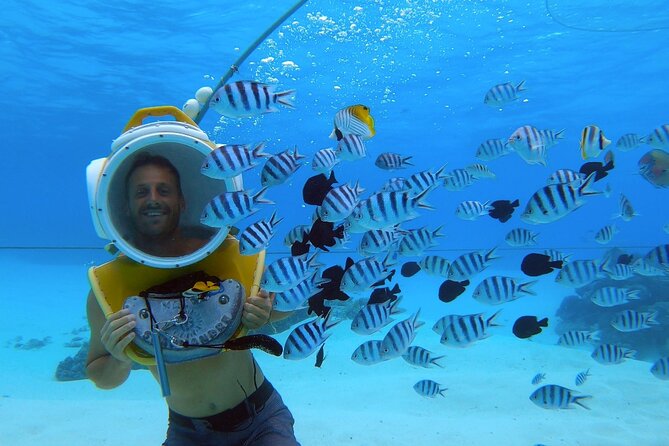
Bora Bora’s Aqua Safari lets you walk on the lagoon floor without swimming, snorkeling, or using a standard scuba mask. You wear a large helmet that keeps your head dry, breathe normally, and spend about 30 minutes at roughly 10 feet, surrounded by coral and tropical fish. It is an unusual way to see the lagoon up close.
I like two things here: the low physical barrier and the close contact with marine life. It suits a nonswimmer, a person who cannot manage a snorkel, or anyone who wears glasses and has always found mask-based activities awkward. I also like that the underwater guide stays with you, points out animals, and takes photos.
The main caution is price. At $158.76 per person, this is not a cheap way to spend two hours, especially when the actual time underwater is about 30 minutes. Ear pressure, limited helmet vision, wind, current, pickup delays, and weather cancellations are also worth considering.
Key points to know before booking
- Walk at about 10 feet: You stay on the sandy lagoon floor inside a controlled area, with a guide nearby.
- No swimming skill required: The helmet supplies air and keeps your head dry, making this a good choice for cautious beginners.
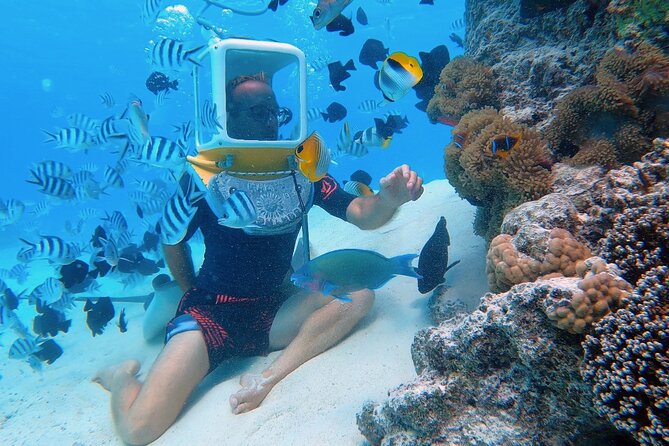
- Expect colorful marine life: Coral gardens attract parrot fish, butterfly fish, clown fish, moray eels, starfish, rays, and other lagoon species.
- The underwater session lasts 30 minutes: The complete outing takes about two to two and a half hours, including transport and instruction.
- Small groups help: The maximum is 12 people, though some outings have had about eight participants.
- Photos are taken underwater: The crew uses a high-definition camera, with images available after the activity. Confirm the current price before accepting them.
Why this helmet walk works for nonswimmers
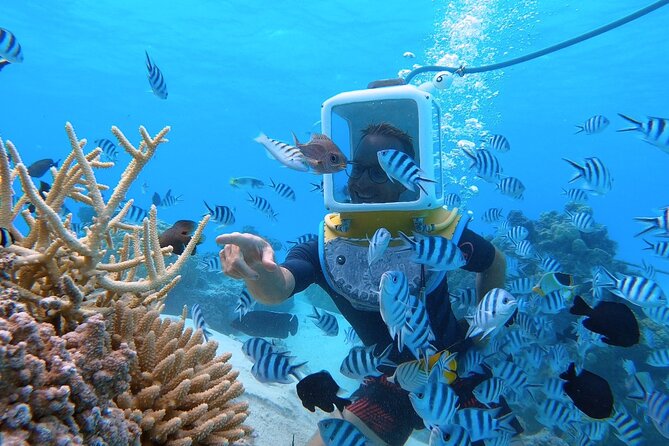
The appeal is simple: you can see Bora Bora’s underwater world without putting your face in the water. The helmet rests over your head and shoulders, while an air supply lets you breathe in the normal way. You walk rather than float, and you remain on the bottom at a shallow depth.
That makes this a strong choice for someone who cannot swim or feels uneasy with open water. One couple chose it because one person could not use a snorkel and another participant had never been underwater before. The crew’s slow descent and calm instructions helped them settle in.
You should still expect a real underwater sensation. The helmet is heavy on land, and the descent can feel intimidating at first. A few people needed time to get comfortable with the equipment, the pressure in their ears, and the restricted peripheral vision.
The helmet does not give you the wide view you get from a mask. One participant found it easy to become disoriented at first because the sides of the helmet block much of your peripheral vision. Look where the guide directs you, move slowly, and avoid turning quickly.
More Walking Tours in French Polynesia:
- Düsseldorf: Altbier-Safari Beer Walking Tour
★ 4.4 · 1,150 reviews - Madeira: Santana Jeep Safari and Referta Levada Walk
★ 4.8 · 239 reviews - Steve Kampala Walking tours (Airpals Safaris tour)
★ 5.0 · 89 reviews
The boat ride and meeting point at F6VX+53X
The stated meeting point is Ferry and Boat Point at F6VX+53X in Bora Bora. Pickup is offered, and several hotel-based arrangements include a transfer to the meeting area or directly from a resort dock. The exact pickup time matters, so read the operator’s email rather than relying only on the broad time shown during booking.
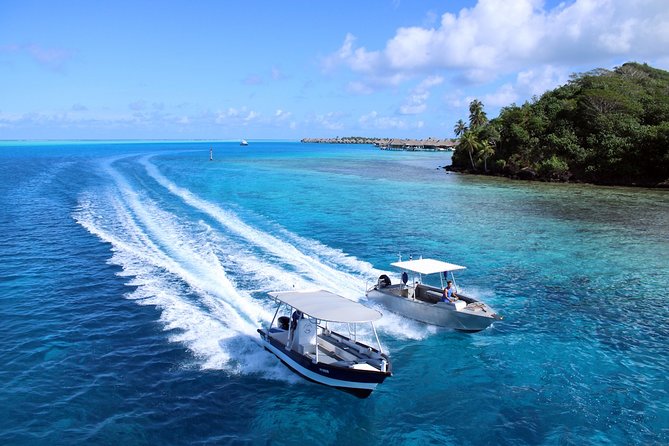
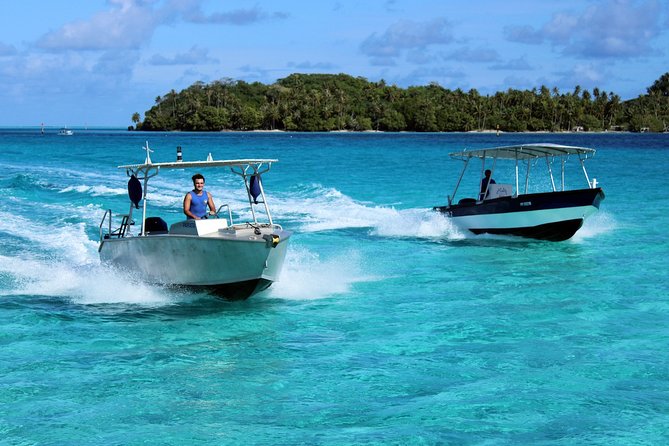
From there, you travel by boat to the helmet-walk site. The ride is part of the pleasure of the outing, giving you lagoon views before you put on the equipment. In some arrangements, a boat taxi carries you to another boat where the underwater gear is ready.
Allow extra time if you have a cruise departure, flight, or tightly timed lunch afterward. One pickup ran about 40 minutes late, although the activity still worked out for that group. Delays appear unusual, but Bora Bora’s boat transfers depend on conditions and coordination.
The activity ends back at the meeting point. The full outing is described as about two hours in one place and two and a half hours in another, so plan around the longer estimate. That gives you room for transport, the safety talk, getting into the water, and the return trip.
The safety briefing and gradual descent
Before entering the lagoon, a professional scuba instructor explains the helmet, the descent, communication, and basic safety steps. This briefing is important, especially if you feel nervous about enclosed equipment or have never been below the surface.
The crew takes you down gradually rather than sending you straight to the bottom. Guides named in the feedback include Tama, JP, Rémi, Sébastien, Frédéric, Séverine, Neven, and Nicholas. The exact team varies, but the strongest part of the operation is the hands-on attention during setup and descent.
You can expect the guide to check your equipment, help you get settled, and remain close while you walk. One guide mainly handled people going down and coming back up while another took pictures, so the crew may divide jobs during a group session.
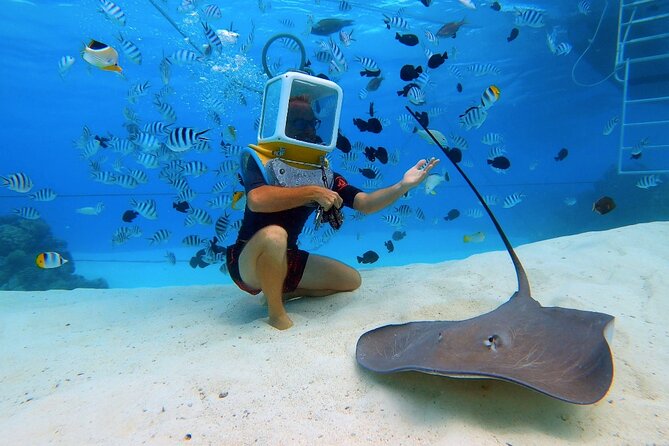
The depth is around three meters, or approximately 10 feet. Some descriptions and accounts put it closer to 15 feet, so think of it as a shallow underwater walk rather than a major descent. You are not sent out to wander freely. The walking area is roped off, which keeps the group together and helps the crew monitor everyone.
Ear pressure is the most practical comfort issue. You may need to equalize as you descend, just as you would on an airplane or in a swimming pool. Bring gum if that helps you pop your ears, and follow the instructor’s advice. If you have a known ear problem, ask the operator before booking.
Thirty minutes among coral and tropical fish
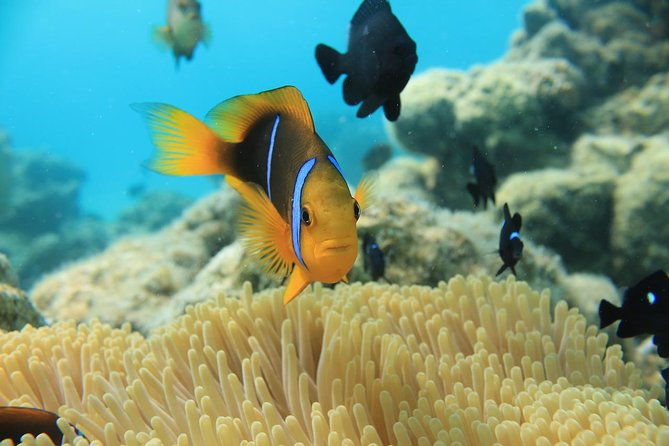
Once you reach the bottom, you walk across sand beside a coral garden. The water is described as clear, and the site attracts many small reef fish. Expect parrot fish, butterfly fish, clown fish, moray eels, starfish, and other tropical species.
Fish may gather close to the group, especially when food is offered. Some outings include small bags of bread to attract them. That can make the animals easier to see, but you can skip the food if having fish brush against you sounds uncomfortable.
A stingray is often the star of the experience. The crew has worked with a resident ray for many years, and it may swim near the group or circle the area. Keep your movements calm and listen to the guide when the ray approaches. The appeal is the close encounter, not chasing or touching wildlife.
The reef is enclosed by a rope, so this is not a long underwater exploration. That is a limitation, but it also makes the activity manageable. You can focus on the fish and coral without needing navigation skills, and the guide can keep track of the whole group.
Thirty minutes sounds short, yet it is a reasonable amount of time in a helmet. The equipment, pressure, fish activity, and constant visual stimulation make the session feel full. If you already enjoy scuba or long snorkel sessions, you may wish for more freedom. If you are anxious about the water, the fixed time and shallow site may feel reassuring.
A few more safaris around French Polynesia worth a look
- Découvrez le Mana durant la traversée de Tahiti en 4×4 Safari
★ 5.0 · 456 reviews - Bora Bora: Full day Lagoon Safari & Lunch on a Motu – ST
★ 4.9 · 443 reviews - Bora Bora Half Day 4X4 Island Safari Tours
★ 5.0 · 431 reviews - Crossing Over Tahiti Island Safari 4×4
★ 4.5 · 307 reviews
What the helmet feels like underwater
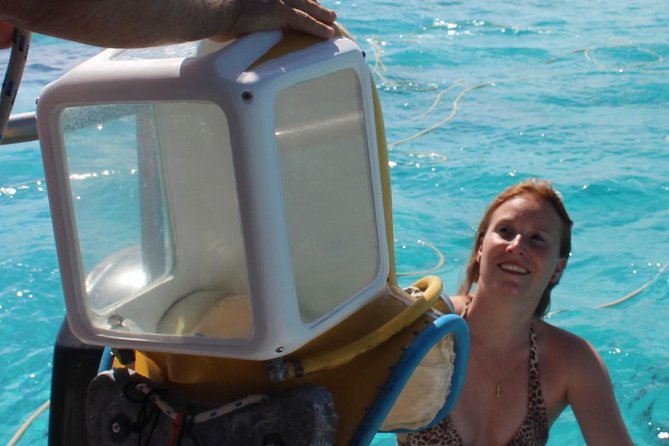
The best feature of the helmet is that your face stays dry. You breathe normally and do not need to bite a mouthpiece or clear a mask. That helps people who dislike snorkels, cannot swim confidently, wear glasses, or feel panicky when water touches their face.
The tradeoff is bulk. On the surface, the helmet can feel heavy. Underwater, buoyancy makes it more manageable, but you still need to move carefully. Walking on sand is different from walking on land, and a light current or wind can make you feel some drag.
The view is also narrower than with a mask. Peripheral vision is limited, so you should turn your whole head and pay attention to the guide. If you are prone to motion sickness or claustrophobia, tell the crew before you descend. The guides are used to helping nervous beginners, but no underwater activity is completely free of stress.
You do not need to know how to swim, but you should be able to follow instructions. Most people can participate, and the activity is presented as suitable for children and adults. The supplied information does not state a minimum age, medical screening rule, or precise restriction for every health condition, so ask the operator if you have concerns.
The guide makes the difference
A good helmet walk depends heavily on the crew. The equipment is unusual, and the first few minutes can feel awkward. Patient instructions and a calm descent matter more here than a polished speech.
The strongest crews combine safety help with a light touch. Guides such as Tama, JP, Rémi, and Sébastien are specifically praised for explaining the process clearly and helping people feel at ease. Séverine was noted for pointing out anemones and the stingray, which shows the value of having someone interpret what you are seeing rather than simply escorting you around.
The outing is shared, with a maximum of 12 participants. A group of eight still received active attention, although the crew had to manage descents, returns, guiding, and photography at the same time. If you want a private, slow-paced experience, this is not advertised as one.
Photos, food, and what to bring
An instructor takes underwater photographs with a high-definition camera. The pictures are shown after the activity, and they may be offered for purchase. Some descriptions call the souvenir photos included, while several accounts describe them as an optional paid package, so clarify this point before you commit to the images.
A waterproof camera or GoPro can be useful if the operator permits it. One person specifically recommended bringing a GoPro for close views of the reef. Keep your equipment secure and follow the crew’s instructions around the helmet and ropes.
Bring gum for ear pressure, a swimsuit, and any personal items needed for the boat ride. The activity supplies the helmet and other required equipment, and the briefing is included. The exact pickup instructions should be kept handy on your phone because the meeting time may differ from the general schedule.
Is $158.76 a fair price?
At $158.76 per person, the cost is high for a two-hour shared outing. You are paying for boat transport, specialist helmet equipment, an instructor, a controlled reef site, a 30-minute underwater session, and the chance to participate without swimming or scuba experience.
The value is strongest if this is your only realistic way to see Bora Bora below the surface. For a nonswimmer, someone uncomfortable with masks, or a family member who has always had to stay on the boat, the price may buy access to an experience that snorkeling cannot provide.
The value is weaker if you are already a confident snorkeler or certified scuba participant. You will spend less time underwater than on many reef outings, and you will have less freedom to move. The fixed route and shallow depth also limit the sense of exploration.
I would treat the photos as a separate purchase decision. They can be a useful souvenir because it is hard to photograph yourself clearly while wearing the helmet, but do not assume they are included until the crew explains the current arrangement.
Weather, cancellations, and timing
The activity requires good weather. If poor conditions force a cancellation, you are offered another date or a full refund. That rule is sensible for a boat-based activity with heavy equipment and people underwater.
The practical problem is notice. One booking was canceled on the morning of the outing, with the hotel learning about it before the participants did. The operator later explained that conditions can be unsafe even when the sky looks clear, because swells and underwater currents are not always visible from shore.
For that reason, do not schedule this as the only important event on the final morning of your stay. Book early enough to leave room for a weather-related change. You can cancel for a full refund up to 24 hours before the start time, but cancellations or changes inside that window are not refundable.
Who should book the Aqua Safari?
I would recommend it most strongly to:
- Adults or children who cannot swim but want to see the lagoon floor
- People who dislike snorkel masks or cannot use them comfortably
- First-time underwater participants who want a shallow, guided introduction
- Families looking for something different from a standard boat and snorkel outing
- Anyone who wants a close look at fish and a possible stingray encounter
I would think twice if you dislike enclosed helmets, have serious ear-pressure concerns, need wide peripheral vision, or want a long and independent reef session. Confident snorkelers may find the price hard to justify unless the helmet format itself is the attraction.
Should you book it?
Book this Aqua Safari if the main goal is to see Bora Bora underwater without needing to swim or use a snorkel. The shallow depth, roped-off area, patient crew, and normal breathing system make it one of the more approachable ways to meet the lagoon’s fish and rays.
The price and short underwater time are the real drawbacks. I would book it early in the stay, allow schedule room for weather, confirm the pickup time, and ask whether photos cost extra. For the right person, especially a nonswimmer or nervous beginner, the unusual access can make the $158.76 worthwhile.
FAQ
How long does the Aqua Safari helmet walk last?
The complete activity takes about two to two and a half hours. The underwater portion lasts about 30 minutes.
How deep does the underwater walk go?
The walk takes place at about three meters, or roughly 10 feet. Some descriptions place the maximum closer to 15 feet.
Do I need to know how to swim?
No. The activity is designed for people who cannot swim, and no swimming, snorkeling, or scuba experience is required.
What marine life might I see?
You might see parrot fish, butterfly fish, clown fish, moray eels, starfish, stingrays, and other tropical fish around the coral garden.
Is equipment provided?
Yes. The necessary helmet and other equipment are provided, along with a safety briefing before you enter the water.
Where does the activity begin and end?
It begins at Ferry and Boat Point, listed at F6VX+53X in Bora Bora, French Polynesia. The activity ends back at the meeting point.
Are underwater photos included?
The instructor takes underwater photographs with a high-definition camera. The photos are offered after the activity, but the supplied information is not consistent about whether they are included or sold separately, so confirm the current arrangement.
What happens if bad weather cancels the activity?
If poor weather causes a cancellation, you can choose another date or receive a full refund. You can also cancel your own booking at least 24 hours before the start time for a full refund.
Just added around French Polynesia
- Private Safari Adventure Tour in Bora Bora with Local Guide★ 5.0 · 15 reviews
- Full-day Lagoon Safari Tour with Lunch in Bora Bora – Shared tour★ 5.0 · 74 reviews
- Half day lagoon safari tour in Bora Bora- Shared tour★ 5.0 · 118 reviews
- Moorea : Safari Nature and Culture Tour with local guide★ 5.0 · 27 reviews
- Moorea: Half-Day Open-Air 4WD Safari with Hotel Transfers★ 4.6 · 240 reviews
- Moorea:4X4 safari excursion between land and sea with lunch★ 4.7 · 28 reviews
- Bora Bora by Land and Sea: 4WD Safari and Snorkel★ 4.7 · 80 reviews
- Bora Bora: Eco Shark and Snorkeling Safari★ 4.8 · 156 reviews
Walking Tours, compared.

Madeira: Santana Jeep Safari and Referta Levada Walk
Read our review →
Steve Kampala Walking tours (Airpals Safaris tour)
Read our review →

Addo Elephant Park and Giraffe Walk Full Day Safari
Read our review →
4 Days lodge safari Tarangire , Ngorongoro crater & Walking
Read our review →
Livingstone Island and Devil’s Pool Walking Safari
Read our review →
LIVINGSTONE ZAMBIA:SAFARI GAME DRIVE & RHINO WALK
Read our review →Browse the lists this tour appears in