
REVIEW · HAMBANTOTA
Bundala National Park Safari (PRIVATE TOURS)
Bundala is the Sri Lankan safari park for people who would rather watch a painted stork stalk through shallow water than queue behind ten jeeps for one sleepy leopard. This private five-hour outing takes you through lagoons, waterways, dunes, and coastal scrub, with birds as the main event and elephants, crocodiles, monkeys, and turtles adding plenty of excitement.
I like two things here: the park is usually calmer than Yala, and the guides are serious bird spotters. Sakun is especially strong with birds and photography, while Ishan, Maduka, Surimal, and Imal have all been praised for patient driving and sharp eyes. The main catch is simple: the national park entrance ticket is not included, so the $36 price is not the full cost.
Key points at a glance
- A quieter alternative to Yala: Bundala often gives you a peaceful safari with fewer jeeps and less engine noise.
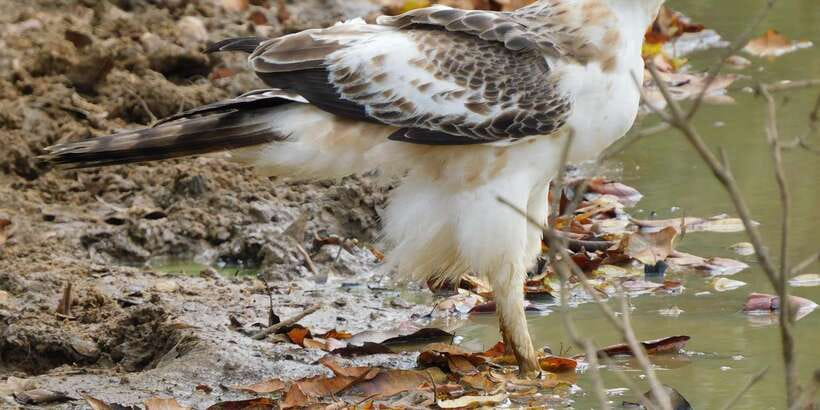
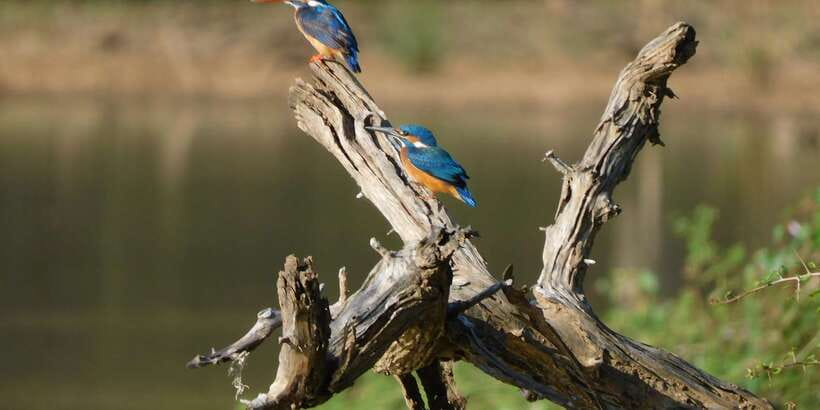
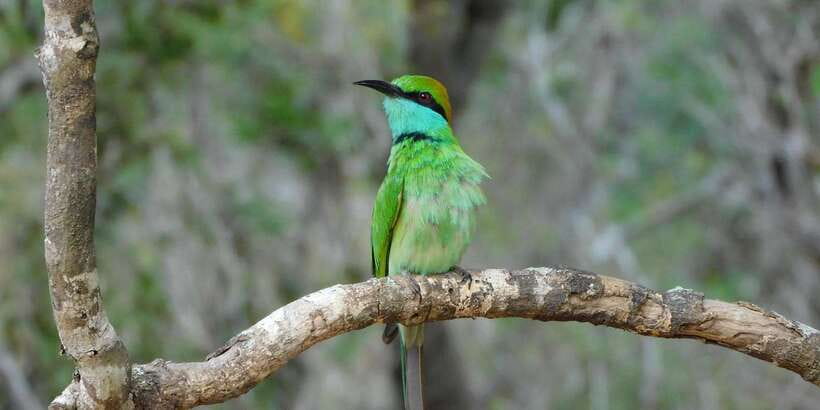
- Birdwatching is the star: Look for painted storks, pelicans, eagles, bee-eaters, kingfishers, openbills, herons, jacanas, and many more.
- Wildlife is not limited to birds: Elephants, crocodiles, monkeys, lizards, hares, otters, jackals, and marine turtles have all been seen on these outings.
- Private five-hour format: You get a private jeep, guide, hotel pickup, bottled water, cool drinks, and binoculars.
- A useful coastal finish: Some outings include time near the coast, with beaches, sea views, and sometimes a sunset stop outside the park.
- Best for patient observers: The experience rewards people who enjoy stopping quietly, scanning reeds, and learning what they are seeing.
Why Bundala feels different from Yala
Bundala National Park covers about 62 square kilometers and is built around wetlands. Lagoons, channels, marshes, sand dunes, and dry ground create a patchwork of habitats. That variety is why the park matters far beyond safari tourism.
Bundala became a Ramsar wetland in 1991, an international label for wetlands of major importance. It was also named a UNESCO biosphere reserve in 2005. Those titles are not just decoration. They explain why this relatively compact park attracts such a large range of birds and why the waterways are central to the experience.
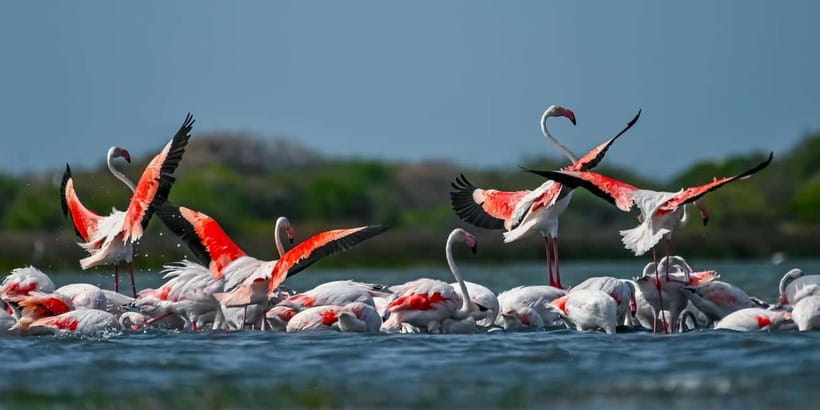
The park shelters about 197 bird species. Many arrive from Siberia and India between August and April, with December through March usually the strongest period for migrant birds. Greater flamingos also use Bundala as a winter refuge, and as many as 2,000 have been recorded at one time.
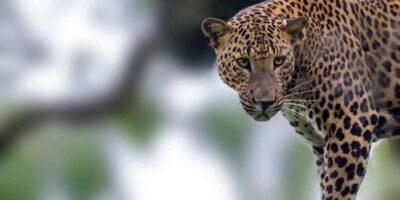
You should set your expectations correctly. Bundala is not mainly a big-cat safari. The pleasure comes from watching a wetland work: a kingfisher dropping toward the water, an openbill probing mud, an eagle circling above reeds, or a crocodile lying so still that you nearly miss it.
More National Park Safaris in Sri Lanka
- Udawalawe National Park | Private Safari Tour
★ 5.0 · 1,499 reviews - Yala National Park Safari Tours: Morning/Evening/Full Day
★ 4.8 · 818 reviews - Udawalawe National Park: Elephant Safari with Expert Guide
★ 4.9 · 641 reviews
Starting from the Yala area
Pickup is included from hotels in Weerawila, Debarawewa, Tissamaharama, Yoda Kandiya, Kataragama, Kirinda, Bundala, and the wider Yala area. The same locations are available for drop-off.
That coverage makes this practical if you are staying around Tissamaharama or preparing for a Yala visit. You do not need to arrange a separate taxi to reach the park, and the private format keeps the day tied to your own group rather than a large shared vehicle.
The exact start time depends on availability. The five-hour duration is long enough to explore properly without turning the day into an exhausting full-day safari. Morning and afternoon outings both appear in the experience, and an afternoon trip can finish with coastal scenery or a sunset stop, depending on the route and guide.
One useful point: the advertised price is $36 per person, but the entrance fee is extra. For a private jeep, transport, guide service, bottled water, cool drinks, and binoculars, that is a fair starting price. Add the park ticket to your budget before comparing it with other safari options.
Inside the park: wetlands first
Once you enter Bundala, the road moves through a mix of open tracks, wetland edges, and dry vegetation. You may spend several minutes looking at what seems to be an empty patch of reeds. Then the guide points out a bird tucked into the shade, a crocodile along the bank, or an elephant partly hidden beyond the scrub.
This is where the guide makes the biggest difference. Sakun has a strong reputation for bird identification and photography, and he knows when to stop, switch off the engine, and give you time to frame a picture. Maduka has also been praised for spotting wildlife at a distance and explaining birds, reptiles, and the park’s ecosystem.
Ishan is another name worth noting. He has guided visitors to large numbers of bird species, elephants, crocodiles, monkeys, lizards, and smaller mammals. Surimal has been particularly effective on afternoon drives, pointing out pelicans, eagles, painted storks, green bee-eaters, macaques, and langurs.
You are not simply driven from one famous animal to the next. The best moments often come from short stops. The engine goes quiet. Everyone scans the water. The guide explains what you are seeing, then waits rather than rushing you onward.
Birdwatching with a real purpose
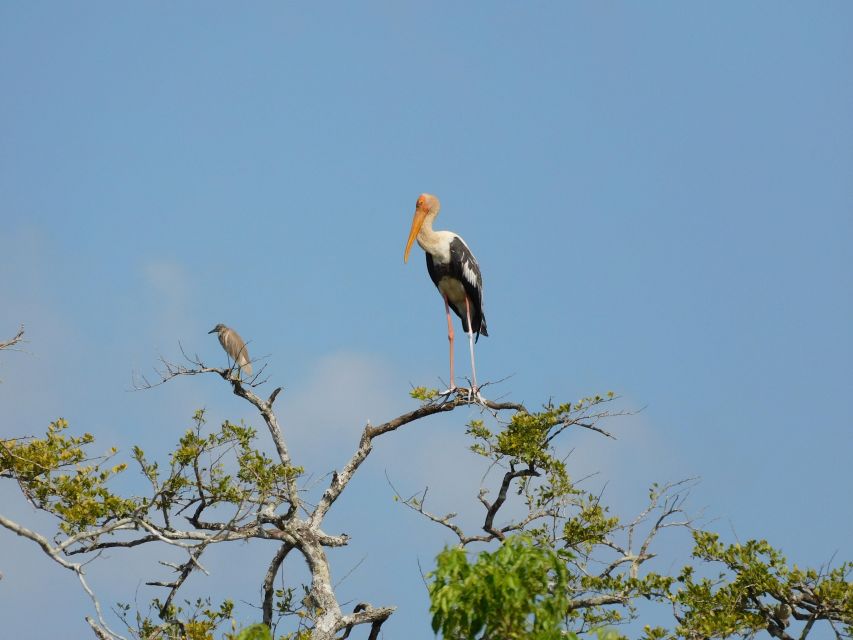
Bundala is one of Sri Lanka’s best choices if birds matter to you. Even if you are new to birdwatching, the range of shapes and colors gives the safari plenty of rhythm.
You might see grey-headed swamp hens, painted storks, white-throated kingfishers, Asian openbills, lapwings, jacanas, coucals, munias, glossy ibises, Sri Lankan green pigeons, serpent eagles, Brahminy kites, and purple herons. Green bee-eaters are another frequent highlight, with their small size and quick movements making them fun to watch.
The free binoculars are a useful inclusion, not a token extra. Wetland birds are often across open water or perched high in a tree, and binoculars let you see details without asking the jeep to move closer. If you own a camera with a long lens, bring it. Sakun in particular has an interest in photography and may help you find better positions for pictures.
Birdwatching here takes patience. You will not always get a close view, and some species may appear only as a distant silhouette. If you like constant action, this could feel slow. If you enjoy noticing small details, the quiet pace is one of Bundala’s strengths.
Same country, a different kind of drive:
- From Colombo: Sigiriya and Dambulla Day Trip with Safari
★ 4.7 · 842 reviews - Full day Safari – Yala National Park – 04.30 am to 06.00 pm with – Janaka safari
★ 5.0 · 603 reviews - Yala National Park: Half, 7-Hour, or Full-Day Safari & Meals
★ 4.8 · 489 reviews - From Sigiriya: Minneriya National Park Private Jeep Safari
★ 4.9 · 415 reviews
Elephants, crocodiles, monkeys, and smaller animals
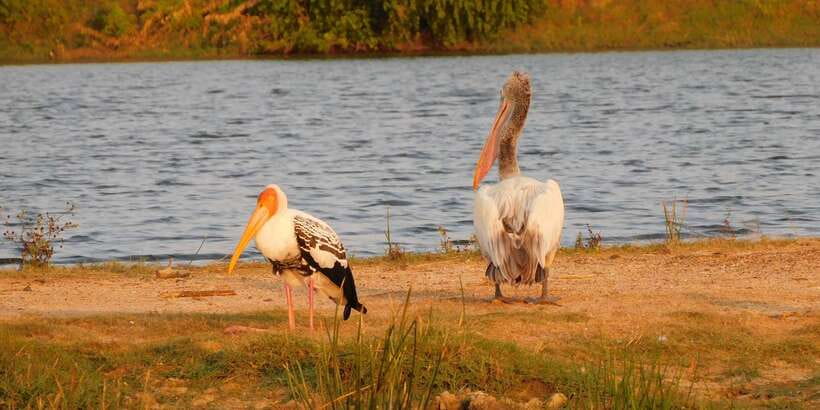
Elephants provide the biggest land-animal moment. The park may hold roughly 15 to 60 elephants depending on the season, with December described as the best month for finding them. Sightings are never guaranteed, but several outings have included groups with young calves.
One particularly good kind of encounter is a herd near the jeep, where you can watch the adults position themselves around a baby. The guides are expected to respect the animals, and several trips have been praised for switching off the engine and allowing calm observation.
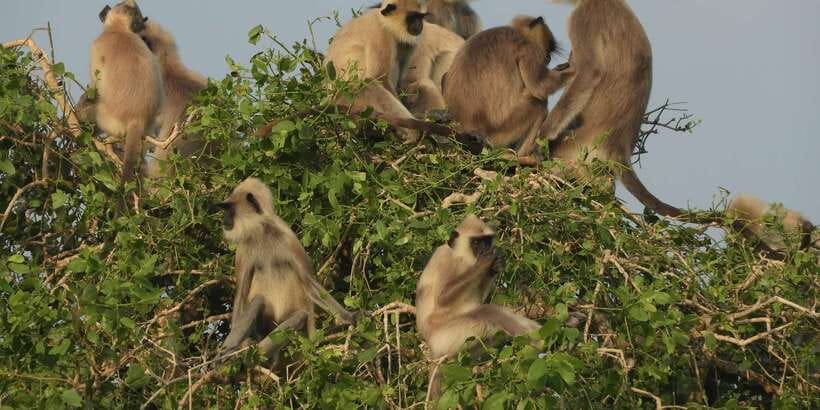
Crocodiles are common enough to be part of the park’s character. Look along lagoon edges and muddy banks, where one may be resting with only its eyes and back visible. Monkeys add movement in the trees and along the track. Both macaques and langurs have been seen.
The smaller sightings can be just as memorable. You might find a hare, giant squirrel, civet, lizard, otter, or golden jackal. One outing produced close views of an otter and a golden jackal, while another included sea turtles. These are reminders that Bundala works best as a broad wildlife safari rather than a single-animal hunt.
The coast and the turtle connection
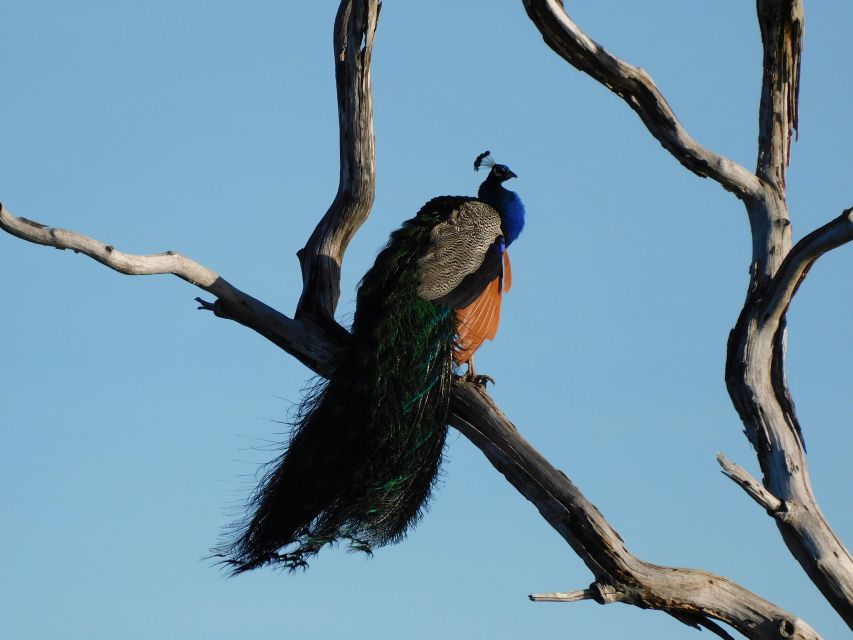
Bundala is not only an inland wetland. Its coastal setting gives the safari a useful second act. Some guides stop at a coastal viewpoint or beach, where you can look out over the sea, stretch your legs, and take in a very different setting from the lagoons.
Four of Sri Lanka’s five marine turtle species lay eggs along this coast between October and January: olive ridley, green, leatherback, and loggerhead turtles. A safari does not promise a nesting turtle or hatchling sighting, so treat this as important background rather than a guaranteed part of the route.
The coastal stop is especially welcome on an afternoon trip. After several hours of slow wildlife watching, sea air and a wide beach give the outing a clear finish. Some trips have included fruit, such as watermelon, at a scenic place near the coast. That kind of simple pause fits the day better than a rushed restaurant stop.
Guides who shape the experience
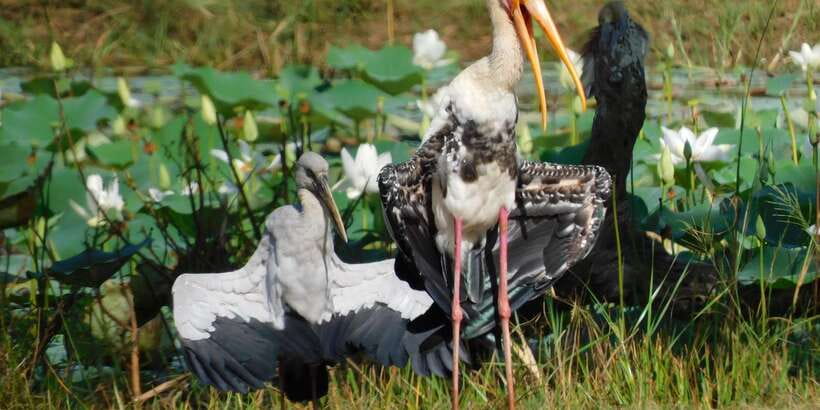
The company is Yala Dreams Wild Safari Tours Sri Lanka, and the guide matters more here than the vehicle. Bundala can look quiet at first glance. A guide who knows bird calls, feeding spots, and animal habits turns that quiet into something worth paying attention to.
Sakun is the clearest choice for a bird-focused outing and photography. Ishan is a strong all-round option, with a record of finding birds and mammals and adding thoughtful extra stops, including a place to see large bats outside the formal safari route. Maduka has been praised for bird knowledge, wildlife spotting, and patient photography stops.
Surimal has guided enjoyable afternoon drives, while Imal has been effective at finding animals at a distance. Guide availability can change, so you may not be able to select a specific person when booking. If birds are your main reason for coming, it is sensible to request the strongest bird guide available.
The extra touches also matter. Bottled water, cool drinks, and binoculars are supplied. One guide even helped with souvenir shopping after the safari, though that should be treated as a kindness rather than a promised stop.
A quiet alternative to a crowded safari
The strongest reason to choose Bundala is atmosphere. Several outings have taken place with very few other jeeps, and one low-season safari had the park almost entirely to itself. That gives you space to hear birds, watch animals without a traffic jam, and take photographs without vehicles crowding the frame.
This does not mean Bundala is empty every day. Conditions, season, and timing affect how busy it feels. Still, it generally offers a calmer experience than Yala, especially if you value silence over the chance of seeing a leopard.
That comparison is important. Yala is often chosen for its famous big cats and larger safari profile. Bundala gives you wetlands, birds, elephants, and coastal nature. I would not choose Bundala as a direct replacement if your only goal is leopard spotting. I would choose it if you want a slower, more intimate look at Sri Lanka’s birdlife and wetland ecology.
What the $36 price really covers
At $36 per person, the tour offers solid value for a private five-hour outing, especially for a small group. The cost includes private transport, safari jeep use, a live English-speaking guide, hotel pickup and drop-off, bottled water, cool drinks, binoculars, and the driving and guiding service.
The missing item is the park entrance ticket. That is the main cost detail to clarify before you commit. Your final bill will be higher than $36, and the exact amount is not provided here.
The value improves if you are sharing the private jeep with companions. You get a personal guide rather than a large group arrangement, and the driver can stop when something interests you. For a solo visitor, the per-person price may feel less attractive once the entrance fee is added, but the private format still gives you control over the pace.
Free cancellation up to 24 hours before the tour and the option to reserve now and pay later make the booking less risky. Starting times depend on availability, so check that carefully if you are planning around a train, transfer, or second safari.
Who should book this safari?
You should seriously consider Bundala if you enjoy birds, photography, wetlands, and quiet observation. It suits couples, families, and small groups who want a private vehicle and hotel pickup around the Yala area.
It is also a good choice if you have already visited Yala and want a different kind of wildlife day. The contrast is clear: fewer crowds, more water, and a stronger focus on birds and coastal habitats.
You may want another safari if you need constant close-up animal action or if you are selecting a park mainly for leopards. Bundala can produce elephants, crocodiles, monkeys, and unusual mammals, but wildlife is still wild and sightings cannot be guaranteed.
Bring a camera, keep your phone ready for bird names and notes, and use the binoculars. Wear practical clothes for a five-hour outdoor trip. Most of all, give the guide time to work. The reward often comes after a few quiet minutes of looking.
Should you book the Bundala private safari?
Book it if you want a calm, bird-rich safari with a private jeep, hotel pickup, and guides who take spotting seriously. Bundala offers an appealing mix of wetlands, elephants, crocodiles, coastal scenery, and migratory birds, often without Yala’s crowd of vehicles.
Before booking, confirm the park entrance fee, start time, and available guide. Ask for a bird-focused guide such as Sakun, Ishan, or Maduka if that is your priority. If you accept that the ticket costs extra and that the park’s best moments may be small and quiet, this is a very good-value way to see a less hectic side of Sri Lanka.
FAQ
How long is the Bundala National Park safari?
The guided safari lasts five hours.
What is the price of the safari?
The listed price is $36 per person. The national park entrance ticket is not included.
Is this a private safari?
Yes. The tour uses a private group and a private safari jeep.
Where is hotel pickup available?
Pickup is available from hotels in Weerawila, Debarawewa, Tissamaharama, Yoda Kandiya, Kataragama, Kirinda, Bundala, and the wider Yala area.
Which language does the guide speak?
The live tour guide speaks English.
Are binoculars provided?
Yes. Free binoculars are included, along with bottled water and cool drinks.
What animals and birds might I see?
The park is home to nearly 200 bird species, including painted storks, pelicans, eagles, bee-eaters, kingfishers, openbills, herons, and flamingos. You might also see elephants, crocodiles, monkeys, lizards, hares, civets, giant squirrels, otters, jackals, and marine turtles.
Can I cancel the booking?
You can cancel up to 24 hours in advance for a full refund. The tour also allows you to reserve now and pay later.
Just added around Sri Lanka
- Tuk Tuk Safari Colombo Sri Lanka★ 5.0 · 19 reviews
- Private Day Trip to Sigiriya, cave and National park Safari Tour★ 4.5 · 143 reviews
- Yala National Park Private Jeep Safari From Colombo & Negombo★ 4.5 · 14 reviews
- Privet One Day Udawalawe National Park Elephant Safari★ 5.0 · 15 reviews
- From Colombo: Sigiriya and Dambulla Day Trip and Safari★ 4.5 · 132 reviews
- Colombo Tuk Tuk Safari★ 5.0 · 25 reviews
- Tuk Tuk Private Safari Tour Exploring Sri Lanka’s Capital Colombo★ 5.0 · 109 reviews
- Private Wilpatu National Park Leopard safari from Colombo/Negambo★ 5.0 · 13 reviews
Hambantota Safaris, compared.
Yala National Park Safari Tours : Half Day & Full Day
Read our review →
Yala National Park Safari Tour From Hambantota port
Read our review →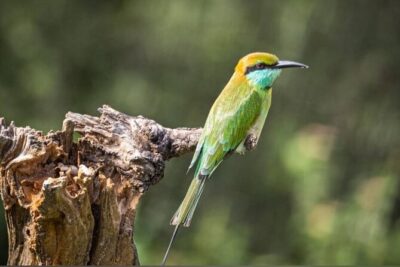
Yala Safari Tour from Hambantota Port by Ajith Safaris
Read our review →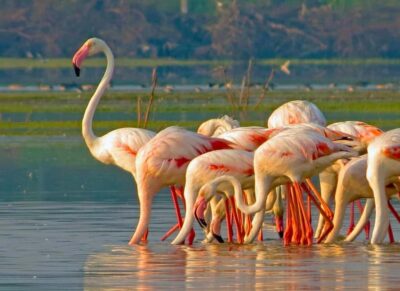
From Hikkaduwa/Mirissa/Galle/Tangalle – Yala Leopard Safari
Read our review →
Hambantota Port: Yala National Park Safari (Shore Excursion)
Read our review →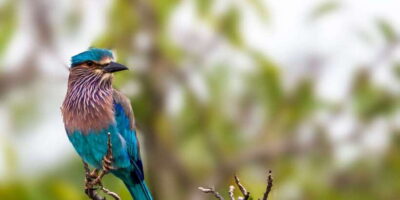
Hambantota Port: Yala National Park Wildlife Safari in a 4×4
Read our review →Browse the lists this tour appears in