
REVIEW · ARUSHA
9-Day Serengeti Migration Footsteps Tanzania Safari
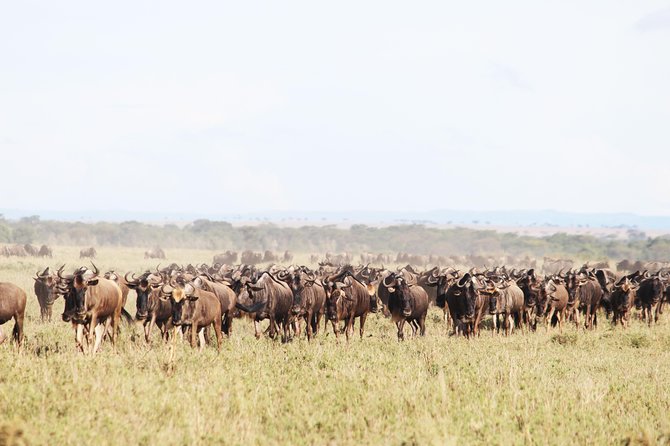
The main draw here is simple: four nights in the Serengeti give you a better chance to follow the Great Migration than a quick one-night stop. The route also adds Tarangire’s elephants, the Ngorongoro Crater, and bird-filled Lake Manyara, so you get much more than one dramatic wildlife scene.
I like the private format and the range of guides available through Lion King Adventures. Guides including Enock, Mwita, Gilbert, and Yusuph have been praised for sharp animal spotting, calm driving, and thoughtful care. The main consideration is timing: migration sightings depend on the month, animal movements, and luck, so a river crossing is never guaranteed.
Key points to know before booking
- Four Serengeti nights: More time in the park means less pressure to see everything in one game drive.
- Migration timing matters: The northern Serengeti is the focus from July to November, while Ndutu is used from December to March.
- Private travel: Only your own group takes part, with private transportation included.
- Strong guide reputation: Enock, Mwita, Gilbert, Yusuph, Amani, Simon, and others are named in the tour’s feedback.
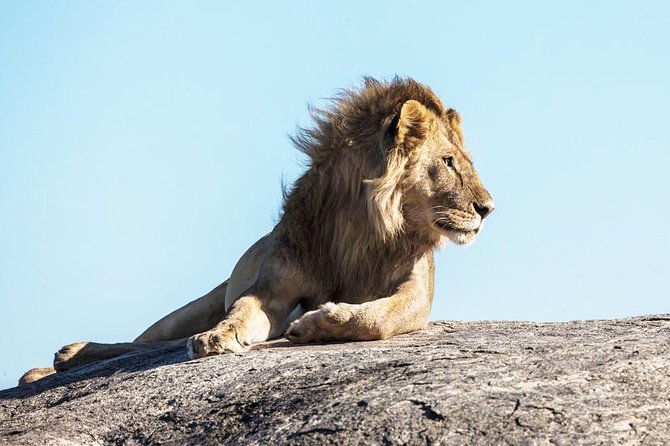
- Big Five country: The route offers good chances for lion, leopard, elephant, buffalo, and rhinoceros, especially in the Serengeti and Ngorongoro Crater.
- Price and pacing: At $4,539 per person, this is a serious investment, but it includes nine days, meals, park visits, accommodation arrangements, and private transport.
Why four Serengeti nights make a difference
A safari built around the Great Migration needs time. The wildebeest do not follow a schedule made for visitors, and a single afternoon in the park can easily pass without a river crossing or a close predator sighting.
This itinerary gives you a longer stay in the Serengeti, including time in the northern section and a return toward Seronera. That variety matters. The north is quieter and more remote than the main southern entry areas, while Seronera is known for steady wildlife viewing and resident predators.
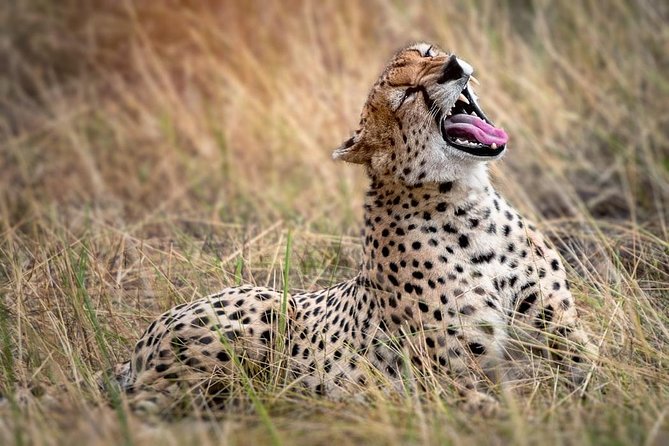
You can expect long days in a safari vehicle. That is part of the deal. The reward is the chance to watch natural behavior rather than simply collect animal names: elephants interacting beneath baobabs, wildebeest gathering at a riverbank, or lions and cheetahs moving through the grass.
The migration focus changes with the season. From July to November, the itinerary aims for the remote northern Serengeti and the Mara River region. From December to March, the action shifts toward Ndutu. Book around the season you care about, not just the number of days.
A few more safaris around Arusha worth a look
- Balloon Safari & Bush Breakfast in Serengeti – Miracle Experience
★ 5.0 · 1,646 reviews - 4 Days Group Camping Safari
★ 5.0 · 1,101 reviews - 5 Days Group Camping Safari
★ 5.0 · 730 reviews
Day 1: A quiet start in Arusha
Your first day begins with airport pickup by a Lion King representative and transfer to your Arusha accommodation. There is no listed sightseeing program, which is useful after an international flight.
You have time to rest, prepare, and get ready for the early starts ahead. Arusha is the practical gateway for northern Tanzania safaris, and beginning here keeps the next morning organized rather than rushing directly from the airport into a park.
The included meal plan lists breakfast on all nine days, lunch on eight days, and dinner on seven. Since the first day is mainly arrival and settling in, check the exact hotel and meal arrangements before you go.
Day 2: Tarangire’s elephants and baobabs
After breakfast, you drive to Tarangire National Park for a full day of game viewing. This is a strong first park because it looks and feels different from the Serengeti.
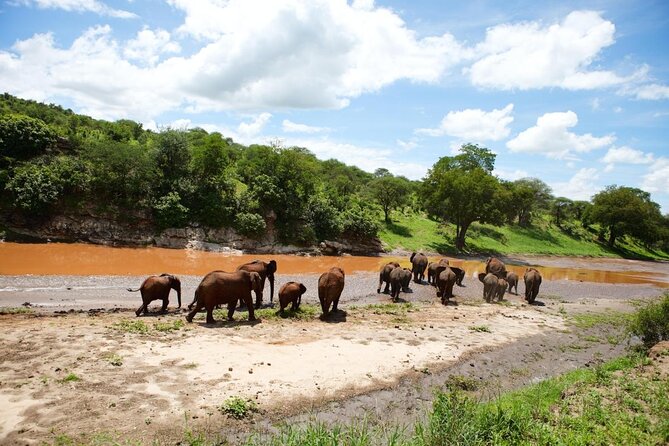
Tarangire is known for its old baobab trees and nine vegetation zones. The Tarangire River draws animals toward water, and the park is especially noted for its large elephant population. You may also see lion, leopard, buffalo, zebra, giraffe, antelope, and many bird species.
I like this stop because it gives you an immediate sense of Tanzania’s range. The huge baobabs make excellent reference points, and elephant families are often the visual highlight. The drawback is the long road day from Arusha, followed by a full game drive. If you want a gentle start, this will feel busy.
Your guide matters here. Animal spotting is not only about luck. A guide who knows how to read tracks, movement, and other vehicles can turn a distant shape into a worthwhile sighting. The operator’s named guides, including Gilbert, Mwita, Enock, and Yusuph, are repeatedly praised for this part of the job.
Day 3: Through Ngorongoro toward the Serengeti
The drive to the Serengeti passes through Iraqw farming country, where wheat and corn are grown in the fertile highlands. You then cross the Ngorongoro Conservation Area, with its misty forest and possible sightings of baboons, elephants, or even leopard.
The route gives you a first look at the Ngorongoro Crater before continuing west. You reach the Serengeti around midday, which leaves time to begin seeing the park rather than simply arriving after dark.
The Serengeti is Tanzania’s largest national park, with grassland, swamps, lakes, and other habitats. That variety helps explain why the park supports both migrating herds and resident predators.
One practical point: the drive itself is part of the experience, but it is not a short transfer. Roads can be tiring, and the day combines scenery, wildlife stops, and a major change of region. Keep your expectations realistic and treat the journey as part of the safari rather than dead time.
Same country, a different kind of drive:
- 3 Days Serengeti & Ngorongoro Group Camping Safari
★ 5.0 · 574 reviews - 7-Day Premium Luxury Tanzania Safari All-Inclusive
★ 5.0 · 426 reviews - 5-Day Highlights mid-Range Crater, Serengeti, Tarangire
★ 5.0 · 296 reviews - 3-Day Classic Serengeti Safari
★ 5.0 · 263 reviews
Days 4 and 5: Searching for a Mara River crossing
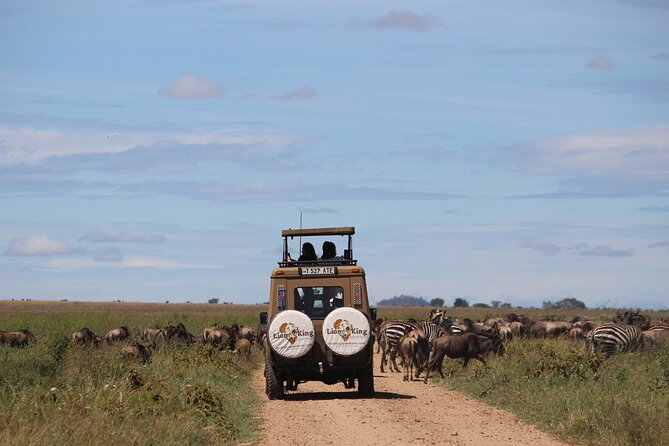
Day 4 takes you north from Seronera through rolling country marked by small rivers, hills, and kopjes. Lobo Kopje is one of the notable geological features along the way.
This northern section receives fewer visitors than the southern entry areas because it is more remote. That makes the journey worthwhile even before you see the migration. The area has a permanent wildlife population, so you are not relying entirely on wildebeest to make the day interesting.
The river crossing is the great hope. Huge herds may gather beside the Mara River, sometimes waiting for a long time before one animal makes the first move. Once the herd begins, the scene can change in seconds, with rushing wildebeest, steep banks, crocodiles, dust, and confusion.
But you need to understand the limits. The animals may gather and then move away. They may cross at a distant point. They may cross before you arrive or not cross at all. No responsible safari company can promise this event.
Day 5 allows a full day of searching, which is one of the strongest parts of the plan. You are not forced to leave after one short look. Early breakfast helps you make the most of the daylight, and your guide can adjust the day according to where the herds are moving.
The itinerary describes August as the key period for this northern section. The wider seasonal guidance places the northern migration from July to November. If your priority is river crossings, ask for the most current advice before booking because the animals do not always match the calendar.
Day 6: Returning toward Seronera
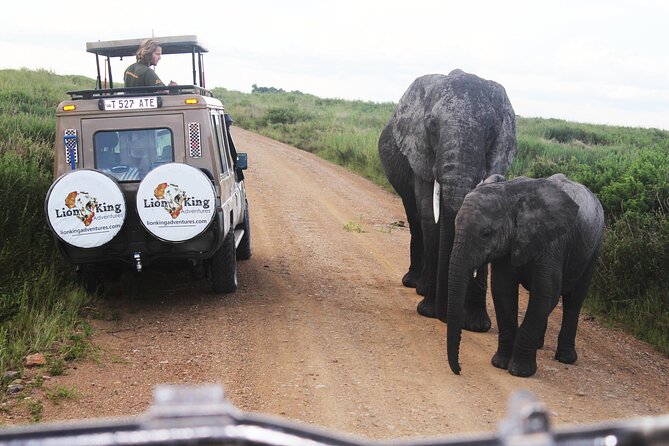
After breakfast, you return toward Seronera with more game-viewing time. This change of direction gives you another chance at the Serengeti’s resident predators.
Lion, leopard, and cheetah are all possible targets, along with the migrating herds. The Serengeti is valuable because you can have an excellent day even if the migration is elsewhere. Resident animals remain in the park, and the open plains make distant sightings possible.
The day ends with dinner and time around a fire under the African night sky. That evening pause is an important part of the experience. Safari is not only about racing from one sighting to another. It is also about sitting quietly after a long day and letting the scale of the plains sink in.
The itinerary does not name the exact camps or lodges for every night. The accommodation feedback does point to comfortable tented camps and, in one case, Nyota Luxury Camp near the crater experience. Ask for the exact lodging list before paying if room style and camp location are important to you.
Day 7: From the Serengeti to the crater rim
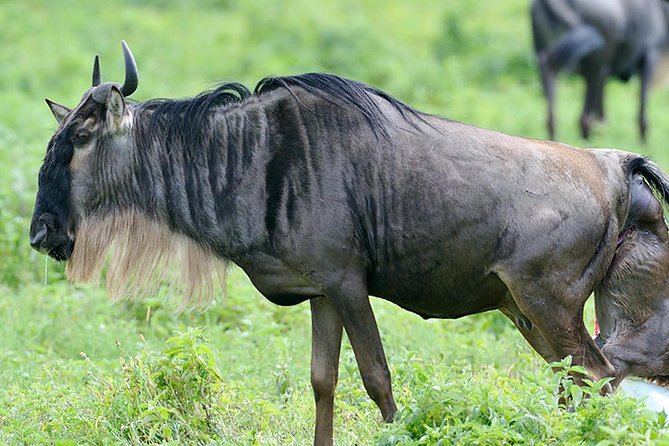
You take another Serengeti game drive before heading toward Ngorongoro. Reaching the crater rim in the afternoon gives you a first view of the caldera before the next day’s descent.
This is a scenic transition, but it is also another long driving day. You are moving from the open Serengeti to a compact wildlife area, so the feel of the safari changes quickly.
Spending the night near the rim is a smart choice. You can start the crater visit early rather than crossing the entire conservation area in the morning. The rim setting also gives you a memorable preview, with streams, open grassland, and animals below.
Day 8: Ngorongoro Crater’s compact wildlife world
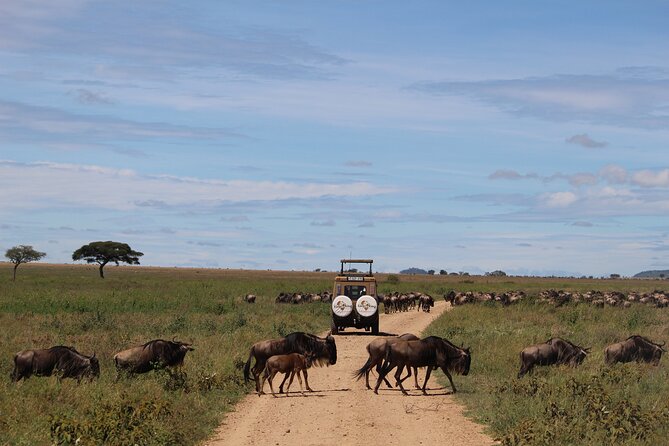
An early breakfast is followed by a descent to the crater floor. Ngorongoro is about 610 meters deep and covers roughly 260 square kilometers. The crater formed around three million years ago after a huge volcanic explosion, leaving an enclosed ecosystem.
This is one of the best places on the route for concentrated wildlife viewing. The open floor can offer lion, elephant, buffalo, leopard, rhinoceros, wildebeest, zebra, and many other animals. The absence of fences between the animals and the reserve creates a powerful sense of openness, even though the crater walls contain the area.
The crater differs from the Serengeti in scale. You are not looking across endless plains. You are in a defined natural bowl where grassland, streams, and wildlife are gathered within a relatively small area.
An early start is worth the effort. You gain more useful viewing time and avoid wasting the best part of the morning on the road. The tradeoff is that you will have already spent several days rising early, so this is not a restful holiday schedule.
Day 9: Lake Manyara and the road back to Arusha
The final park is Lake Manyara, about 120 kilometers west of Arusha. The shallow, seasonal salt lake covers about 70 percent of the park and attracts thousands of flamingos as well as around 500 bird species.
Manyara adds a different kind of wildlife day. You move through open grassland, woodland filled with primates, and cliffs dotted with baobabs. Possible sightings include monkey, giraffe, zebra, wildebeest, buffalo, elephant, and lions lounging in trees.
The park is relatively small, so it works well as a final stop before returning to Arusha. After lunch, you drive back and arrive in the late afternoon.
Do not expect this to be another full Serengeti-style day. Lake Manyara is compact and varied, and its birdlife is a major reason to visit. If your main goal is the migration, this final park is an added bonus rather than the central reason to choose the tour.
What the $4,539 price delivers
At $4,539 per person, this is not a budget safari. The value comes from the route, the private vehicle, and the time spent in the Serengeti rather than from a single attraction.
Included services are private transportation, parking fees, breakfast for nine days, lunch for eight days, and dinner for seven days. Park entry is included for the listed visits. International flights and gratuities are not included, so allow extra money beyond the advertised price.
Private travel is important here. Only your own group takes part, so you are not sharing the vehicle with unrelated passengers. That can make a real difference on long drives and at wildlife sightings. You can ask questions freely, spend more time at a sighting, and discuss adjustments with your guide.
The strongest value is for people who want a serious wildlife trip with several major parks. If you only have one goal, such as seeing a Mara River crossing, the price carries more risk because no crossing can be guaranteed.
Guides, comfort, and the human side of the safari
The guide can shape the entire trip. Lion King Adventures uses guides including Enock, Mwita, Gilbert, Yusuph, Amani, Simon, Richard, Immanuel, Leonard, Shafino, and Ozzy.
Specific strengths associated with the guide team include strong eyesight for finding animals, careful driving, warm personal attention, and detailed explanations of wildlife. Mwita is described as having been born and raised in the Serengeti, while other guides are praised for handling family trips, honeymoons, senior travelers, and groups of friends.
That range matters. A good guide is not only an animal spotter. You also need someone who can keep the days organized, respond to your interests, and help you feel safe on rough roads and long drives.
Accommodation quality is another bright point. The available information describes comfortable lodges and clean tented camps, with Nyota Luxury Camp receiving special praise. Exact properties are not specified across every night, so request the confirmed accommodation list if comfort level is central to your choice.
Who should book this safari
I would recommend this trip to you if you want a private, wildlife-heavy itinerary and can handle long road days. It suits first-time safari visitors who want the Big Five, families with older children or teenagers, couples on a honeymoon, and photographers who value repeated chances in the Serengeti.
It is also a good fit if you want more than a migration chase. Tarangire, Ngorongoro, and Lake Manyara give you elephants, crater wildlife, birds, forests, baobabs, and varied scenery.
I would hesitate if you dislike early breakfasts, long drives, basic safari-road conditions, or uncertainty. A river crossing is a natural event, not a scheduled performance. Also, if you need a fixed luxury hotel standard every night, confirm the camps before booking.
Cancellation is free up to 24 hours before the start time for a full refund. Changes or cancellations made inside that window are not accepted for a refund, and the operator may offer another date or a full refund if the minimum number of participants is not reached.
Should you book the 9-Day Serengeti Migration Footsteps safari?
Book it if your priority is time in the Serengeti, private guiding, and a broad northern Tanzania route. The four Serengeti nights are the key advantage, especially when paired with the seasonal plan for the northern river region or Ndutu.
Choose it with open eyes. You may see the Big Five, excellent predators, elephants under baobabs, and large herds, but the exact sightings will depend on nature. At $4,539, the trip makes the most sense when you value time, flexibility, and a well-rounded safari more than a guaranteed single spectacle.
FAQ
Where does the safari start?
The safari starts in Arusha, Tanzania. Airport pickup by a Lion King representative is provided on the first day.
Where does the safari end?
The activity ends back at the Arusha meeting point after the drive from Lake Manyara.
How long is the safari?
The safari lasts approximately nine days.
What time does the activity start?
The listed start time is 8:30 am.
Is this a private tour?
Yes. This is a private activity, and only your own group takes part.
Which parks are included?
The route includes Tarangire National Park, Serengeti National Park, Ngorongoro Crater, and Lake Manyara National Park.
When is the migration in the northern Serengeti?
The northern Serengeti migration period is listed as July through November, with August highlighted for the northern region and possible Mara River crossings.
When is the migration found near Ndutu?
The migration is listed in the Ndutu region from December through March.
Are meals included?
Breakfast is included for nine days, lunch for eight days, and dinner for seven days.
Are international flights included?
No. International flights are not included. Gratuities are also not included.
Just added around Arusha
- 6 days Tanzania budget safari★ 5.0 · 65 reviews
- 7 days great migration safari★ 5.0 · 77 reviews
- serengeti, ngorongoro & tarangire 5days private tour★ 5.0 · 77 reviews
- 5 days safari, hiking & culture (Serengeti & kilimanjaro)★ 5.0 · 27 reviews
- 5-Day Mid-Range Safari in Tanzania★ 5.0 · 33 reviews
- 4 days safari★ 5.0 · 34 reviews
- serengeti & ngorongoro 3 days private tour★ 5.0 · 15 reviews
- serengeti, ngorongoro & tarangire 4 days private tour★ 5.0 · 18 reviews
Arusha Safaris, compared.
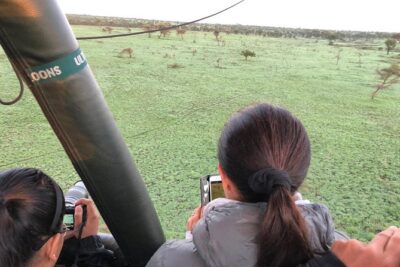
Balloon Safari & Bush Breakfast in Serengeti – Miracle Experience
Read our review →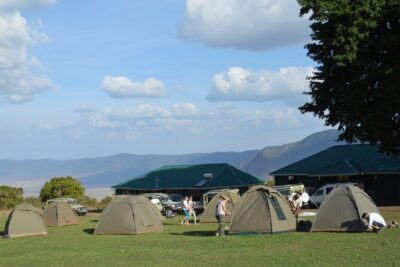
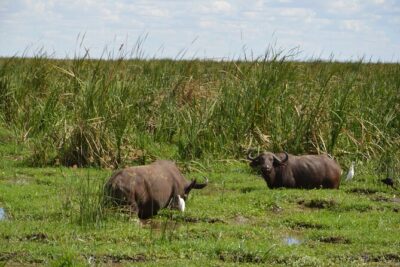
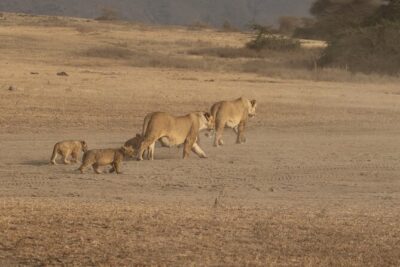
3 Days Serengeti & Ngorongoro Group Camping Safari
Read our review →
7-Day Premium Luxury Tanzania Safari All-Inclusive
Read our review →
5-Day Highlights mid-Range Crater, Serengeti, Tarangire
Read our review →
8 Days Great Wildebeest Calving Migration Safari from Arusha
Read our review →Browse the lists this tour appears in