
REVIEW · ARUSHA
5 Days Group Camping Safari
Tarangire’s giant elephants and baobabs are the first act in a fast-moving safari through four of northern Tanzania’s best wildlife areas. You get a private guide and 4×4, included meals, and a small group capped at seven, which keeps the vehicle more personal than a large coach tour.
I like the range: Tarangire brings elephants, Manyara adds a lake and hippos, Serengeti supplies wide-open predator country, and Ngorongoro packs animals into one crater. I also like the practical camping setup, with cooks such as Salim preparing generous meals and guides including Max and Amiri leading past departures.
The tradeoff is mileage. You spend long hours on rough park roads and moving between camps, and the group format can combine people booked for different safari lengths. If you want a slow, lodge-based holiday, this will feel busy. If you want four major parks in five days for $1,100 per person, it is a strong, active choice.
Key points to know before booking
- Four famous wildlife areas in five days: Tarangire, Lake Manyara, Serengeti, and Ngorongoro each offer a different setting and animal mix.
- Small-group scale: The tour has a maximum of seven people, with a private guide and private 4×4 listed for the safari.
- Best elephant stop: Tarangire is especially good for large elephant herds and its distinctive baobab trees.
- Serengeti gets the most time: You have an afternoon drive on Day 3 and a long morning drive on Day 4.
- Ngorongoro is the grand finale: The crater descent offers a concentrated wildlife day, including Lake Magadi.
- Camping is part of the deal: Accommodation and meals are included, but this is an African camping safari, not a resort stay.
Four parks, four very different wildlife settings
This trip works because it does not treat northern Tanzania as one giant game drive. Each park has its own character, and the order builds toward Ngorongoro.
You leave Arusha after breakfast and return to the same meeting point at Jevas Hotel Encore. Pickup is offered, and the usual departure window is 8:30 to 9:00 in the morning. That makes an arrival in Arusha the day before a sensible plan, rather than trying to land and rush straight into the safari.
The operator describes the tour as private, while the maximum group size is seven. That is a useful middle ground. You get a dedicated guide and vehicle rather than joining a large bus, but you should still ask how many people will share your vehicle on your dates. The group arrangement may include people doing different numbers of days, which can affect who joins or leaves along the way.
More Overnight Safaris in Arusha
- 4 Days Group Camping Safari
★ 5.0 · 1,101 reviews - 3 Days Serengeti & Ngorongoro Group Camping Safari
★ 5.0 · 574 reviews - 5 Days Camping Tarangire, Serengeti & Ngorongoro crater & Visiting Maasai
★ 5.0 · 229 reviews
Day 1: Tarangire’s elephants and baobabs
Tarangire is a fine opening park because it gives you an immediate sense of Tanzania’s scale without asking you to cross the entire country on the first day. After breakfast, you travel by private 4×4, arrive for lunch, then set out on an afternoon game drive.
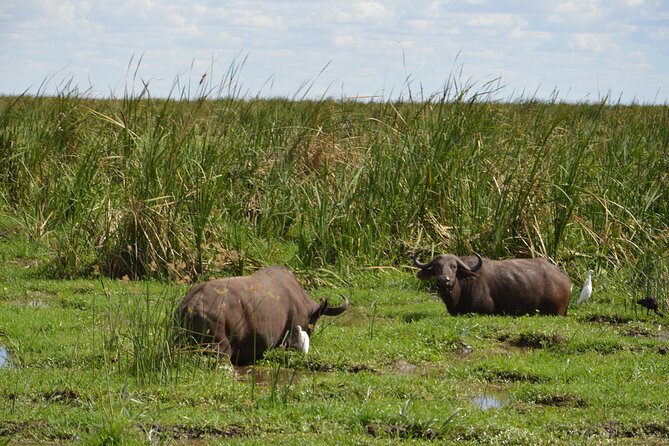
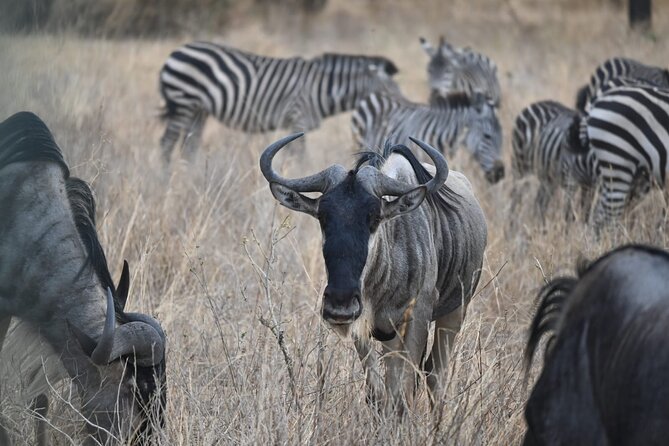
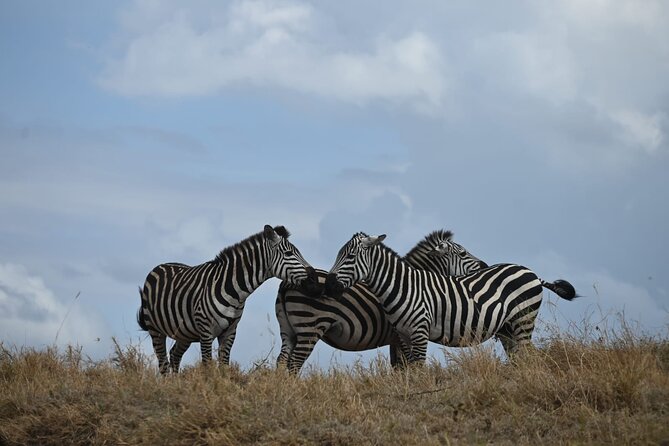
The park is best known for its elephant population and old baobab trees. These trees give the drive a memorable shape, with thick trunks and bare branches rising above the scrub. During the June to November dry season, animals gather in larger numbers, including zebra, wildebeest, and Cape buffalo.
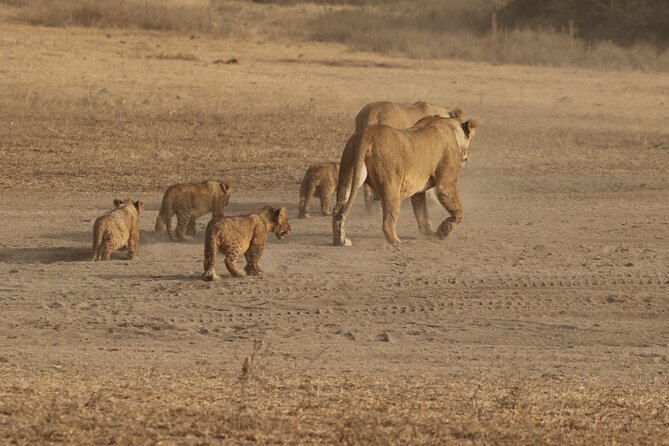
You might also see giraffe, impala, eland, waterbuck, dik-dik, Grant’s gazelle, vervet monkeys, baboons, and banded mongoose. Predators include lions, leopards, cheetahs, caracals, honey badgers, and African wild dogs, although no safari can promise a sighting of any particular animal.
The planned Tarangire portion lasts about six hours. That includes the transfer into the park, lunch timing, and the afternoon drive, so the day is full without being the longest one on the schedule. I like starting here because the elephants and baobabs provide a clear first taste of safari country.
Day 2: Lake Manyara’s forest, lake, and hippos
After breakfast at the lodge, you leave around 8:30 to 9:00 with a packed lunch for an extended drive in Lake Manyara National Park. The listed park time is about six hours.
Manyara gives you a change of scenery after Tarangire. The lake draws flamingos, especially in the wet season, when thousands may gather along the edges. In the dry season, flamingos are less reliable, so you should treat them as a welcome bonus rather than the main reason to book this park.
The animal list is strong for a compact park. You might find elephants, blue monkeys, dik-dik, gazelles, giraffe, impala, zebra, hippos, lions, cheetahs, and leopards. The hippo pond is one of the clear stops, and it gives you a chance to watch these heavy animals in and around the water.
Manyara is also useful as a contrast. Tarangire is associated with open scrub, elephants, and baobabs. Manyara brings a lake-centered setting and a different rhythm of wildlife watching. The drawback is that dry-season conditions can reduce the flamingo spectacle, and the park visit is relatively short compared with the Serengeti days ahead.
Day 3: The long road into the Serengeti
Day 3 is the transition from the northern highlands into the Serengeti. You pass through the farmland around Karatu and the Ngorongoro Conservation Area before descending toward the park’s open plains.
The drive is listed at about three hours for the Serengeti portion, though the full day includes the route from your overnight stop, lunch, and the game drive. You arrive in time for lunch, then head out for an afternoon drive in the Seronera area.
Seronera is central Serengeti country, known for the Seronera River and the animals drawn to its water. That makes it a practical base for finding a broad mix of species. The open plains also provide the kind of long views that make the Serengeti feel much bigger than any single wildlife sighting.
This is the day when your guide’s judgment matters. A trained eye helps with distant animals, tracks, and movement in the grass. Guides such as Max and Amiri have been part of this safari experience, and the strongest part of a guide’s role is not simply naming animals. It is helping you understand why they are in one area and not another.
The road into Serengeti is also one of the trip’s costs in time and energy. You are not flying between parks. You are traveling overland, with dust, bumps, and long stretches between sightings. That is the price of seeing the countryside change from cultivated highlands to open African plains.
More Overnight Safaris in Tanzania
- 2 Days Tarangire and Ngorongoro Group Camping Safari
★ 5.0 · 146 reviews - 6 Days Tanzania Budget Camping Safari
★ 5.0 · 145 reviews - Multi-Day Tanzania Odssey Safari from Arusha
★ 5.0 · 120 reviews - 3 Days Tarangire, Ngorongoro & Lake Manyara Group Camping Safari
★ 5.0 · 102 reviews
Day 4: A long Serengeti morning, then Ngorongoro
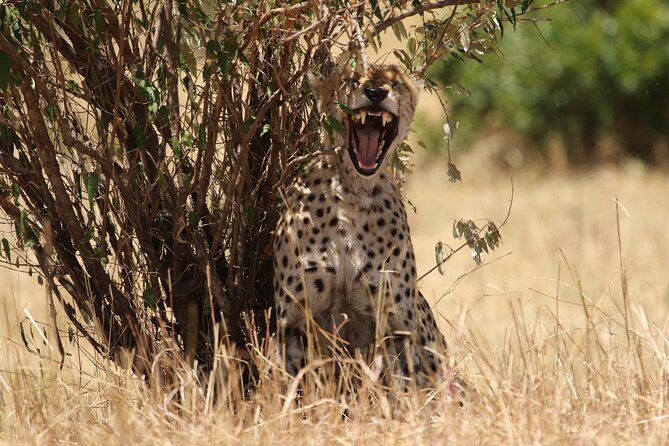
The fourth day begins early, with coffee, tea, and a biscuit before an extended morning game drive. You carry lunch boxes and spend roughly 8:00 to 14:30 on the drive before heading toward the Ngorongoro Conservation Area.
This is your best chance to settle into the Serengeti rather than treating it as a quick photo stop. Six and a half hours in the vehicle can be tiring, but it gives you time to look for more than the obvious animals. The elusive leopard, for example, often demands patience and careful scanning, while lions, hyenas, jackals, and other wildlife may appear in more open positions.
The route toward Ngorongoro includes game viewing along the way, then dinner and overnight arrangements in the conservation area. The day combines wildlife time with another transfer, so do not expect a relaxed afternoon at camp.
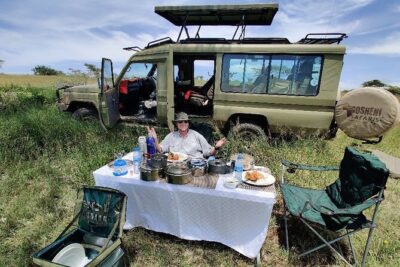
This is also where the camping format matters. The safari has included accommodation and meals, with five breakfasts, five lunches, and four dinners listed. A cook such as Salim has prepared abundant meals on past trips, but you should picture a working camp, not a lodge dining room. One Italian-language account described the tents as comfortable while making the sensible point that African camping is not a resort experience.
Day 5: Down into the Ngorongoro Crater
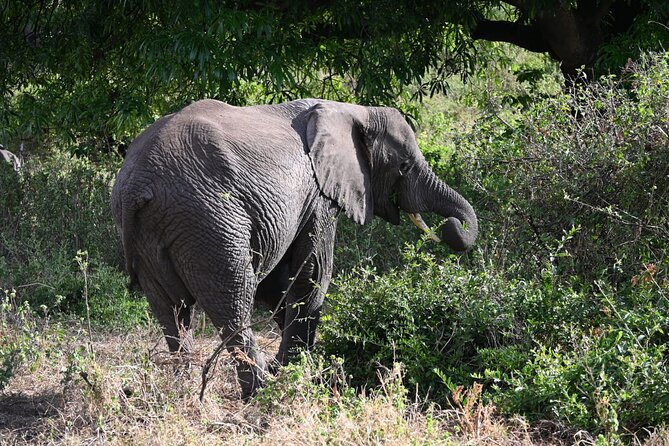
The final day is the visual high point for many people. After an early coffee and breakfast, you descend more than 600 meters into the Ngorongoro Crater for a full wildlife day of about eight hours.
The crater has a year-round water supply and grazing areas, which help support large numbers of animals in a relatively contained setting. You might see wildebeest, zebra, buffalo, eland, warthog, hippos, and elephants. The predator list includes lions, hyenas, jackals, cheetahs, and leopards.
Lake Magadi, a large shallow alkaline lake in the crater, is one of the planned features. Its water and surrounding flats can attract wildlife, and the open setting can make animal watching easier than in thicker vegetation.
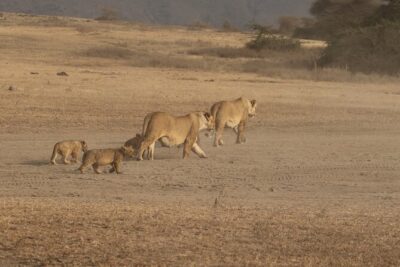
Ngorongoro is not a guarantee of the Big Five, but the conditions give you a legitimate chance. One five-day itinerary account recorded sightings of all five, but you should keep expectations sensible. Wildlife is wild, and leopard sightings in particular may require help from your guide and plenty of patience.
After the crater visit, the activity ends back at the meeting point in Arusha. The supplied schedule does not give an exact return time, so avoid booking a tight onward flight or fixed evening plan until you confirm the timing.
What the $1,100 price really covers
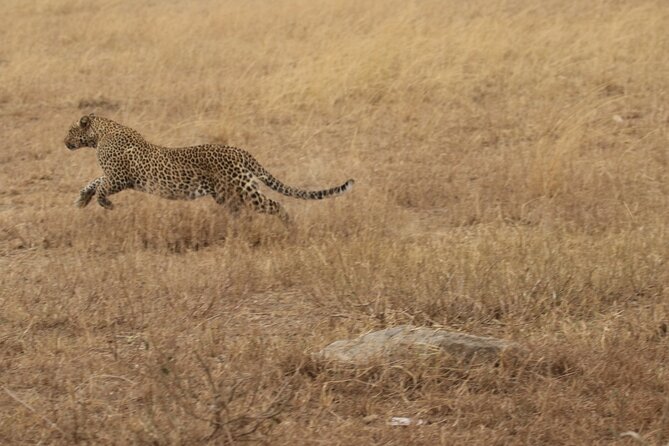
At $1,100 per person, this is not a cheap weekend outing, but it covers a lot of ground. You are paying for five days, a private guide, a 4×4 safari vehicle, four major wildlife areas, included accommodation, and meals. The package lists five breakfasts, five lunches, and four dinners.
The value is strongest if you want a broad first safari and do not want to arrange park visits, transport, camping, food, and guiding separately. The private vehicle also matters. A safari is much better when you can spend time watching an animal instead of being one seat among dozens on a large vehicle.
Still, read the practical wording carefully before you pay. The available details do not spell out every camping category, room or tent arrangement, or all possible park-related charges. Ask what is included in the $1,100 price beyond the listed meals and accommodation, and ask how many people will share your vehicle.
The free cancellation policy is useful: you can cancel up to 24 hours before the experience begins for a full refund. Changes or cancellations made within 24 hours are not accepted for a refund.
Food, camping, and the pace of the days
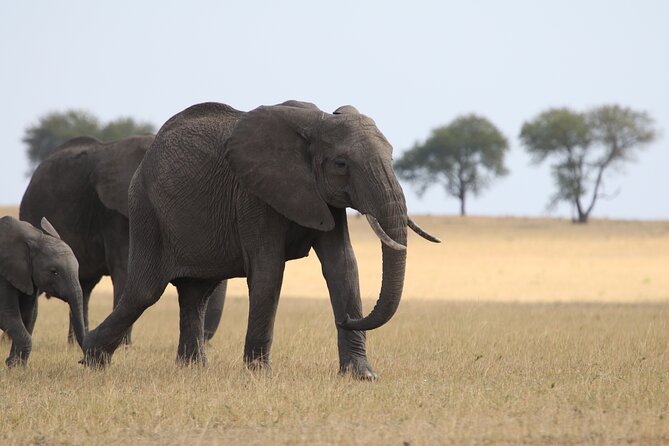
Food is one of the more praised parts of this safari. The trip includes breakfast, lunch, and dinner arrangements, with packed lunches used on the longer park days. A dedicated cook has prepared generous meals, which is no small matter when you are spending many hours outdoors.
You should also be ready for early starts. Day 4 begins with a simple hot drink and biscuit before the morning drive, and Day 5 starts early for the crater descent. Those departures are practical because animals are often active early, but they leave little room for leisurely mornings.
The camping is comfortable according to the details provided, but it is still camping in Africa. Expect a functional base for sleeping and eating, not a polished lodge with resort services. That distinction is important for first-time safari visitors deciding between price, comfort, and time in the parks.
Who will enjoy this safari most
I would choose this trip if you want to see the main northern Tanzania parks in one compact journey and you are comfortable with long road days. It suits first-time safari visitors who want a guide to explain the ecosystem, identify animals, and handle the daily logistics.
It is also a good fit for people who value a small group but do not need a fully private party of two or four. A maximum of seven is more personal than a large group, while the price remains lower than many fully exclusive safaris.
You may want a different plan if you dislike camping, struggle with long drives, or prefer one park explored at a slower pace. The itinerary is ambitious. Tarangire, Manyara, Serengeti, and Ngorongoro are not quick nearby stops, and the journey between them is part of the experience.
Most participants can take part, and the meeting point is near public transportation. Pickup is offered from the stated Arusha location, Jevas Hotel Encore on Street House No. 9, Plot 163, Block F, Levolosi Area.
Should you book the five-day camping safari?
Book it if your priority is wildlife variety and value. The route gives you elephants and baobabs in Tarangire, lake country in Manyara, broad Serengeti viewing, and the crater wildlife of Ngorongoro. The guide, vehicle, meals, and camping arrangements remove much of the work from planning a complicated safari.
Before booking, confirm the exact group size, the sleeping setup, and what the quoted price includes beyond the stated meals and accommodation. Also allow plenty of time on the final day before any onward travel.
For a five-day introduction to northern Tanzania, this is a well-balanced route with a serious amount of wildlife time. It is busy, dusty, and sometimes tiring, but that is also why it delivers so much in a short period.
FAQ
How long is the safari?
The experience lasts approximately five days, beginning and ending in Arusha.
Where does the safari start?
The stated meeting point is Jevas Hotel Encore, Street House No. 9, Plot 163, Block F, Levolosi Area, Arusha, Tanzania. Pickup is offered.
Which parks and wildlife areas are included?
The route includes Tarangire National Park, Lake Manyara National Park, Serengeti National Park, and the Ngorongoro Conservation Area.
Is accommodation included?
Yes. Accommodation is included, and the experience is described as a camping safari. The available information does not specify the exact tent or campsite category.
Are meals included?
Yes. The package lists five breakfasts, five lunches, and four dinners. Packed lunches are used on some of the longer game-drive days.
How large is the group?
The activity has a maximum of seven participants. It also lists a private guide and private 4×4 safari vehicle. Group arrangements can combine people taking different numbers of safari days.
Can I cancel for a refund?
You can cancel at least 24 hours before the experience start time for a full refund. Cancellations or changes made less than 24 hours before the start time are not accepted for a refund.
More 5-Day Experiences in Arusha
- 5-Day Highlights mid-Range Crater, Serengeti, Tarangire
★ 5.0 · 296 reviews - Tanzania Simba Safari – 5 Days
★ 5.0 · 217 reviews - 5 Days Budget Private Safari, Tanzania
★ 5.0 · 191 reviews - 5-Day Private Northern Tanzania Safari from Arusha
★ 5.0 · 182 reviews
Just added around Arusha
- 6 days Tanzania budget safari★ 5.0 · 65 reviews
- 7 days great migration safari★ 5.0 · 77 reviews
- serengeti, ngorongoro & tarangire 5days private tour★ 5.0 · 77 reviews
- 5 days safari, hiking & culture (Serengeti & kilimanjaro)★ 5.0 · 27 reviews
- 5-Day Mid-Range Safari in Tanzania★ 5.0 · 33 reviews
- 4 days safari★ 5.0 · 34 reviews
- serengeti & ngorongoro 3 days private tour★ 5.0 · 15 reviews
- serengeti, ngorongoro & tarangire 4 days private tour★ 5.0 · 18 reviews
Arusha Safaris, compared.
Balloon Safari & Bush Breakfast in Serengeti – Miracle Experience
Read our review →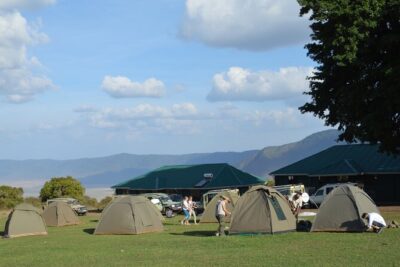
3 Days Serengeti & Ngorongoro Group Camping Safari
Read our review →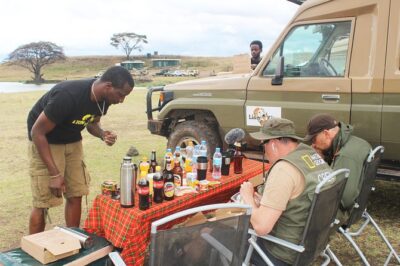
7-Day Premium Luxury Tanzania Safari All-Inclusive
Read our review →
5-Day Highlights mid-Range Crater, Serengeti, Tarangire
Read our review →
8 Days Great Wildebeest Calving Migration Safari from Arusha
Read our review →
Group Safari 7 Days in Tanzania’s Main Parks
Read our review →Browse the lists this tour appears in