
REVIEW · ARUSHA
4 Days safari Tour Tanzania
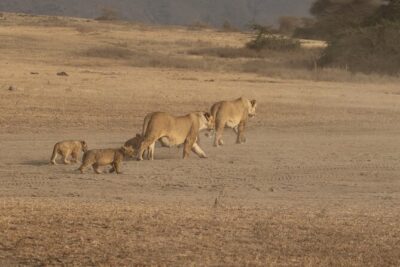
Tarangire’s elephant herds and giant baobabs are the first act, but the real payoff comes when the road reaches the Serengeti plains. You spend two days looking for lions, elephants, cheetahs, leopards, and other wildlife from a pop-roof 4×4, then finish among the crater’s dense animal population.
I like the practical setup: meals, camping equipment, binoculars, and a private vehicle are included, so you can focus on watching animals instead of sorting out camp supplies. I also like the guide-led format. Past departures have included guides such as Max, Filex, Andersson, Benji, Dulla, Zepha, and Elikana, with strong praise for safe driving, animal spotting, and flexible planning.
The tradeoff is the pace. Long driving days and rough roads are part of the bargain, especially on the route to Serengeti. At $1,650 per person, this is a solid value for a private four-day safari with food and equipment, but it is not a soft, leisurely lodge holiday.
Key points at a glance
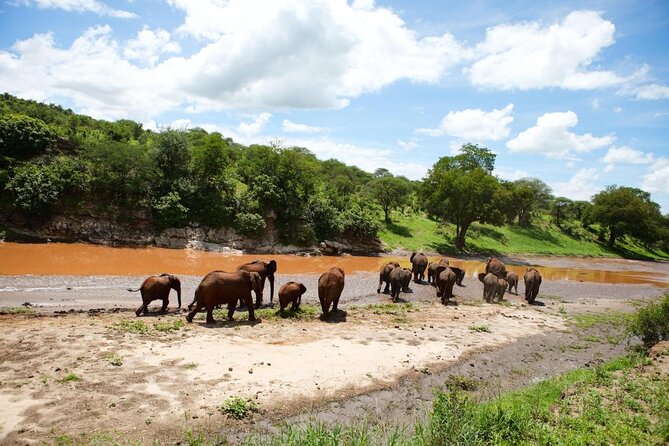
- Tarangire opens the trip with elephants and baobabs: Expect a good first game drive only about two hours from Arusha.
- Serengeti gets the most time: You have an afternoon drive on day two and an early sunrise drive on day three.
- Ngorongoro Crater packs wildlife into one dramatic setting: The five-hour crater drive may bring sightings of rhino, lions, elephants, flamingos, and more.
- Your private 4×4 keeps the day flexible: Only your group takes part, with a pop-roof vehicle made for viewing and photography.
- Camping gear and all meals are supplied: You avoid hauling your own equipment, and dietary needs can be discussed before departure.
- The route is active rather than restful: The Serengeti transfer takes roughly four to five hours on a long, bumpy road.
Why this four-day route works
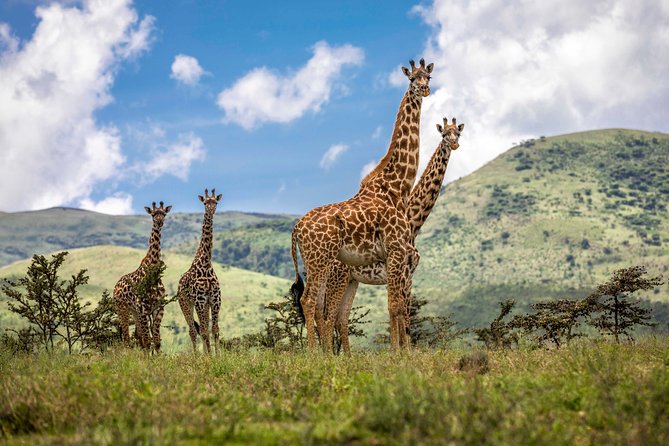
This safari gives you three of northern Tanzania’s best-known wildlife areas in a compact schedule. You begin with Tarangire, spend the core of the trip in Serengeti National Park, and end at Ngorongoro Crater before returning to Arusha.
That order makes sense. Tarangire offers an easy first park day after pickup. Serengeti then gets the broadest share of your attention. Ngorongoro finishes the trip with a concentrated wildlife drive, where the crater walls create a natural boundary around an unusually dense mix of animals.
You should think of this as a camping safari with private service, not a luxury tour. The vehicle, guide, meals, and gear do much of the work for you, but you still spend long stretches on rough roads and rise early for the best animal activity.
A few more safaris around Arusha worth a look
- 4 Days Group Camping Safari
★ 5.0 · 1,101 reviews - 4 Days Join Group tour Tarangire Serengeti and Ngorongoro crater
★ 5.0 · 219 reviews - 4-Day Safari from Arusha: Tarangire, Serengeti and Ngorongoro
★ 5.0 · 173 reviews
Day one: Tarangire’s elephants and baobabs
Pickup is scheduled for 7:30 am from your hotel in Arusha. The drive to Tarangire National Park takes about two hours, giving you a fairly gentle start compared with the longer road days ahead.
Tarangire is famous for its large elephant herds and ancient baobab trees. Those baobabs are not just background scenery. Their thick trunks and unusual shapes give this park a look that differs from the open grassland you will see later in Serengeti.
Once inside the park, you ride with the roof open while looking across seasonal swamps, savanna, and the Tarangire River. The river area can draw a wide mix of wildlife, including elephants, giraffes, zebras, impalas, warthogs, elands, lions, leopards, and many bird species.
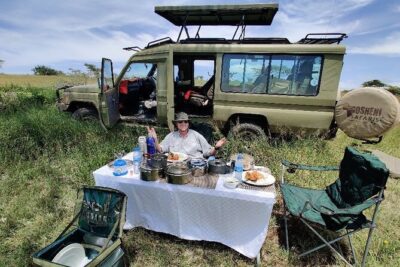
The first day is listed at about six hours. That includes the game drive and a picnic lunch at a site with a broad view. I like this arrangement because you do not lose the middle of the day to a formal restaurant. You eat outside, then continue looking for animals before heading to Fig Tree Lodge for dinner and the night.
Tarangire is often a strong first stop because it offers both large mammals and distinctive plant life. You get elephants and baobabs in the same frame, which makes it especially rewarding if this is your first safari.
Day two: the rough road into Serengeti
After breakfast, you leave for Serengeti National Park. The route takes roughly four to five hours and passes through the crater highlands before reaching the wide Serengeti plains.
The road is described plainly as long and bumpy. That matters. You should pack water, sun protection, and anything that helps you stay comfortable in the vehicle. The payoff is that the journey itself becomes a moving introduction to northern Tanzania, with changing views as you leave the highlands behind.
A picnic lunch comes before the afternoon park drive. After entering Serengeti, you spend the afternoon looking for wildlife and remain out until sunset. That timing can be useful because the cooler late afternoon often gives you a pleasant stretch of viewing before dinner.
You then continue to the Seronera campsite for dinner and overnight. Seronera is a central part of the Serengeti route, and spending the night there saves you from immediately turning around after the afternoon drive.
This day has a lot packed into it. You get a transfer, a picnic, park entry, an afternoon game drive, sunset views, and a camp arrival. If you prefer slow mornings and short transfers, this may feel tiring. If your priority is seeing as much of the park as possible in four days, the schedule is sensible.
Day three: sunrise in the Serengeti
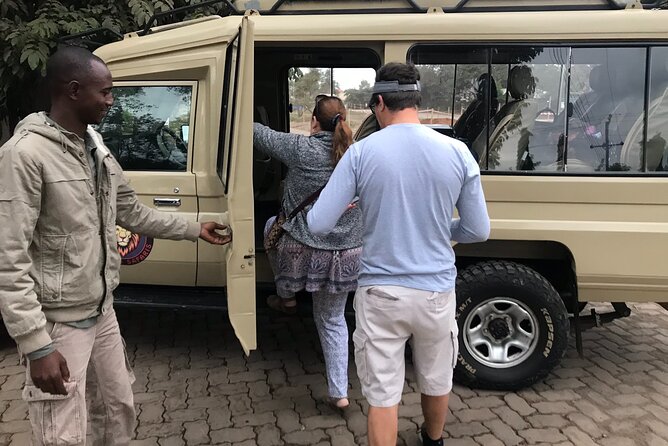
The early start comes at about 6 am. You set out for a sunrise game drive, when many animals are active. This is one of the strongest parts of the schedule because it puts you in the park before the heat of the day builds.
Breakfast is served at a picnic site in the bush. It is a simple but memorable rhythm: drive at first light, stop for food outdoors, then continue the game drive. You return to camp around noon for a hot lunch and load the vehicle before leaving for Ngorongoro.
The morning drive is listed at about seven hours, including the return to camp and departure. You should expect a full day rather than a quick morning outing.
Serengeti is the place where your guide’s skill matters most. The park is enormous, and animal sightings depend on timing, route choices, and sharp eyes. Several guides associated with this operator have been singled out for spotting animals at a distance, finding the right routes, driving safely, and explaining what you are seeing.
Names that have received strong praise include Filex, Max, Andersson, Zepha, Benji, Dulla, Elikana, Edward, and Maushir. You cannot assume a particular guide will be assigned, so ask about this before booking if a named guide is important to you.
Past safari groups have reported seeing the Big Five, including black rhino, as well as cheetahs, lions, elephants, and other animals. These sightings are possible, not guaranteed. Wildlife is wild, and no responsible safari should promise a particular animal on a particular day.
After the game drive, you travel toward Ngorongoro and spend the night at Simba campsite. This keeps you close to the crater for the early descent on day four.
Same country, a different kind of drive:
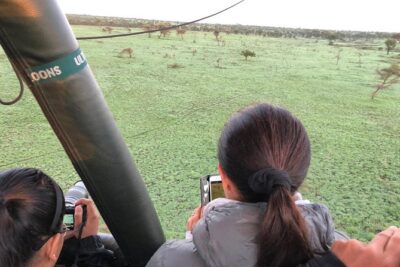
- Balloon Safari & Bush Breakfast in Serengeti – Miracle Experience
★ 5.0 · 1,646 reviews - 5 Days Group Camping Safari
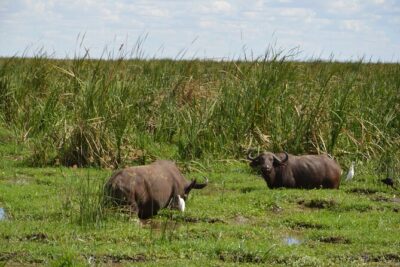
★ 5.0 · 730 reviews - 3 Days Serengeti & Ngorongoro Group Camping Safari
★ 5.0 · 574 reviews - 7-Day Premium Luxury Tanzania Safari All-Inclusive
★ 5.0 · 426 reviews
Day four: inside Ngorongoro Crater
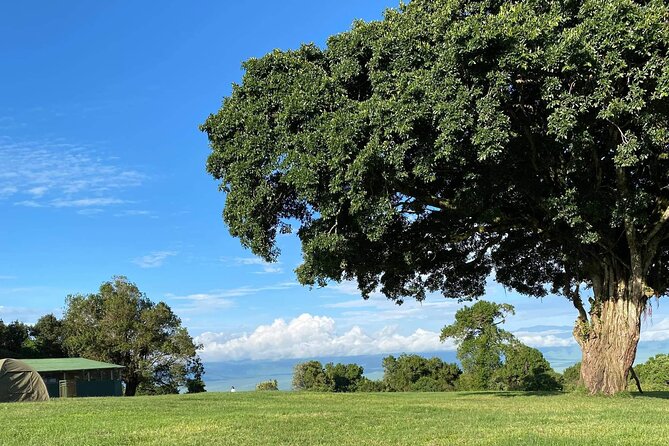
After breakfast, you begin an early morning game drive and descend into Ngorongoro Crater. The crater contains open plains, a river, several swamps, a soda lake, forest, and areas where flamingos gather.
This variety is the reason Ngorongoro feels so different from Serengeti. Instead of searching across a huge open area, you explore a contained setting with many types of habitat close together. The crater is also known for its concentration of wildlife, including the black rhino.
The large bull elephants here are noted for their unusually large tusks. The explanation given is the mineral content of the volcanic soil and grasses, a detail that adds useful context when you see them in the crater.
The game drive lasts about five hours before you return to Arusha, where the safari ends. It is a strong final day, but it is also another early start followed by a long return drive. If you have a flight that evening, confirm the timing carefully rather than assuming you will arrive early.
What the private 4×4 adds
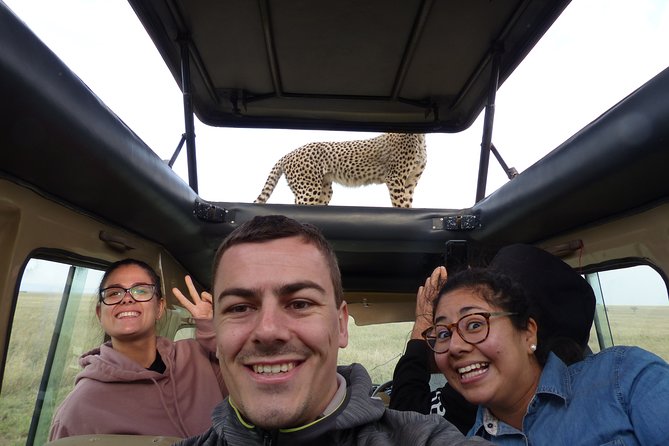
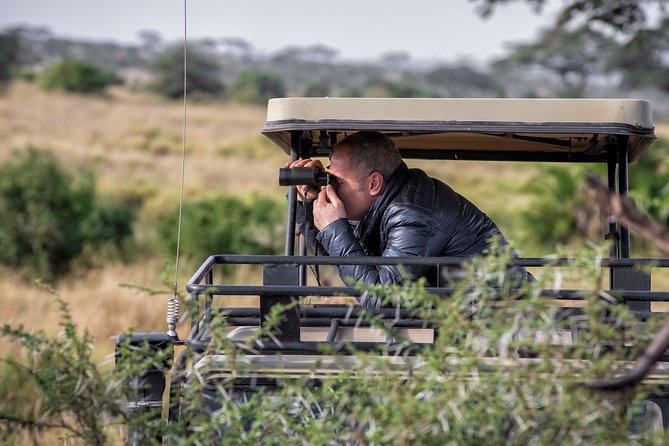
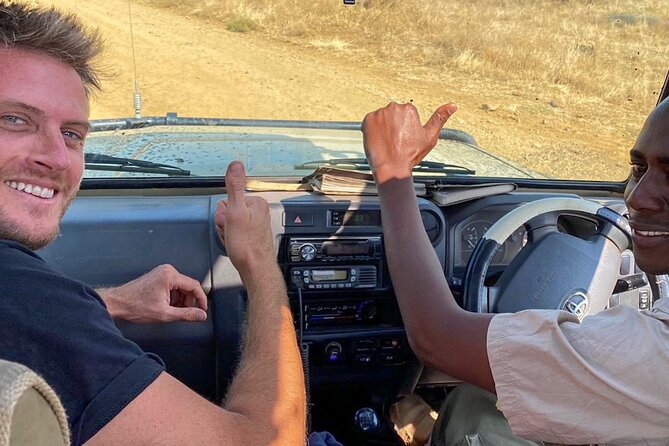
The pop-roof 4×4 is central to the experience. You can stand or sit with a clear view above the sides of the vehicle, which helps when a lion, elephant, or giraffe appears nearby. Binoculars are included, a useful touch when animals are far off.
This is a private activity, so only your group participates. That gives you room to ask questions and discuss what you want to see with your guide. The itinerary can also feel more personal than a large shared departure.
The guide is both driver and wildlife interpreter. Past trips have placed particular value on safe driving, good English communication, clear explanations, and the ability to adjust the day around the group’s wishes. If you have specific interests, such as birds, big cats, elephants, or photography, tell the operator before departure.
Do not expect a silent, polished ride on every road. The transfer to Serengeti is bumpy, and safari vehicles cover rough tracks. That is part of reaching the parks, but it is worth considering if you have back or mobility concerns.
Food, camping, and comfort
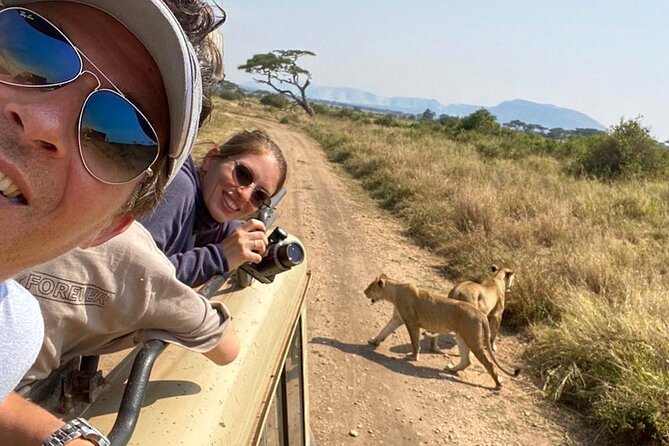
Breakfast, lunch, and dinner are included for the listed four-day schedule. Dietary requirements can be accommodated if you communicate them in advance. Lunches are served as picnics on the first two days and breakfast is taken in the bush on day three, so meals are part of the outdoor rhythm rather than an interruption to it.
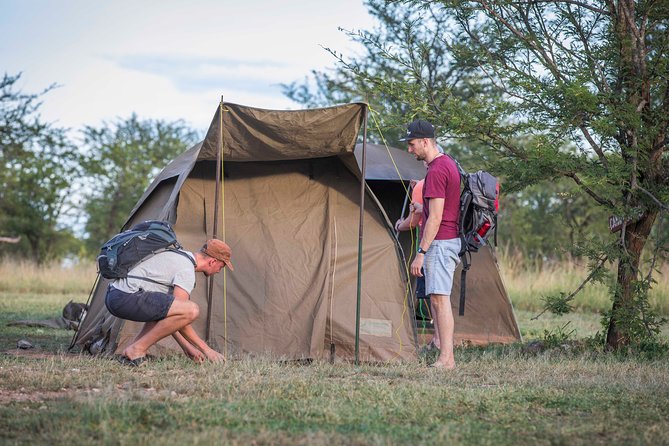
Camping equipment is supplied. That removes one of the main hassles of planning a budget safari. You do not need to organize tents and related camp gear yourself.
The overnight stops include Fig Tree Lodge, Seronera campsite, and Simba campsite. The descriptions do not promise the same level of comfort at each stop, so you should view this as a mixed lodge and camping trip. Some past departures have praised the campsites, food, views, and even Wi-Fi at one camp, but you should not treat Wi-Fi as a standard feature of the whole route.
Wine and beer are included, which is a pleasant extra after a long drive. Other drinks and personal spending are not detailed, so ask what is covered if you have particular beverage needs.
Is $1,650 good value?
At $1,650 per person, the price is easier to justify if you value a private departure and want the main park fees, transport, guide service, meals, and equipment handled together. You are paying for a four-day route that covers Tarangire, Serengeti, and Ngorongoro, rather than a single-park outing.
The strongest value comes from the combination of a private group, pop-roof 4×4, professional driver-guide, binoculars, camping equipment, and all listed meals. You also avoid the cost and effort of renting camping gear or arranging each park transfer yourself.
The price is less compelling if you want luxury rooms, short drives, or a slow schedule. The route is ambitious, and a good part of your time is spent getting between parks. Tips and gratuities are not included, so budget separately for those.
I would compare the exact accommodation standard, vehicle size, park fees, and any airport transfers before paying. The supplied details clearly cover meals, guide service, equipment, wine, beer, and transport in a private vehicle, but they do not spell out every possible extra.
Who should book this safari?
This trip suits you if you want the classic northern Tanzania circuit in a short window. It works well for first-time safari visitors who want a private vehicle, a guide, and a strong chance of seeing a broad range of wildlife.
It can also suit families. One past family departure included children aged eight and fourteen, with the route completed using the same low-budget lodge and camping style. Still, the early morning starts and bumpy roads may be hard for younger children.
You will likely enjoy it most if you care more about time in the parks than luxury at night. Couples, families, and small groups can all benefit from the private format, especially if you want to set the pace of questions and wildlife viewing.
This is less suitable if you dislike camping, need a very relaxed timetable, or want guaranteed sightings of a specific animal. The package gives you excellent places to search, but nature keeps the final say.
Booking details worth checking
Pickup is offered, and the listed start time is 7:30 am. Confirmation is provided at booking, and most people can participate. The activity is private, meaning only your own group joins the vehicle.
You can cancel for a full refund if you do so at least 24 hours before the local start time. Changes or cancellations inside that window are not accepted for a refund.
Before booking, confirm your pickup hotel, dietary needs, sleeping arrangements, vehicle details, park fees, and the exact guide assignment. Those questions are especially useful because the trip combines lodge accommodation, camping, long road transfers, and several different national parks.
Should you book it?
I would book this safari if you want a private, practical route through the three headline wildlife areas near Arusha and you are comfortable with early mornings, camping, and rough roads. The itinerary makes good use of four days, and the inclusion of food, gear, binoculars, and a guide keeps the planning simple.
I would look elsewhere if your priority is a luxury lodge, a slow pace, or short travel times. For everyone else, $1,650 is a reasonable price for a concentrated northern Tanzania safari, especially when the private vehicle and supplied camping equipment fit your needs.
FAQ
Where does the safari begin?
The safari begins in Arusha, Tanzania, with hotel pickup offered. The listed start time is 7:30 am.
Which national parks are included?
The route includes Tarangire National Park, Serengeti National Park, and Ngorongoro Crater.
Is the safari private?
Yes. Only your group participates in the activity.
What meals are included?
Breakfast, lunch, and dinner are included for the listed schedule. Dietary requirements can be catered for if you communicate them in advance.
Is camping equipment provided?
Yes. Camping equipment is supplied as part of the safari.
What is included in the vehicle and guide service?
The package includes a professional driver-guide, a 4×4 vehicle with a pop-up roof, and binoculars. Wine and beer are also listed as included.
Can I cancel for a full refund?
Yes. You can receive a full refund if you cancel at least 24 hours before the experience start time. Cancellations or changes made less than 24 hours in advance are not refunded or accepted.
Just added around Arusha
- 6 days Tanzania budget safari★ 5.0 · 65 reviews
- 7 days great migration safari★ 5.0 · 77 reviews
- serengeti, ngorongoro & tarangire 5days private tour★ 5.0 · 77 reviews
- 5 days safari, hiking & culture (Serengeti & kilimanjaro)★ 5.0 · 27 reviews
- 5-Day Mid-Range Safari in Tanzania★ 5.0 · 33 reviews
- 4 days safari★ 5.0 · 34 reviews
- serengeti & ngorongoro 3 days private tour★ 5.0 · 15 reviews
- serengeti, ngorongoro & tarangire 4 days private tour★ 5.0 · 18 reviews
Arusha Safaris, compared.
Balloon Safari & Bush Breakfast in Serengeti – Miracle Experience
Read our review →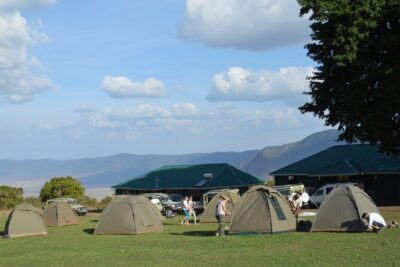
3 Days Serengeti & Ngorongoro Group Camping Safari
Read our review →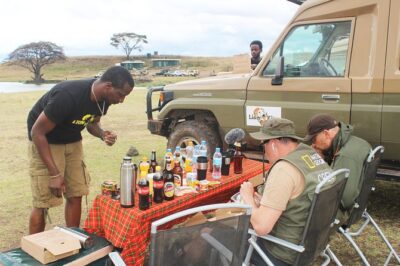
7-Day Premium Luxury Tanzania Safari All-Inclusive
Read our review →
5-Day Highlights mid-Range Crater, Serengeti, Tarangire
Read our review →
8 Days Great Wildebeest Calving Migration Safari from Arusha
Read our review →Browse the lists this tour appears in