
REVIEW · ARUSHA
4 Days Safari to Tarangire, Serengeti and Ngorongoro
The great appeal here is simple: in four days, you reach three of Tanzania’s best-known wildlife areas. You get the wooded shores of Lake Manyara, the enormous open plains of the Serengeti, and a crater floor where wildlife gathers against steep volcanic walls. It is a lot of safari in a short time.
I like the strong mix of scenery and wildlife, and I like that park fees, meals, drinking water, a professional guide, and pickup are included. Guides named in past trips include Manfred and Augustin, both praised for sharp animal-spotting skills. The main caution is the pace. You spend only one night in the Serengeti, and the published details mention Lake Manyara in the itinerary while the tour title refers to Tarangire. Confirm that point before paying.
Key points at a glance
- Three major safari areas in four days: Lake Manyara, Serengeti, and Ngorongoro are packed into a tight schedule.
- Only one Serengeti night: You get a taste of the park, but not the leisurely coverage of a longer safari.
- Early starts matter: Sunrise game drives offer cooler conditions and more active animals.
- Guide quality can shape the trip: Manfred and Augustin are specifically praised for their wildlife knowledge and fast spotting.
- Camping needs clarification: One account praised a first-night resort tent but found later tent accommodation less comfortable and suggested bringing a sleeping bag.
- The $1,450 price includes major costs: Park fees, four breakfasts, four lunches, three dinners, water, guiding, and pickup are covered, but visa, flights, tips, and some extra pickup charges are not.
Why this short safari works
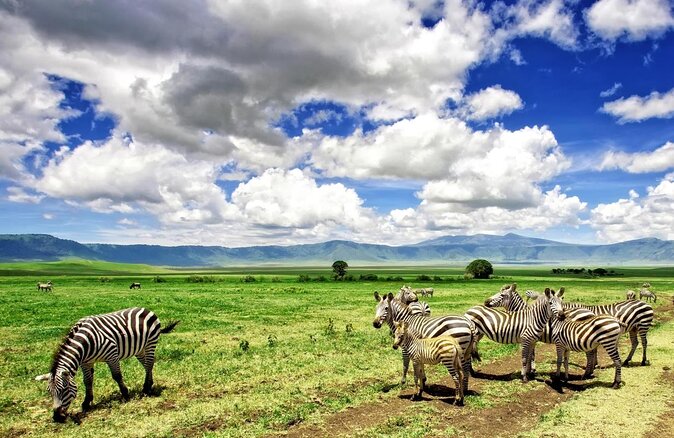
A four-day safari is not enough to explore northern Tanzania slowly, but it can work well if you want the headline sights and have limited time. The route gives you a quick change of scenery each day. You begin among forests and lake country, move into the open Serengeti, then finish in the Ngorongoro Crater.
That variety is the strongest reason to choose this trip. Lake Manyara offers thick trees, monkeys, elephants, giraffes, buffaloes, impalas, and hippos. The Serengeti brings the wide horizons and major predator habitat that most people picture when they think of a Tanzanian safari. Ngorongoro gives you a concentrated morning of wildlife inside an ancient volcanic crater.
The trade-off is time in the vehicle. Day two includes a long drive toward the Serengeti, and day three combines an early game drive, breakfast or brunch at camp, and the journey toward Ngorongoro. You should be comfortable with long road sections and early mornings.
A few more safaris around Arusha worth a look
- 4 Days Group Camping Safari
★ 5.0 · 1,101 reviews - 4 Days Join Group tour Tarangire Serengeti and Ngorongoro crater
★ 5.0 · 219 reviews - 4-Day Safari from Arusha: Tarangire, Serengeti and Ngorongoro
★ 5.0 · 173 reviews
Day 1: Lake Manyara’s forest, lake, and wildlife
Pickup is scheduled from your hotel at 8 a.m., followed by the journey across the Great Rift Valley to Lake Manyara National Park. The day is planned as a full game drive, lasting about 10 hours.
Lake Manyara is smaller than the Serengeti, covering about 205 square miles, but its compact size gives it a different feel. Instead of endless grassland, you pass through acacia woodland, giant figs, and mahogany trees. Baboons and blue monkeys are among the most noticeable residents, while giraffes, elephants, impalas, and buffaloes are also found here.
The lake adds another layer. Hippos live in the water, and the shoreline creates good opportunities for photographs. The mix of open water, forest, and animals makes this a useful first day because you start with varied scenery rather than heading straight into open plains.
There is one important planning issue. The title refers to Tarangire, while the detailed first day describes Lake Manyara. The overview also says the first park may be Manyara or Tarangire. These parks are not interchangeable experiences. Lake Manyara is associated here with forest, monkeys, hippos, and lake views. Tarangire is a different park with its own character. Ask the operator to confirm the exact first stop, the overnight location, and the accommodation before your departure.
Day 2: The long road into the Serengeti
After an early breakfast, you set out for Serengeti National Park. The drive is long, but it is also part of the experience. As the trees and settled areas give way to broad grassland, the scale changes dramatically.
The name Serengeti is commonly translated as endless plains, and the description fits the view. The park covers about 6,900 square miles, or 18,000 square kilometers. The horizon can seem far away, and distances are easy to misjudge. That sense of space is one of the best parts of the trip, even before an animal appears.
The Serengeti is home to the Great Migration, along with huge numbers of wildebeest, zebras, and antelopes. It is also a major setting for lions and other predators. Your guide’s skill matters here because wildlife can be spread across a very large area. Augustin, described as a veteran guide, was praised for telling people to ready their cameras before an animal came into view. That kind of warning can make the difference between a good sighting and a missed one.
The limitation is clear: this itinerary allows only one night in the Serengeti. You may have a rewarding afternoon game drive and a memorable sunset or camp evening, but you will not cover much of such a large park. If the Serengeti is your main reason for coming to Tanzania, a longer itinerary would give you more time and better odds of seeing different parts of the park.
Day 3: Sunrise in the Serengeti, then toward Ngorongoro
Day three begins very early. That is good safari practice, not needless punishment. Animals are often more active in the cooler morning, and the sunrise across the plains can be one of the most striking moments of the trip.
After the morning drive, you return to camp for a substantial brunch. Then the route turns toward Ngorongoro, known for its dramatic crater and dense wildlife. The day is scheduled for about eight hours, including the game drive and transfer.
The Ngorongoro Crater covers about 102 square miles and has walls roughly 2,000 feet high. The enclosed setting helps concentrate wildlife in a way that feels different from the open Serengeti. The crater floor includes a river, swamps, and a soda lake, creating several types of habitat close together.
Black rhino is one of the major reasons this area matters. It is one of the few places in Africa where you may see one. You should not treat that as a promise, but the possibility gives the crater special importance.
This is also the day when the schedule may feel most compressed. You have a dawn drive, food at camp, and a long transfer. The reward is reaching the Ngorongoro area in time for the next morning’s crater descent. The cost is that you have little spare time for rest.
Same country, a different kind of drive:
- Balloon Safari & Bush Breakfast in Serengeti – Miracle Experience
★ 5.0 · 1,646 reviews - 5 Days Group Camping Safari
★ 5.0 · 730 reviews - 3 Days Serengeti & Ngorongoro Group Camping Safari
★ 5.0 · 574 reviews - 7-Day Premium Luxury Tanzania Safari All-Inclusive
★ 5.0 · 426 reviews
Day 4: A crater-floor morning and the return to Arusha
You start early again and descend into the crater for a morning game drive. This is the trip’s most concentrated wildlife session. The crater walls surround the route, and the combination of open ground, water, and steep volcanic sides gives the morning a strong visual identity.
A picnic lunch is planned near Hippo Lake. After lunch, you have time for a shorter game drive before ascending from the crater and leaving the Ngorongoro Conservation Area.
The return to Arusha is expected around 5 p.m., though the schedule is described as flexible if you need to catch a flight or handle another fixed commitment. I would still avoid booking a tight same-evening connection unless the operator confirms the timing directly. Safari roads and animal sightings do not follow an airport timetable.
Guides can make the difference
The company provides a professional guide, and guide quality appears to be one of the strongest parts of the experience. Manfred is praised for leading a four-day safari with extensive wildlife knowledge and careful organization. Augustin is singled out for spotting animals early and preparing the group before the sighting happens.
Names do not guarantee who will lead your trip, so ask when booking if a particular guide is available. A good guide does more than point toward a lion. The guide manages the day’s pace, watches the road, explains animal behavior, chooses practical stopping points, and helps you make the most of limited time.
Communication before departure also matters. John, identified as the company’s chief executive, received praise for being responsive and helping shape a trip around personal preferences. Use that contact before you arrive to settle the unclear points: Manyara or Tarangire, sleeping arrangements, pickup location, and the exact route.
Accommodation: ask what the tent really means
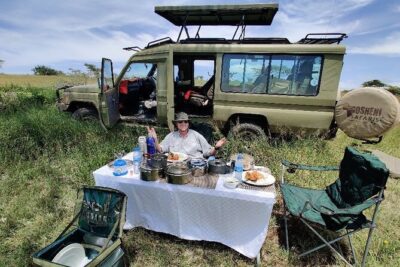
Accommodation is the least clear part of the package. Some trips have included a first-night tent at Jungle Pearl, described as a resort setting. Another account found the tent accommodation on later nights less comfortable and advised bringing a personal sleeping bag.
That is useful practical advice. Do not assume that a tent means the same thing every night. Ask if you will sleep in a permanent tent, a lodge room, or a simpler camping tent. Ask if bedding is supplied, if a sleeping bag is needed, and whether the accommodation has private facilities.
This question is especially important because the price is not presented as a fixed luxury package. The experience may suit you perfectly if you are happy with basic safari lodging and want to put more of your budget into park access and guiding. If you expect hotel-style rooms each night, confirm the upgrade cost before booking.
What the $1,450 price covers
At $1,450 per person, this is not a bargain-basement outing, but the value depends on what is included and how many people share the vehicle. The package covers park fees, unlimited drinking water, a professional guide, three dinners, four lunches, and four breakfasts. Pickup is offered, with an extra $50 charge for pickup locations more than 30 kilometers away.
The included park fees matter. Tanzania’s major national parks and conservation areas can make entry costs a large part of a safari budget. Having those charges built in makes the advertised price easier to compare with other four-day trips.
You still need to budget for a visa, international flights, and tips. The supplied details do not state the vehicle type, group size for a normal departure, or the accommodation grade. Although the activity can accept up to 100 participants, that is a maximum listed capacity, not a promise that your vehicle will contain 100 people. Ask how many people will share your vehicle.
The best value comes if you want a tightly planned introduction to three famous areas and do not have time for a longer trip. The value is weaker if you want slow game drives, several Serengeti nights, or guaranteed upscale lodging.
Who should book this safari
I would recommend this trip to someone with four days available from Arusha who wants a first look at northern Tanzania’s major parks. It also suits people who prefer having meals, park fees, water, guiding, and hotel pickup arranged together.
It is a good match for families and couples if everyone can manage early starts and long drives. One honeymoon account praised the accommodation and said the couple saw the Big Five, though that kind of result cannot be guaranteed on every departure.
I would be more cautious about recommending it to anyone who dislikes rougher accommodation, needs a relaxed pace, or wants to spend several days in the Serengeti. The schedule is ambitious. You will see a lot, but you will not have much downtime.
The package is also less suitable if your first priority is Tarangire specifically. Since the daily description focuses on Lake Manyara, you should get written confirmation of the first park before booking.
Booking details worth settling first
Confirmation is provided at booking, and free cancellation is available if you cancel at least 24 hours before the local start time. Cancellations or changes made inside that 24-hour window are not refunded or accepted.
The listed meeting start time is 7 a.m., while the first-day schedule says pickup from your hotel at 8 a.m. That difference should be clarified. Ask for the actual pickup time for your hotel, especially if you are staying outside central Arusha.
Most people can participate, but the itinerary involves early mornings, long drives, and a crater descent followed by a return to Arusha. Tell the operator about flight times or other fixed plans before the safari begins.
Should you book the 4-day safari?
Book it if your time is short and you want a fast, high-impact introduction to Lake Manyara, the Serengeti, and Ngorongoro. The included park fees and meals simplify planning, while guides such as Manfred and Augustin suggest that wildlife spotting can be a real strength.
Before booking, settle three things: Manyara or Tarangire, the exact accommodation, and the number of people sharing your vehicle. If you can accept one night in the Serengeti and a busy schedule, $1,450 can be fair value for the range of places covered. If the Serengeti is your main goal, spend more days there instead.
FAQ
How long is the safari?
The safari lasts approximately four days.
Where does the safari start?
The experience starts in Arusha, Tanzania, with pickup offered.
What time does the safari begin?
The listed meeting start time is 7 a.m. The first-day details also mention hotel pickup at 8 a.m., so confirm the exact time for your accommodation.
Which parks are included?
The detailed schedule includes Lake Manyara National Park, Serengeti National Park, and the Ngorongoro Conservation Area. The tour title mentions Tarangire, and the overview says Manyara or Tarangire, so confirm the exact first park before booking.
Is pickup included?
Pickup is offered. Pickup outside 30 kilometers carries an additional $50 charge.
What meals are included?
The package includes four breakfasts, four lunches, and three dinners.
Is drinking water provided?
Yes. Unlimited drinking water is included.
Are park fees included?
Yes. Park fees are included in the listed price.
What is not included in the price?
Visa costs, international flights, tips, and the extra charge for pickup outside 30 kilometers are not included.
Just added around Arusha
- 6 days Tanzania budget safari★ 5.0 · 65 reviews
- 7 days great migration safari★ 5.0 · 77 reviews
- serengeti, ngorongoro & tarangire 5days private tour★ 5.0 · 77 reviews
- 5 days safari, hiking & culture (Serengeti & kilimanjaro)★ 5.0 · 27 reviews
- 5-Day Mid-Range Safari in Tanzania★ 5.0 · 33 reviews
- 4 days safari★ 5.0 · 34 reviews
- serengeti & ngorongoro 3 days private tour★ 5.0 · 15 reviews
- serengeti, ngorongoro & tarangire 4 days private tour★ 5.0 · 18 reviews
Arusha Safaris, compared.
Balloon Safari & Bush Breakfast in Serengeti – Miracle Experience
Read our review →
3 Days Serengeti & Ngorongoro Group Camping Safari
Read our review →
7-Day Premium Luxury Tanzania Safari All-Inclusive
Read our review →
5-Day Highlights mid-Range Crater, Serengeti, Tarangire
Read our review →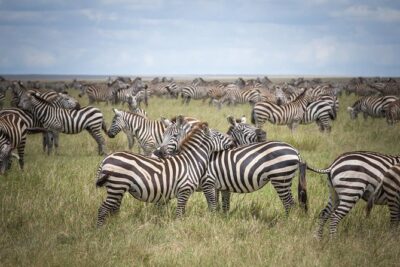
8 Days Great Wildebeest Calving Migration Safari from Arusha
Read our review →Browse the lists this tour appears in