
REVIEW · ARUSHA
8 Days Safari (Lake Manyara /Tarangire/Serengeti/Ngorongoro)
The big draw here is the sweep of the route. In eight days, you move from the forested slopes of Arusha National Park to Tarangire’s elephant country, then into the Serengeti for several full days focused on the wildebeest migration. The route ends with the Ngorongoro Crater and Lake Manyara, giving you a broad look at northern Tanzania rather than a single-park visit.
I like the four full Serengeti days, which give your guide time to search for wildlife instead of rushing through after one night. I also like the mix of camping and lodge stays, plus extras such as the Mto wa Mbu village walk and Maasai boma visit. The main caution is the pace: early breakfasts, long drives, basic campsites, and a possible conflict between the description of a private tour and the reference to a joining group safari.
Key points to know before booking
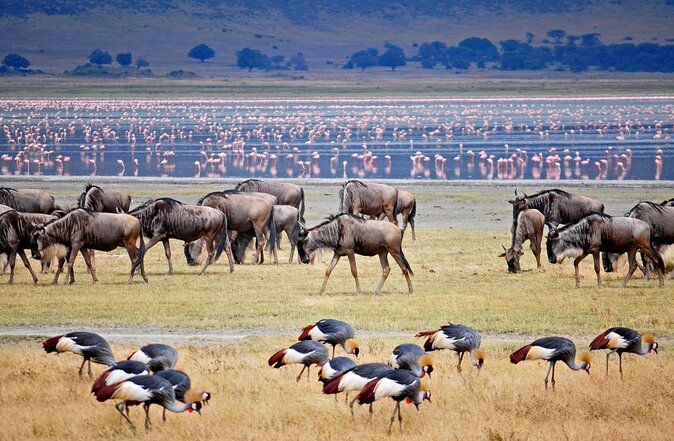
- Four days in the Serengeti: The schedule gives you time in central and northern areas, including the Mara River region during migration season.
- Migration timing matters: July to October is the stated period for the best chance of seeing river crossings, while January to March is calving season.
- A broad northern-circuit route: You visit Arusha National Park, Tarangire, Serengeti, Ngorongoro Crater, and Lake Manyara.
- Camping is part of the experience: Nights include Seronera and Simba campsites, with lodge accommodation at Jambo Lodge and two nights in Arusha.
- Wildlife and culture together: The plan includes Mto wa Mbu village, a Maasai boma, local food tasting, banana plantations, and traditional customs.
- Confirm the final price and group format: The displayed price is $0, which is almost certainly incomplete, and the details describe both a private tour and a joining safari.
Why this eight-day route works
This is an ambitious northern Tanzania circuit. You cover several parks, but the plan does not treat the Serengeti as a quick stop. That matters because wildlife moves, roads are rough, and a quiet morning can turn into an excellent afternoon with the right timing.
You begin and end in Arusha, with airport transfers and two town nights included. That makes the trip easier to fit around an international flight, especially if you arrive tired or need a final night before flying home.
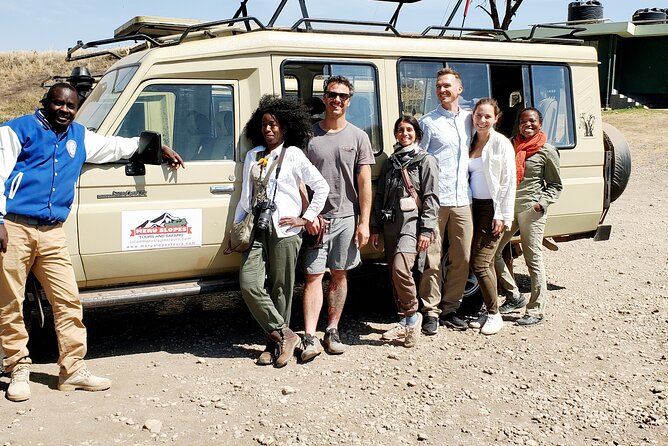
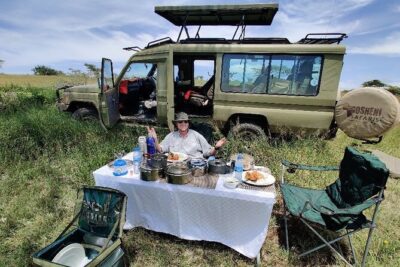
The vehicle is an extended 4×4 safari jeep with a pop-up roof. That roof is important. It gives you a better view than a closed vehicle and lets you watch wildlife while standing safely inside the vehicle. An English-speaking guide and unlimited drinking water are also included.
The plan is listed as private, but the wording also calls it a joining group camping safari. These are different arrangements. A private vehicle gives your party more say over stops and timing, while a shared safari can cost less but may require compromise. Ask the operator to confirm exactly which format applies before paying.
A few more safaris around Arusha worth a look
- Balloon Safari & Bush Breakfast in Serengeti – Miracle Experience
★ 5.0 · 1,646 reviews - 4 Days Group Camping Safari
★ 5.0 · 1,101 reviews - 5 Days Group Camping Safari
★ 5.0 · 730 reviews
Day 1: Arusha National Park’s forest and Ngurdoto Crater
The first morning begins around 8:00 a.m., with a drive of about 40 minutes from Arusha town to Arusha National Park. This is a sensible opening day because it puts you in the bush quickly without a long transfer.
Arusha National Park is not simply a warm-up stop. The entrance road passes through montane forest, where blue monkeys, colorful turacos, and trogons may appear. It is also one of the northern safari parks where black-and-white colobus monkeys are relatively easy to see.
The main feature is Ngurdoto Crater. Its steep walls surround a marshy floor where buffalo and warthogs can be seen. You should expect a full eight-hour park visit, but the wildlife here differs from what you will see later in the open Serengeti. Forest birdlife and monkeys are part of the appeal.
Day 2: Tarangire’s elephants and baobabs
Day two starts around 8:00 a.m. with a drive of roughly three hours to Tarangire National Park. The park lies about 115 kilometers from Arusha and covers approximately 2,800 square kilometers.
Tarangire is famous for its elephants, baobab trees, and the Tarangire River, an important water source for wildlife. During a game drive, you might see lions, leopards, pythons climbing trees, and other animals gathered near water.
I like this stop because it has a clear visual identity. The baobabs and large elephant groups make Tarangire feel different from the grasslands farther west. It also gives you a strong wildlife day before the longer transfer toward the Serengeti.
The schedule says you spend the night at Jambo Lodge after the game drive. The supplied timing contains a typo that lists the stop as eight minutes, but the description clearly calls for a full day in the park and a three-hour drive from Arusha. Confirm the exact accommodation and departure time.
Day 3: The long road into the Serengeti
After breakfast, you pack the vehicle and travel toward the Serengeti with lunch inside the jeep. This is one of the longer road days, but it brings some rewarding views, including the Rift Valley and a view of Ngorongoro Crater along the way.
The plan expects you to reach the Serengeti around 3:00 p.m., followed by an evening game drive in central Serengeti. That timing gives you a chance to see the plains in softer afternoon light and perhaps watch the sunset before heading to Seronera campsite.
The Serengeti is known for its open plains and the annual movement of roughly 1.5 million wildebeest and other herbivores, followed by predators. The important point is that the migration is not a single event on one fixed date. Herds move according to rain, food, and local conditions.
You should view day three as both a transfer and a first look at the park. The ride may feel long, especially after the earlier days, but the route allows you to reach the central Serengeti rather than staying near the park entrance.
Same country, a different kind of drive:
- 3 Days Serengeti & Ngorongoro Group Camping Safari
★ 5.0 · 574 reviews - 7-Day Premium Luxury Tanzania Safari All-Inclusive
★ 5.0 · 426 reviews - 5-Day Highlights mid-Range Crater, Serengeti, Tarangire
★ 5.0 · 296 reviews - 3-Day Classic Serengeti Safari
★ 5.0 · 263 reviews
Days 4 and 5: Following the wildebeest in Serengeti country
These are the most important days for anyone booking this safari for migration viewing. The plan calls for early breakfast and full-day game drives, with the guide taking you toward key areas in the Serengeti and, when conditions allow, toward northern Serengeti.
The Mara River is the headline location from July through October. Kogatende is identified as a crossing area, and the schedule notes that the herds may cross back and forth rather than moving in one neat line. That means no guide can promise a river crossing on a particular morning.
This is where the extra Serengeti time earns its keep. If animals are not near one viewpoint, you have another day to search. You also have time to see more than the migration itself, including predators and resident wildlife.
The stated best chance for migration viewing is June through September, with July through September favored for the northern Serengeti and Mara River. January through March is the period given for calving. If you are booking outside those windows, the Serengeti is still worthwhile, but you should not expect the same herd location.
Expect early mornings, packed lunches or meals around the vehicle, and long hours on rough roads. The reward is the chance to see wildebeest in motion, along with the hunting and scavenging activity that follows large herds. Patience matters more here than a tight list of guaranteed sightings.
Day 6: Sunrise, a final Serengeti drive, and Simba Campsite
Day six begins at about 5:45 a.m. with an early breakfast and a sunrise game drive. You continue until around 11:30 a.m., return to camp for a hot lunch, pack the vehicle, and then continue with another game drive while heading toward Ngorongoro.
This is a demanding day, but it makes good use of the morning, when many animals are active. The later drive is also practical because it positions you near the crater for the next morning.
The night is scheduled at Simba Campsite. Camping is not just a cheaper sleeping arrangement here. It keeps you close to the parks and helps preserve long wildlife days, but you should be comfortable with simple facilities and early starts. Ask what camping equipment, bedding, and washing facilities are supplied, since those details are not provided.
Day 7: Descending into Ngorongoro Crater
You rise around 5:30 a.m. for breakfast, then descend into Ngorongoro Crater for six to seven hours of game viewing. The crater floor is famous for its high concentration of wildlife, and the plan specifically highlights the chance to see the Big Five, black rhinos, birds, and flamingos.
A crater visit differs from the Serengeti. The scenery is enclosed by steep crater walls, and wildlife is concentrated on the floor. That can make sightings feel more immediate, but the area can also be busy, especially at popular viewing points.
Lunch is served inside the crater while you continue watching the natural surroundings. After the game drive, you ascend, collect your luggage, and return to Jambo Lodge for dinner and the night.
The cultural part of the day takes place in Mto wa Mbu. A walking tour may include banana plantations, local food tasting, and a look at everyday life in the village. This is a useful change of pace after several days in the vehicle. It also gives the trip a human side, rather than making the whole experience about photographing animals.
Day 8: Lake Manyara and the return to Arusha
The final day takes you to Lake Manyara National Park after breakfast. The plan calls for a full-day game drive, with possible sightings of tree-climbing lions, flamingos, and other animals drawn to the lake’s algae.
Tree-climbing lions are the park’s famous attraction, but they are not a sure thing. The same applies to large groups of flamingos. You may also visit a hot spring, adding another point of interest beyond the game drive.
The day includes a visit to a Maasai boma, where you can learn about local life, traditions, and customs. Since this follows the Mto wa Mbu visit, the final day adds another cultural stop before the drive back to Arusha.
The schedule says you return to Arusha for dinner and an overnight stay. Because the trip already includes a post-safari night in town, this is useful if your flight leaves the next day. Do not schedule a tight international connection unless the operator confirms the return time, since Lake Manyara to Arusha still involves road travel.
Camping, meals, and daily comfort
This safari combines camping with lodge accommodation. The named stays include Seronera Campsite in the Serengeti, Simba Campsite near Ngorongoro, and Jambo Lodge. Two nights in Arusha are also included, one before and one after the safari.
The vehicle carries the luggage, lunch, and supplies, so packing light will make daily loading easier. Unlimited drinking water is included, as are breakfast and lunch for eight days and dinner. The meal count lists nine dinners, which does not match an eight-day schedule, so confirm the exact meal plan.
The food is prepared by a safari cook according to the supplied details. Several past bookings specifically praised the cooks, including Dula and Eric, for home-cooked meals. The company has also used guides named Jacob, Nuru, Samwel, Benson, Douglas, Mohamed, Iddy, and Jerome Hotti. Guide assignments can change, so ask who will lead your departure.
Guide quality and the practical value of the team
A safari guide does more than drive. The guide decides where to pause, how long to wait, and how to interpret animal behavior. Past bookings singled out guides such as Jacob, Nuru, Samwel, Benson, Douglas, Mohamed, Iddy, and Jerome Hotti for careful driving, wildlife spotting, and clear answers.
You should still ask specific questions before departure. Find out whether the guide is assigned in advance, whether the safari is private or shared, and how the company handles a request to follow the migration north. A good guide may adjust the route, but park access, road conditions, and animal movement limit what anyone can control.
Airport transfers, Arusha hotel nights, water, meals, park fees, taxes, and the 4×4 are included. Visa costs, laundry, phone use, other drinks, and tips are not. Budget for gratuities separately, especially if you receive strong service from both guide and cook.
Is the displayed price good value?
The supplied price is listed as $0 per person. Treat that as an incomplete or placeholder figure, not as a genuine free safari. An eight-day trip covering five parks, park fees, a 4×4, guide, cook, meals, airport transfers, Arusha accommodation, and camping cannot be judged properly without the real price.
Once you have a quote, compare what is included. A low price may reflect shared transport, simpler camps, fewer included nights, or a different route. A higher price may be justified if the vehicle is private, the group is small, the guide is assigned to your party, and the Serengeti days are positioned for the migration.
Ask for the final amount in writing and check whether the listed inclusions remain unchanged. Pay special attention to the number of Arusha nights, camping equipment, crater fees, and whether the airport transfers cover both arrival and departure.
Free cancellation is offered up to 24 hours before the start time. Changes or cancellations inside that window are not accepted for a refund, and poor weather may lead to a new date or a full refund.
Who should book this safari?
I would choose this route if you want a full northern Tanzania sampler with extra time in the Serengeti. It suits people who value wildlife variety, do not mind early mornings, and are comfortable with several long drives and camping nights.
It is also a strong fit for anyone who wants more than animal sightings. The Mto wa Mbu walk, food tasting, banana plantations, and Maasai boma add local contact to the park schedule.
I would hesitate if you want a slow luxury holiday, private lodge rooms every night, or a fixed guarantee of seeing the Mara River crossing. The route is active and the migration cannot be scheduled like a museum visit.
FAQ
How long is the safari?
The experience lasts approximately eight days, beginning and ending in Arusha.
Which national parks are included?
The route includes Arusha National Park, Tarangire National Park, Serengeti National Park, Ngorongoro Crater, and Lake Manyara National Park.
Is airport transportation included?
Yes. Transfers in both directions between the international airport and Arusha are included.
When is the best time to see the wildebeest migration?
The supplied schedule gives June through September as the best general period, with July through September offering the strongest chance of seeing the migration in northern Serengeti and near the Mara River. January through March is the stated calving period.
Are meals and drinking water included?
Yes. Breakfast, lunch, dinner, and unlimited drinking water are included. The meal details list eight breakfasts, eight lunches, and nine dinners, so confirm the final meal count with the operator.
Is the safari private or shared?
The details describe it as a private activity but also refer to joining group camping safaris. Ask the operator to confirm whether your booking uses a private vehicle or shared transport.
Should you book it?
Book this safari if you want a wildlife-heavy route with four Serengeti days, a real chance of reaching migration country, and cultural stops along the way. The strongest features are the time in the Serengeti, the range of parks, the included transport and meals, and the company’s record of using guides and cooks such as Jacob, Nuru, Benson, Dula, and Eric.
Before committing, get the actual price, confirm the private or shared format, and check the camping setup. If those details suit your budget and comfort level, this is a well-rounded northern Tanzania safari with enough time for the Serengeti to be the main event rather than a rushed stop.
Just added around Arusha
- 6 days Tanzania budget safari★ 5.0 · 65 reviews
- 7 days great migration safari★ 5.0 · 77 reviews
- serengeti, ngorongoro & tarangire 5days private tour★ 5.0 · 77 reviews
- 5 days safari, hiking & culture (Serengeti & kilimanjaro)★ 5.0 · 27 reviews
- 5-Day Mid-Range Safari in Tanzania★ 5.0 · 33 reviews
- 4 days safari★ 5.0 · 34 reviews
- serengeti & ngorongoro 3 days private tour★ 5.0 · 15 reviews
- Serengeti & Ngorongoro fly in safari★ 5.0 · 76 reviews
Arusha Safaris, compared.
Balloon Safari & Bush Breakfast in Serengeti – Miracle Experience
Read our review →
3 Days Serengeti & Ngorongoro Group Camping Safari
Read our review →
7-Day Premium Luxury Tanzania Safari All-Inclusive
Read our review →
5-Day Highlights mid-Range Crater, Serengeti, Tarangire
Read our review →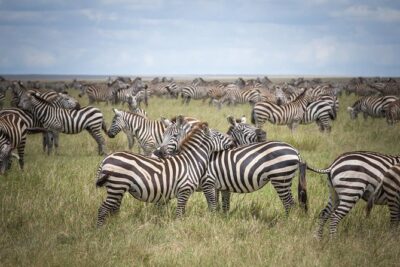
8 Days Great Wildebeest Calving Migration Safari from Arusha
Read our review →Browse the lists this tour appears in