
REVIEW · ARUSHA
3 Days Tanzania Safari
Tarangire’s giant baobabs and elephant herds make a strong opening to this three-day Northern Circuit safari. You then move to Ngorongoro Crater, where wildlife gathers on the crater floor, before finishing among Lake Manyara’s birds, forests, and soda lake. I like the compact route and the private format, which lets your group set the pace. The main catch is long driving days and basic camping rather than lodge comfort.
I like that the package includes the big practical costs: park fees, meals, bottled water, a professional guide, emergency evacuation insurance, and a 4×4 with a pop-up roof. I also like the useful extras, especially binoculars and a wildlife field guide. The tradeoff is that visas, drinks, tips, personal items, and pre- or post-safari accommodation cost extra.
Key points to know before you book
- Three famous parks in three days: Tarangire, Ngorongoro Crater, and Lake Manyara give you a broad taste of Tanzania’s Northern Circuit.
- Private group format: Only your own group participates, though group discounts may be available.
- Pop-up-roof 4×4: You can watch wildlife from a raised position without leaving the vehicle.
- Camping is part of the experience: Two nights of accommodation are included, but this is not presented as a lodge safari.
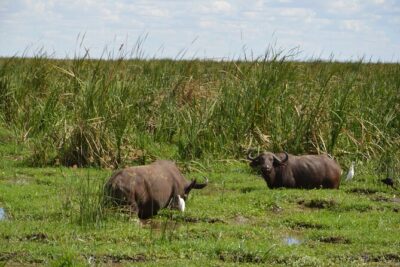
- Strong wildlife focus: Expect elephants, zebra, buffalo, wildebeest, flamingos, and many other birds, with a chance of seeing rhino.
- Flexible end point: Day three finishes in Arusha, Moshi, or at Kilimanjaro Airport.
What this three-day safari is really like
This is a fast, wildlife-heavy introduction to Tanzania. In a short stretch, you visit three very different protected areas: the dry baobab country of Tarangire, the enclosed grasslands of Ngorongoro Crater, and the Rift Valley setting of Lake Manyara.
The route makes sense geographically, but it does not leave much spare time. Each day is listed at roughly six or seven hours, and those figures include game viewing and transfers. You should be ready for early starts, road time, and a full day outside.
The safari begins with pickup at Mount Meru Hotel in Arusha. From there, you travel in a 4×4 fitted with a pop-up roof. That vehicle matters more than it may sound. You get a better view over grass and shrubs, a stable platform for photography, and a way to watch animals without stepping out in the parks.
This is a private activity, so only your group takes part. That is a useful advantage for families, couples, or friends who want to ask questions freely and avoid being matched with strangers. It also gives the guide more room to respond to your interests, although the actual schedule remains tight.
A few more safaris around Arusha worth a look
- 3 Days Serengeti & Ngorongoro Group Camping Safari
★ 5.0 · 574 reviews - 3-Day Classic Serengeti Safari
★ 5.0 · 263 reviews - 3 Days Tarangire, Ngorongoro & Lake Manyara Group Camping Safari
★ 5.0 · 102 reviews
Day one: elephants and baobabs in Tarangire
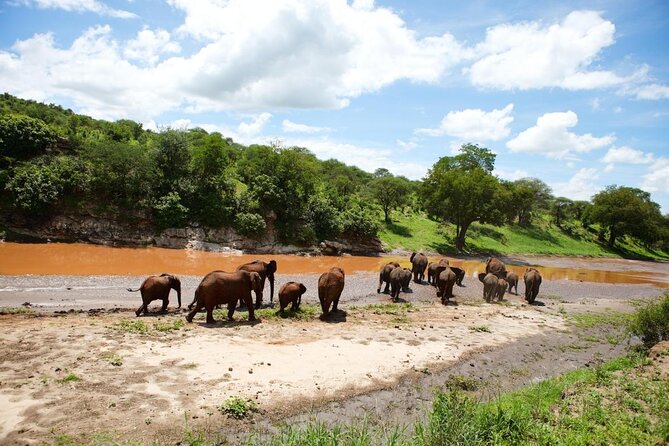
Your first park is Tarangire National Park, about a seven-hour experience including the drive and afternoon game drive. Tarangire is known for its huge baobab trees, open, dry vegetation, and large elephant population.
The park’s sparse growth can help with animal viewing. In dry periods, elephants may search for underground water in riverbeds, while wildebeest, zebra, and buffalo gather near shrinking lagoons. That concentration gives you a good chance of seeing several large animals in one outing, though no safari can promise a particular sighting.
The afternoon timing is worth noting. You are not getting a full dawn-to-dusk park day here. Instead, the route uses the afternoon for a first game drive, with a picnic lunch included. The payoff is a gentle first taste of safari country, but the drawback is that you have less time in Tarangire than on a full-day visit.
I like this opening because it begins with scenery that feels distinctly East African. Baobabs give the park a strong sense of place, and elephants are often the main attraction. Keep your eyes open near the riverbeds and lagoons, where animal activity can change quickly.
Your two nights of accommodation are included in the package, along with dinner and breakfast according to the meal plan. Since the experience is sold as a camping safari, ask for the exact camp details before departure if comfort level matters to you. The information provided confirms two nights of accommodation but does not specify the camp style or facilities.
Day two: the long descent into Ngorongoro Crater
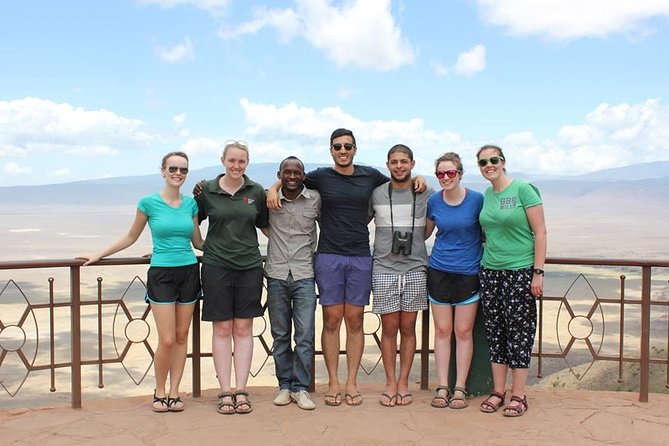
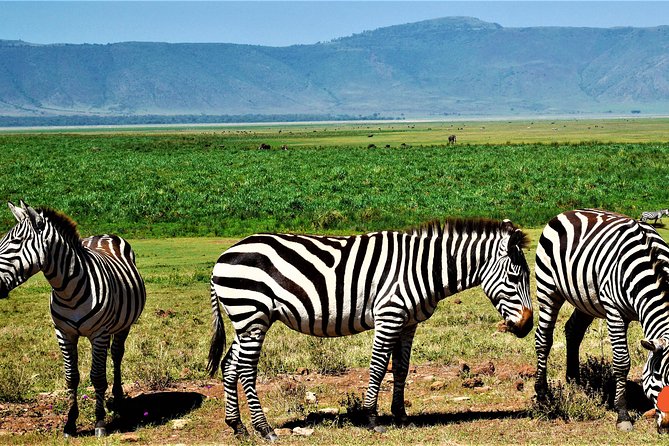
Day two begins early with a descent down the crater’s roughly 600-meter walls. This is the emotional center of the trip. From above, Ngorongoro feels immense. Once you reach the floor, the high walls surround a broad wildlife area where animals are easier to find than in a huge, open park.
Ngorongoro Conservation Area is a UNESCO World Heritage Site and one of Africa’s most unusual wildlife settings. The crater supports a dense collection of animals, and you may have a chance to see the endangered rhino. That possibility is one reason many people give Ngorongoro priority when time is short.
The seven-hour day is built around an early descent and game viewing on the crater floor. The early start is practical, not decorative. Wildlife activity is often strongest earlier in the day, and the crater visit needs enough time for driving between sightings.
You should expect this to be a busy day physically. You are not hiking into the crater, but you will spend hours in a vehicle, with an early start and rough sections of road possible. Anyone with a moderate fitness level should be able to manage the trip, but this is not a restful sightseeing day.
The crater is also the place to pay attention to your guide’s explanations. The value of a safari is not only the animals you spot. A good guide helps you understand why wildlife gathers in certain areas, how water shapes the animal movements, and what makes the crater different from Tarangire.
Several guides associated with this operator have been praised for their warmth and animal knowledge, including Roger, Alan, Joshua, Edwin, Richard, Rashid, and Francis. Your guide may be different, so treat those names as examples rather than a guaranteed assignment. The consistent point is that the guide can shape the whole trip, especially when sightings are brief or distant.
Day three: birds, lions, and the Rift Valley at Lake Manyara
The final park is Lake Manyara National Park, located within the Great Rift Valley. This is a different kind of safari stop. Tarangire is strongly associated with elephants and baobabs, while Ngorongoro centers on a compact wildlife basin. Lake Manyara adds forest, wetland, and birdlife.
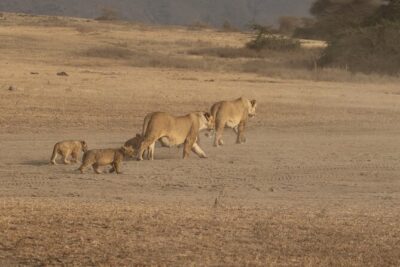
The park is famous for tree-climbing lions, although the name should not be treated as a promise that you will see lions in trees. Wildlife is unpredictable. You may instead find the birdlife to be the day’s main reward.
More than 400 bird species are associated with the park, including waterfowl and migratory birds. Pink flamingos may gather around the soda-ash lake, adding a strong splash of color to the shoreline. If you care about birds, this park gives the itinerary more range than a route focused only on large mammals.
The Lake Manyara visit lasts about six hours before the drive back to Arusha, Moshi, or Kilimanjaro Airport. That makes the final day useful for travelers catching a later connection, but you should confirm your departure time carefully. The schedule is full, and airport transfers before or after the safari are not included unless arranged separately.
I like the way Lake Manyara rounds out the trip. You get a look at Tanzania’s birdlife and wetland setting rather than seeing three versions of the same dry grassland. The limitation is time. A short visit may feel rushed if you want long birdwatching sessions or relaxed photography.
Same country, a different kind of drive:
- Balloon Safari & Bush Breakfast in Serengeti – Miracle Experience
★ 5.0 · 1,646 reviews - 4 Days Group Camping Safari
★ 5.0 · 1,101 reviews - 5 Days Group Camping Safari
★ 5.0 · 730 reviews - 7-Day Premium Luxury Tanzania Safari All-Inclusive
★ 5.0 · 426 reviews
What is included, and why the price matters
The listed price is $1,038.47 per person. That is not a bare park-entry price. It covers two nights of accommodation, national park fees, meals, bottled water, government taxes, a professional guide, hotel pickup and drop-off, emergency evacuation insurance, and unlimited mileage in the safari vehicle.
You also receive binoculars and a birds and animal field guide book. Those are small additions, but they improve the trip. Binoculars help when an animal is across a valley or resting in cover, while a field guide helps turn quick sightings into something you understand.
The value depends on how many people are in your private vehicle and how much you value convenience. A solo visitor may find the per-person cost harder to justify, while a small private group can spread some operating costs and gain more control over the day. Group discounts are offered, but the exact terms are not provided.
Meals are included according to the itinerary, with breakfast, lunch, dinner, coffee, and tea listed. Vegetarian food is available if requested at booking. You should still mention dietary needs early rather than treating them as a last-minute detail.
The package also includes emergency evacuation insurance, which is a meaningful practical benefit in a remote safari setting. It is not a substitute for full travel insurance, however. Your personal insurance, camera costs, visa, alcoholic drinks, and tips remain your responsibility.
The recommended gratuities are $15 per day for the cook and $20 per day for the guide, divided by everyone in the vehicle. For a three-day trip, that means budgeting those amounts before splitting them among your group.
Camping, comfort, and the daily pace
Camping gives this trip a closer connection to the setting, but you should choose it with open eyes. The supplied information confirms two nights of accommodation, yet it does not describe the tents, beds, showers, toilets, or camp services. Ask for those details before paying if the standard of camp comfort will affect your decision.
The schedule also calls for early mornings and long road hours. That is normal for a short safari covering three parks, but it can be tiring. You will get more variety than on a single-park trip, at the cost of slower mornings and less unplanned time.
Bring a camera with a strong optical zoom. One useful tip connected with this route is to carry a camera with around 60x optical zoom, since animals may be close one moment and far away the next. A phone can record the atmosphere, but distant wildlife often needs more reach.
Mosquito and fly protection is also sensible. DEET was specifically recommended as a useful item. Pack light layers, sun protection, sturdy closed shoes, and a small day bag that you can keep with you in the vehicle.
The guide can make or break the experience
The company’s strongest practical asset appears to be its guide-and-cook team. Guides named Roger, Alan, Joshua, Edwin, Richard, Rashid, Francis, Praise, and others have been associated with warm service, animal knowledge, patience, and good organization. One cook, Godfrey, has also been specifically praised for the food and support.
That does not guarantee who will lead your safari. Still, it gives you a useful question to ask before arrival: who is assigned to the vehicle, and who prepares the meals? You want a guide who explains what you are seeing rather than simply driving from one animal to the next.
The guide also handles more than wildlife spotting. The operator has arranged other activities such as visits with the Maasai and day trips to waterfalls, coffee areas, hot springs, and a bushmen community. Those experiences are not part of this three-day route, but they show that you can ask about extending your Tanzania plans.
There has been at least one complaint about professionalism and payment handling connected with the operator. The company response described the payment issue as a rare technical error and addressed the other concerns. I would not ignore that warning, but I would also weigh it against the many positive accounts of guides, organization, food, and personal help, including assistance with lost luggage.
Who should book this safari?
This trip suits you if you have only three days and want the classic Northern Circuit highlights without arranging transport, camps, park fees, meals, and a vehicle separately. It is especially practical for couples, families, and small groups who want a private vehicle.
Families should note that one account described a memorable trip with three children, but the schedule is still demanding. Parents should be comfortable with early starts, extended drives, and camping. The moderate fitness requirement is less about strenuous walking and more about handling long days on the road.
This is also a good fit for first-time safari visitors who want variety. Tarangire provides elephants and baobabs, Ngorongoro offers one of the most concentrated wildlife settings in the region, and Lake Manyara adds birds and Rift Valley scenery.
You may want another option if you prefer luxury lodges, slow mornings, or a single park explored in depth. The route is efficient, not leisurely. You should also add more time if rhino, birds, photography, or cultural visits are your main goals.
Pickup is offered, with the main starting point listed as Mount Meru Hotel in Arusha. The final drive can return you to Arusha or Moshi, or take you to Kilimanjaro Airport. Airport transfers before or after the safari are not included unless separately arranged.
Cancellation is free if you cancel at least 24 hours before the start time. Cancellations or changes made inside that window are not accepted for a refund.
Should you book it?
Book this safari if you want a compact, private introduction to Tanzania with the major costs bundled into one price. The strongest reasons are the smart three-park route, the pop-up-roof vehicle, included park fees and meals, and the chance to work with a guide who can add real value through wildlife knowledge and good timing.
Think twice if camping is not your style or if you need a relaxed schedule. Before booking, confirm the camp facilities, assigned guide, pickup details, final drop-off time, and any dietary needs. For the right group, this is a practical way to see three of Tanzania’s best-known parks in only three days.
FAQ
How long is the safari?
The experience lasts approximately three days. The daily activities are listed at about seven hours on days one and two, and about six hours on day three.
Which national parks and protected areas are included?
The route includes Tarangire National Park, Ngorongoro Conservation Area and Crater, and Lake Manyara National Park.
Where does the safari start?
Pickup is offered from Mount Meru Hotel in Arusha.
Where does the safari end?
On day three, the drive returns to Arusha or Moshi, or continues to Kilimanjaro Airport.
Is this a private safari?
Yes. Only your own group participates in the activity.
What type of vehicle is used?
The safari uses a 4×4 vehicle with a pop-up roof for wildlife viewing and includes unlimited mileage.
Are accommodation and meals included?
Yes. Two nights of accommodation are included, along with meals listed in the itinerary, bottled water, coffee, and tea.
Are park fees included?
Yes. National park fees and government taxes are included in the price.
Is vegetarian food available?
Yes. A vegetarian option is available, but you should request it when booking.
Do I need a visa?
Yes. The supplied information states that a visa must be obtained at the border or airport.
Are tips included?
No. Gratuities are not included. The recommended amount is $15 per day for the cook and $20 per day for the guide, divided among everyone in the vehicle.
Can I cancel for a full refund?
Yes, if you cancel at least 24 hours before the experience begins. Cancellations or changes made less than 24 hours before the start time are not accepted for a refund.
Just added around Arusha
- 6 days Tanzania budget safari★ 5.0 · 65 reviews
- 7 days great migration safari★ 5.0 · 77 reviews
- serengeti, ngorongoro & tarangire 5days private tour★ 5.0 · 77 reviews
- 5 days safari, hiking & culture (Serengeti & kilimanjaro)★ 5.0 · 27 reviews
- 5-Day Mid-Range Safari in Tanzania★ 5.0 · 33 reviews
- 4 days safari★ 5.0 · 34 reviews
- serengeti & ngorongoro 3 days private tour★ 5.0 · 15 reviews
- serengeti, ngorongoro & tarangire 4 days private tour★ 5.0 · 18 reviews
Arusha Safaris, compared.
Balloon Safari & Bush Breakfast in Serengeti – Miracle Experience
Read our review →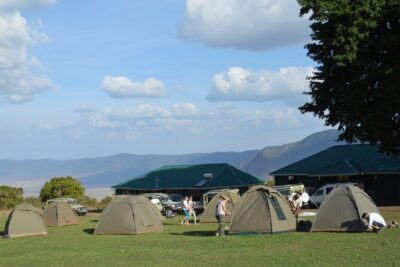
3 Days Serengeti & Ngorongoro Group Camping Safari
Read our review →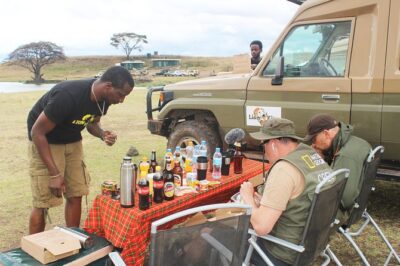
7-Day Premium Luxury Tanzania Safari All-Inclusive
Read our review →
5-Day Highlights mid-Range Crater, Serengeti, Tarangire
Read our review →
8 Days Great Wildebeest Calving Migration Safari from Arusha
Read our review →Browse the lists this tour appears in